Day after day, for more than a year, Annie Andrews worked to convince South Carolina voters that they should vote Lindsey Graham out of office this November.
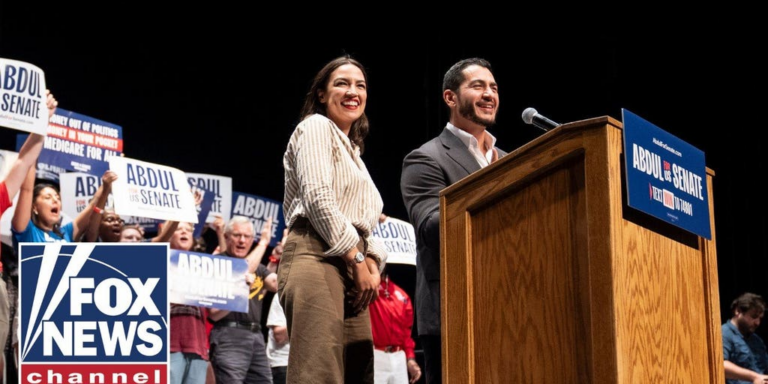
In interviews, social media posts and in-person campaign events, Andrews, who declared her candidacy in 2025 and won the June 9 Democratic primary to take on Graham for U.S. Senate in November, dialed in attacks on the long-serving incumbent’s record on such matters as the war with Iran and Republican plans to slash healthcare funding.
Then, on the morning of July 12, she learned that Graham had died the night before at his residence in Washington, D.C.
“I’ve spent the last year thinking about and talking about Senator Graham, so to wake up that Sunday morning to messages from my team about the news was incredibly shocking.”
It was “a reminder that life is so fragile” and that “life is bigger than politics.”
She added that it was “an opportunity to reflect on the fact that there is far more that unites us as fellow South Carolinians than divides us.”
Still, Andrews has a campaign to run, and she isn’t backing off of her criticisms of President Donald Trump’s leadership or of the GOP agenda.
Graham’s death prompted a Republican primary for the Senate race. There are currently nine candidates in the field, including Graham’s sister, Darline Graham, who was appointed by Gov. Henry McMaster to temporarily fill the vacant Senate seat through January. She has Trump support in the primary.
Other candidates include former Gov. Mark Sanford and 3rd Congressional District Rep. Ralph Norman, who recently ran in the GOP primary for governor.
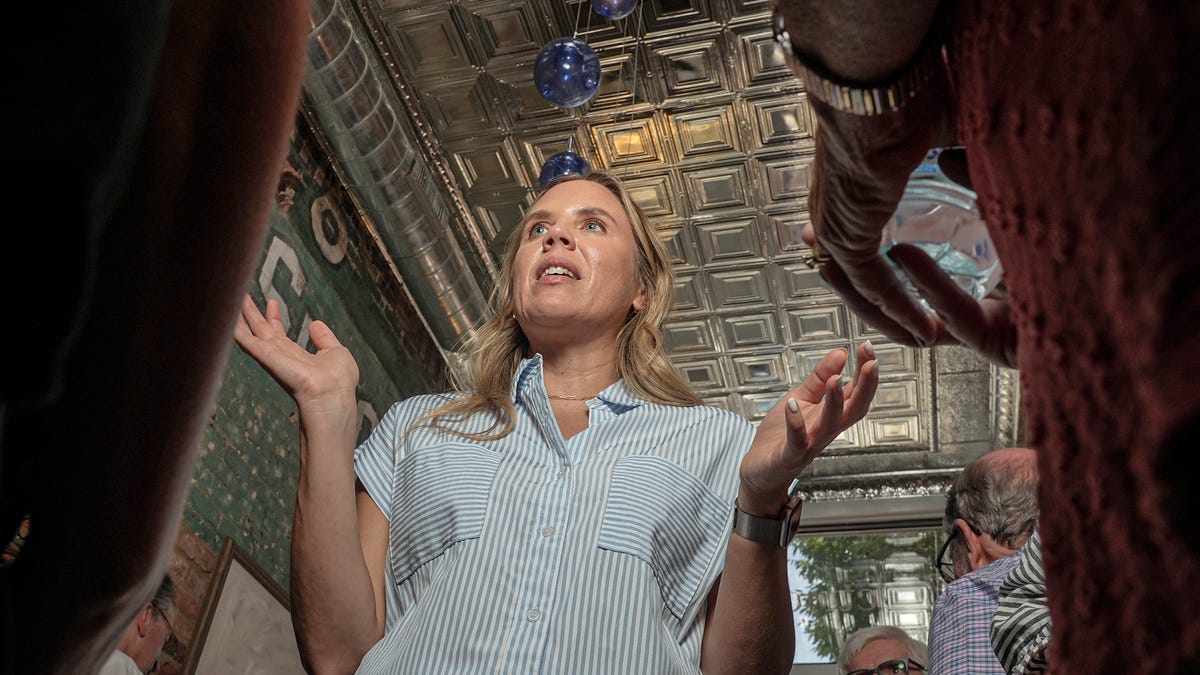
“Frankly, our mission didn’t change” after Graham’s passing, Andrews said at a campaign stop in Anderson on July 30.
“My opponent has changed, but who I’m running for hasn’t changed. The reasons I got off the sidelines and got involved haven’t changed.”
Andrews is a pediatrician and the mother of three children. She lives in Charleston.
“It was my experience working on the frontlines of our healthcare system, particularly in children’s hospitals, that helped me understand the impact of broken policies on children and their families,” she said.
She became active politically, taking opportunities to speak with legislators about healthcare policy.
Ideas she described as “evidence-based,” including the expansion of ACA coverage for more South Carolinians and bolstering public health agencies, “were falling on deaf ears.”
Andrews said she was convinced that the way to make a lasting difference was “by changing who we elect —electing people who inherently care about South Carolina’s children and families.”
In 2022, she ran against Rep. Nancy Mace in South Carolina’s 1st Congressional District.
Mace defeated Andrews by a 14-point margin.
A South Carolina Democrat has not won a U.S. Senate race since 1998, when incumbent Fritz Hollings defeated Republican Bob Inglis.
Winthrop University political scientist and public opinion researcher Scott Huffmon said Andrews faces long odds in 2026.
“(She) is going to have a tremendous uphill battle simply because of the partisan lean of the state,” he said in an email.
Huffmon thinks Graham’s death and the scrambling of the race “make Andrews’ campaign even more difficult.”
More: Gov. McMaster, South Carolinians honor Lindsey Graham at SC service
Running against Lindsey Graham enabled Andrews to present a stark contrast to voters: a fresh face going up against a politician first elected to Congress more than 30 years ago, a medical doctor taking on a politician who had embraced Robert F. Kennedy Jr., Trump’s controversial pick for Secretary of the Department of Health and Human Services.
For many years, Graham was widely praised for his willingness to work across the political divide in Congress, and he maintained personal friendships with Democrats until his death.
But his close relationship with Trump and, most recently, his vocal support for the war with Iran, inspired increasing disdain among Democratic voters.
At an event in Spartanburg in May, Andrews described Graham as “a warmonger” in a line that drew an enthusiastic reaction from the audience.
Without Graham in the race to energize the Democrat base and peel off Republicans who may have opposed his pro-war stance, Huffmon said the uphill fight becomes “very steep.”
Antjuan Seawright, a Democratic consultant and South Carolina native, said he sees the race differently.
Emphasis on the built-in Republican advantage is “conventional wisdom,” said Seawright, who offers political analysis from a Democratic perspective on television and radio programs. “But these are not conventional times.”
Pointing to voters’ economic anxieties and Trump’s sagging approval ratings, Seawright said, “This cycle presents a tremendous opportunity to defy political gravity.”
Andrews said internal campaign polls showed her in a close race with Graham before his death and now show her in a similar position against several of the Republicans in the primary.
She added that she is focused on her general campaign messaging while the Republican hopefuls are “running a race to the right.”
They are currently spending their time and financial resources “talking to the most extreme Republican voters about their most extreme positions that are out of touch” with more moderate voters.
Andrews said her “pragmatic plans” on the economy and health care can connect with “independent and center-right” South Carolinians.
She aims to convince voters that the GOP agenda has negative impacts on residents of the state.
Looming cuts to Medicaid, for example, threaten the well-being of children and seniors alike, she said.
Stopping those cuts, written into the Trump-backed One Big Beautiful Bill and set to take effect in 2027, will be one of her top priorities, she said.
Losing Medicaid funds “will be devastating to access to health care for so many South Carolinians,” she said.
“Our healthcare system in South Carolina will not be able to withstand having all of this money taken out of the system, and it will impact all of us.”
That’s a frightening notion — and the kind of pocketbook issue that Andrews hopes will cause voters to look beyond the “R” and “D” beside candidates’ names.
If so, she said, “We can absolutely win.”
About the Author