Please refresh the page or navigate to another page on the site to be automatically logged inPlease refresh your browser to be logged in
Swipe for next article
Renault’s new E‑Space concept, shown at the Paris Motor Show, reimagines the 1984 people‑carrier with a spacious cabin and E‑Tech electrified technology for modern families
Removed from bookmarks
Want to bookmark your favourite articles and stories to read or reference later? Start your Independent Membership today.
Already a member? Log in
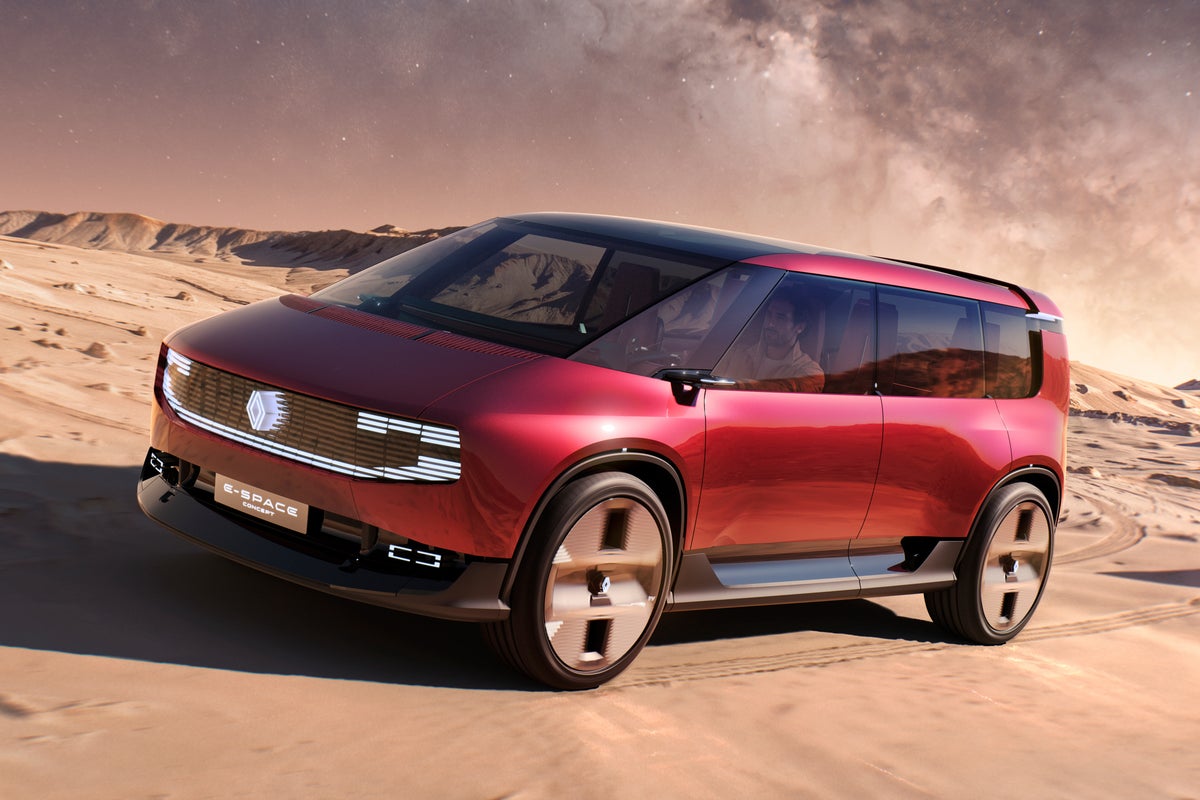
Renault is taking the traditional Espace family car back to its roots – with a new name and a rethink for the electric-age. The Renault E-Space Concept will make its debut at the Paris Motor Show on 12 October, drawing inspiration from the original people carrier that arrived in 1984.
It’s a concept for now, with the focus on modern family life, a roomy cabin and technology designed to be useful to the people on board. Renault is revisiting its idea of cars as living spaces, something that helped set the first Espace apart more than four decades ago. Its design team has been looking at how people use their cars and spend time inside them today, with those needs shaping the design.
There’s a clue in that extra hyphen, too. The E comes from E-Tech, Renault’s name for its electrified technology, while Space points to a generous, welcoming, high-tech interior. The old name already meant space in French, so there’s a familiar idea behind the updated spelling.
The concept measures 4,700mm long, making it 450mm longer than the original Espace, and wears black rubé – a dark red – paint. Wide U-shaped light strips at the front and rear follow the outlines of the body, while an illuminated Renault diamond sits in the middle of the front end. A pixel-like lighting effect makes the badge appear to float.
That’s a different look from the original Espace, which helped establish the people carrier in Europe, although there appear to be a few nods to the original in the shape of the front and rear ends. The original car offered room for up to seven in a body that looked unlike the usual family saloon or estate, with a cabin that owners could rearrange to suit the job in hand.
Developed by Matra and improved by Renault, the first Espace had seats that could swivel, fold or be removed. Individual rear chairs replaced a conventional bench, and taking them out freed up a large load space with a flat floor. The same car could carry the family or help with moving the furniture, all within a body just 4,250mm long. It was a living room on wheels, with the emphasis on making that space work for its occupants.
Apparently, it could have worn a Peugeot badge, too. Matra initially offered the project to Renault’s French rival, which turned it down before Renault took it on.
Buyers took a little convincing at first, with sales slow to get going, but 191,674 first-generation cars were built before production ended in 1991. Further generations followed, including the larger Grand Espace. The fifth-generation car arrived in 2015, although it wasn’t offered in right-hand drive for British buyers.
The Espace name hasn’t disappeared altogether, either: Renault announced a sixth-generation SUV in 2023, with five or seven seats. This new concept, though, takes its inspiration directly from the first car and its approach to family motoring.
For E-Space, Renault is bringing that thinking into its plans for the electric age, with cabin space and useful technology among the priorities. The full unveiling in Paris will give this latest chapter its first public outing, 42 years after the original went on sale. And as usual with Renault, there’s a strong possibility that a concept could be made real and go into production.
Join thought-provoking conversations, follow other Independent readers and see their replies
Please refresh the page or navigate to another page on the site to be automatically logged inPlease refresh your browser to be logged in
About the Author