Keep up to date with Digiday’s annual coverage of Advertising Week in New York. More from the series →
Advertising Week New York, a four-day conference that draws nearly 20,000 of adland’s finest, is renowned for on-stage programming tinged with optimism and creator reps angling for their 15 minutes in the spotlight.
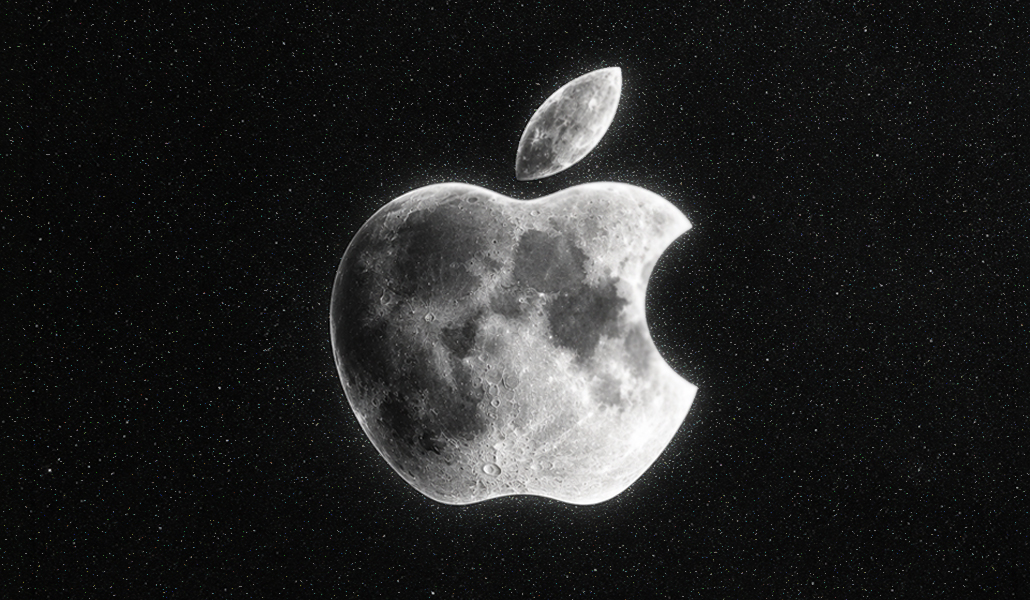
However, out in the snaking lines outside the conference venue, nearby hotels and dive bars, the talk often circles back to Apple — the biggest brand/platform provider in the industry — which reopened its war with the digital ad industry just a week before.
The news came too late for the official agenda, so ad execs have been picking it apart over coffee and drinks all week, usually off the record, with the developments — effectively, a naughty and nice list for ad tech — leaving many in a tizzy.
Word got out last week that Apple’s iOS 27 updates, released in mid-September, meant it had started cutting off companies that track people around the web to target them with ads.
Once installed, Apple’s Safari web browser would stop talking to those companies altogether, meaning they can’t collect data on those users or serve them ads. The first names caught up were some of the biggest in the business, including The Trade Desk, LiveRamp — soon to be owned by Publicis Groupe — ID5, Permutive and Experian’s Audigent.
More could follow. AdExchanger has reported Apple has hundreds of similar firms in its sights, though there’s little sign of that yet. Digiday has seen results from a test of more than 70 ad tech domains that found only that first handful blocked. Zeta’s LiveIntent, Publicis Groupe-owned Lotame and Yahoo’s ConnectID — all rival ID companies — got through without a problem.
In other words, somewhere at Apple HQ, there’s a naughty-and-nice list few people outside the iPhone-maker have insight into — reportedly sitting in a private GitHub repository.
The company has also written new code into WebKit — the engine powering Safari — that will let it add companies whenever it likes without waiting for a software update. The code hasn’t shipped yet, but once it does, Apple can expand the list dynamically.
Digiday’s attempts to contact Apple for comment were not returned by press time.
“What this will allow Apple to do is make this block list dynamic,” said Rowena Lam, senior director of privacy and data at IAB Tech Lab and product lead for its Trusted Server initiative.
That alone would explain the panic. But the block reaches beyond Safari since Apple requires every browser on the iPhone and iPad to run its own engine, WebKit, meaning Chrome, Firefox and the rest are caught up too.
“I don’t think there are going to be CEOs who throw themselves out of windows yet. I think it will be a slow death,” said one ad exec on the sidelines. “But if I was a banker today I definitely would not invest in an ID company.”
Several sources speaking with Digiday on condition of anonymity, in return for candor, said ID vendors such as ID5 have been testing ways to work within Apple’s restrictions, including moving their pixels server-side and relying less on cookie-based technology.
Most of the rubbernecking so far has focused on The Trade Desk, with critics pondering how the latest episode would affect the under-fire demand-side platform. Apple’s crackdown makes its predicament harder, but The Trade Desk will survive it. Some other companies on the list might not.
Unlike them, The Trade Desk’s ad server — the part of its business that bids on ad space and loads the winning ad — is now off Apple’s naughty list. Apple has removed it in a test version of iOS, though people on the current version won’t see the fix until the end of the month at the earliest.
That’s just as well for Apple, which runs its own ad network and could have faced accusations of abusing its position had the block stayed. ID companies have no such card to play. Apple doesn’t compete directly with them and can defend the block on privacy grounds, making any legal fight difficult.
How badly each gets hurt depends on what it sells. Since email matching still works outside Safari, some firms can continue with the practice. Others built around linking cookieless browsers back to cookies lose much of their pitch. Either way, it’s another sign the user IDs’ ad tech was built on are losing their grip on how ads get targeted and measured.
This is far from the first time Apple’s “privacy-first” mantra has had negative implications for ad tech, with sources also noting Apple’s lack of proactive communication with adland around the latest software update.
Scott Messer, principal and founder of Messer Media, a consultancy specializing in helping publishers manage their ad tech, told Digiday low adoption rates of the latest Apple software had limited its impact on the sell-side.
“You have to ask yourself: ‘Was this a mistake, or was this intentional, and Apple knew exactly what they were doing?’” he added, reflecting on the switch in The Trade Desk’s circumstances.
For Jay Friedman, a former agency chief and buy-side specialist at Cartograph, “This was clearly not a mistake [from Apple], because mistakes tend to be random… all this does is begin a massive game of cat and mouse as all these companies adapt.”
All the attention on ad tech and ID players makes it easy to forget who sits at the end of this chain. Publishers use those IDs to show advertisers who’s reading, and the better an advertiser knows its audience, the more it pays to reach them.
That goes double for iPhone users on Safari, who are among the most valuable readers on the web. Take the IDs away and publishers lose much of what made those readers worth paying for.
—as reported by Krystal Scanlon
If someone told you this week that creative is the new targeting, there’s a good chance you rolled your eyes. The phrase has been doing the rounds for so long that it has lost most of its punch. Worn out as it is, the idea still stands up — and says plenty about where the industry is moving.
During sessions at Advertising Week New York, TikTok, Meta and X have all put creative under the spotlight, unveiling or expanding tools designed to help advertisers generate, adapt, select and activate ads within their platforms. As automated buying systems demand more creative variations to test and optimize, platforms can use AI to keep those systems topped up with assets.
TikTok introduced Smart+ Creative Selection, which brings advertisers’ assets, AI-generated creative from its Symphony suite and creator content into one approved workflow. It builds on TikTok’s Recommended Creatives tool, launched at Advertising Week last year.
Ben Dutter, chief strategy officer at Power Digital, whose team was an early adopter, said they’ve seen time savings “as much as 50%” on the ad selection process.
“Having a tool like the Smart+ Creative Selection lets the actual ad buyers communicate very quickly to the production or influencer teams and shortens the feedback loop significantly,” he said during a TikTok panel. “When you have faster scale at producing new interactions, that drives better performance.”
Meta’s Ads Creative Studio, its AI-powered solution for analyzing, iterating and generating Facebook and Instagram ads, is rolling out to more advertisers following testing this summer. Meta is also expanding its generative AI video tools.
Meanwhile, X launched X Lift, an AI-powered campaign builder that can turn campaign ideas from a URL into a ready-to-review campaign.
“X Lift is our first major product that brings together the three core pillars: speed, scale and intelligence in one product,” said X’s lead engineer, ads product, Mohit Bhatia, during X’s panel at AWNY. “You don’t have to watch your campaign. It will shift the budget towards what’s working, and then in future, it will also spin up new creatives.”
The push gives platforms an incentive to control both sides of the equation: media buying and the creative feeding it. As Enders Analysis senior research analyst Jamie MacEwan said, “This is absolutely about ad platforms who have invested heavily in AI using it to solve their own problems.”
Keeping creation, testing, and activation inside the same platform reduces friction while bringing the creative and media decisions that determine performance closer together.
“I think the future is better tools that help us get back to what the craft, what the art really is,” said Tony Chopp, vice president, paid media at Common Thread Collective, during a Meta panel when discussing what AI means for marketing.
“The more creative is automated within the platform’s systems, the greater the scope for them to introduce format innovations and optimize performance across placement and creative,” MacEwan said.
It’s a direction Meta has telegraphed before. Sixteen months ago, The Wall Street Journal reported that CEO Mark Zuckerberg intended to automate the entire ad creation process using AI, later calling it a “redefinition of the category of advertising” during a podcast with Stratechery’s Ben Thompson.
“I don’t believe in that brand safety shit anymore. It’s BS. It’s really where someone fits on the ideological scale; that’s what they’re saying it is. I don’t think that in this day and age that we could have I believe now within the last year that we would have another Bud Light situation. I just think those days are gone.”
– Don Lemon, journalist and founder of Lemon Media Network, during a session at Advertising Week New York.
Advertisers are wary of discounting away their profit margins, but find it hard to argue against increasing ad spend with e-commerce titan.
The holdco and the ad-tech platform are taking in-content ad insertion to a new level, identifying scenes that can be monetized contextually.
Companies like Opella are borrowing from the consumer brand playbook as they pivot around shifting health habits. Can they adapt FMCG marketing without also importing the issues facing that category?
Get access to tools and analysis to stay ahead of the trends transforming media and marketing
Visit your account page to make changes and renew.
Get Digiday's top stories every morning in your email inbox.
Follow @Digiday for the latest news, insider access to events and more.
About the Author