Jakarta, IO – Indonesians are familiar with blood donation, but plasma donation is less familiar to the public. Plasma is an important component of blood that can be processed into plasma-derived medicinal products (PDMPs) to support the treatment of patients with various medical conditions. Raising public awareness of plasma and plasma donation is important to help the public understand how plasma donors contribute to patient care.
Plasma comes from human donors; therefore, its availability depends heavily on donor willingness to participate and safe, reliable plasma collection systems. Ensuring a sustainable supply of PDMPs requires a strong, integrated ecosystem connecting plasma donors, collection and processing facilities, healthcare professionals and patients.
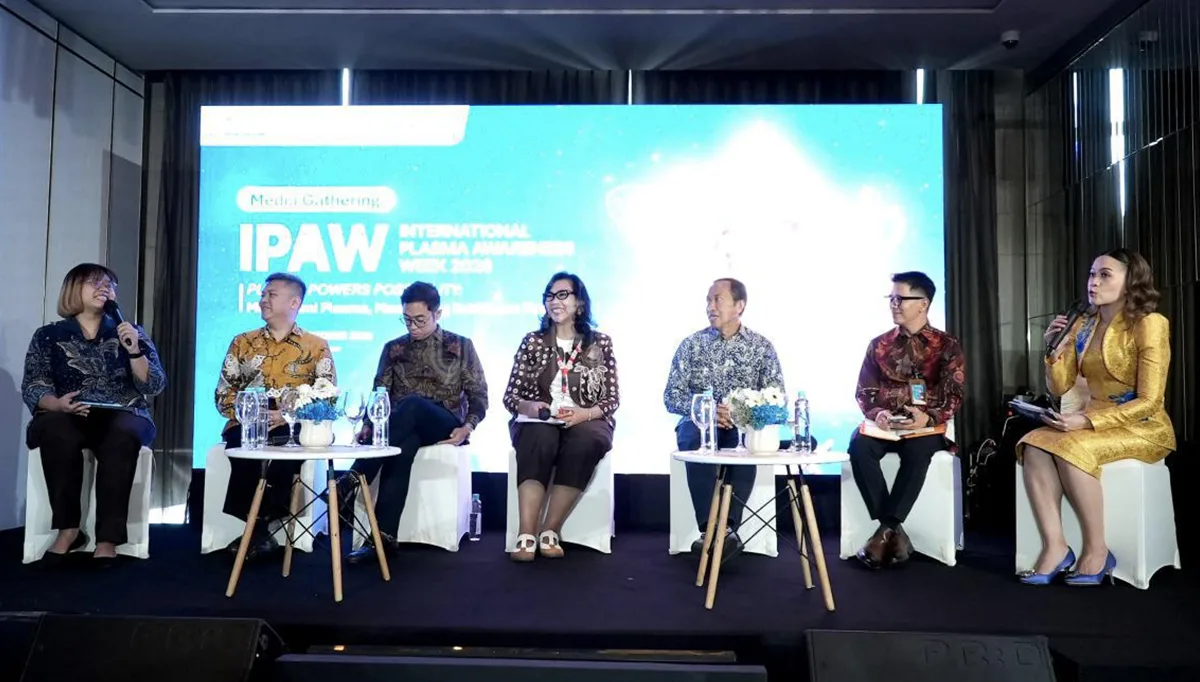
International Plasma Awareness Week (IPAW) 2026, held from October 5 to 9 under the global theme “Plasma Powers Possibility,” provides an opportunity to improve public understanding of plasma, recognize donors’ contribution and PDMPs, and encourage collaboration among stakeholders to build a safe, reliable and sustainable plasma ecosystem in Indonesia.
Dr. Dra. Lucia Rizka Andalusia, Apt., M.Pharm, MARS, Director General of Pharmaceuticals and Medical Devices at the Ministry of Health (Kemenkes), said in her remarks at IPAW 2026 that strengthening Indonesia’s plasma ecosystem requires collaboration across sectors. “Strengthening Indonesia’s plasma ecosystem can be achieved through collaboration among the Government, healthcare institutions, blood and plasma services, patient communities, donors and industry. IPAW 2026 is an important opportunity to improve public understanding, while encouraging these joint efforts,” Lucia said.
Dr. dr. Tubagus Djumhana Atmakusuma, Chairman of the Indonesian Society of Hematology and Blood Transfusion (PHTDI) and the Indonesian Society of Medical Hematology-Oncology (Perhompedin), highlighted the role of PDMPs in patient care. “Plasma-derived medicinal products play an important role in treating patients with blood disorders and other medical conditions. For these patients, long-term and continuous treatment is essential,” he said to media, Wednesday (7/10/2026).
“Strengthening the plasma ecosystem is therefore necessary to ensure the availability of PDMPs that meet quality and safety requirements and are supported by adequate clinical evidence. Healthcare professionals also play an important role by providing guidance and expertise to ensure that the development of Indonesia’s plasma ecosystem meets patients’ needs,” he added.
Meanwhile, dr. Siti Nadia Tarmizi, M.Epid, Kemenkes’ Director of Noncommunicable Diseases, also emphasized the importance of a well-functioning plasma ecosystem as part of efforts to strengthen the national healthcare system. “Plasma-derived medicinal products can play an important role in the long-term care of patients with hemophilia and primary immunodeficiency,” dr. Nadia said.
“Through IPAW 2026, we hope to increase public understanding of plasma and the role of donors, as well as highlighting how individual contributions are connected to patients’ needs. We also hope to encourage stronger collaboration to improve treatment with PDMPs,” she added.
Dr. dr. Teguh Triyono, Sp.PK, Subsp.BDKT(K), Subsp.KV(K), M.Kes, a specialist in blood banking and transfusion medicine, explained that plasma accounts for about 55% of blood volume and contains important proteins, including albumin, antibodies and clotting factors, many of which can be processed into PDMPs.
“Unlike whole-blood donation, plasma is collected using an apheresis machine, which separates plasma from other blood components before returning those components to the donor,” Dr. Teguh said. “The collected plasma can then be processed into various therapeutic products for patients with certain conditions, including hypoalbuminemia, bleeding disorders and immunodeficiency. This is why understanding plasma, how it is collected and the role of plasma donors is important in the patient care journey.”
The availability of plasma begins with eligible donors and proper collection procedures. Head of the Blood Donation Unit Development Division at the Indonesian Red Cross (PMI) headquarters, dr. Linda Lukitari Waseso, emphasized that plasma donors, safe collections and adequate blood and plasma services are all essential to maintaining a reliable supply.
Representing the donor community, Mila Rahmania, head of communications and information at the Laskar Aferesis Berbagi Foundation (YLAB), said people are more likely to contribute when they understand the purpose and impact of their donations. “Many people are willing to contribute when they understand why their contribution matters and how it can benefit others. Sustainable participation is possible through helping donors understand their contribution, ensuring a positive donation experience and showing appropriate appreciation,” Mila said.
“Donor communities also play a role in providing accurate information, addressing misconceptions and building communication & collaboration with patients, healthcare professionals and other stakeholders. With better understanding and positive experiences, more people can gain confidence in supporting patient needs,” she added.
Read More: Basketball: Jusraga Holds Discussion On The Indonesian Basketball Ecosystem, Highlighting Coaching, Regulations, And National Team Achievements
For people living with certain medical conditions, access to PDMPs is essential to maintaining treatment and quality of life. Yusnidar Patah, acting head of the Layman Division and deputy head of Finance at the Indonesian Hemophilia Society (HMHI), one who also lives with severe Hemophilia B, highlighted the need for timely and continuous treatment for people with hemophilia. He said that a strong plasma ecosystem helps create a sustainable supply of therapies for patients in Indonesia.
The same need also comes from the primary immunodeficiency patient community. Dimas Adhi Sugiharto, chairman of the Indonesian Primary Immunodeficiency Patient Foundation (YPIPI), said immunoglobulin is essential for patients with primary immunodeficiency.
“For patients with primary immunodeficiency, immunoglobulin is not simply supportive therapy. It is the treatment we need regularly to stay healthy. Without it, patients are highly vulnerable to repeated severe infections, something that can reduce quality of life and even become life-threatening,” Dimas said.
“Immunoglobulin is made from plasma, so its availability depends heavily on plasma donors. Our challenge is not only availability, but also whether the treatment is affordable and its continuous access. A sustainable plasma supply means a great deal to us, allowing us to continue treatment and live healthy lives like everyone else,” he added.
Cross-sector collaboration is needed to build a safe, reliable and sustainable plasma ecosystem, while supporting the resilience of Indonesia’s healthcare system. Takeda is drawing on its global experience and expertise in plasma collection and processing to support the development of Indonesia’s plasma infrastructure. Its BioLife network operating in various countries allows Takeda to support the development of plasma collection networks in Indonesia in line with applicable quality, safety and regulatory standards.
Andreas Gutknecht, President Director of PT Takeda Life Sciences, said PDMPs are important for patients living with complex and potentially life-threatening conditions.“Improving public understanding of plasma and supporting the development of a plasma ecosystem are important to strengthen Indonesia’s healthcare system. With Takeda’s experience and presence in Indonesia, we are committed to working with the Ministry of Health and other stakeholders, to support Indonesia’s long-term health priorities,” Andreas said.
In line with the “Plasma Powers Possibility” theme, IPAW 2026 highlights how every stage of the plasma journey, from donor contributions and plasma collection to processing and the production of PDMPs, is interconnected and depends on collaboration. Greater public awareness and stronger cooperation among stakeholders can help develop Indonesia’s plasma ecosystem while supporting a sustainable healthcare system and continued access to treatment for patients who rely on PDMPs. (est)
© Copyright 2019 – 2026 by Independent Observer
About the Author