Image by EU Debates
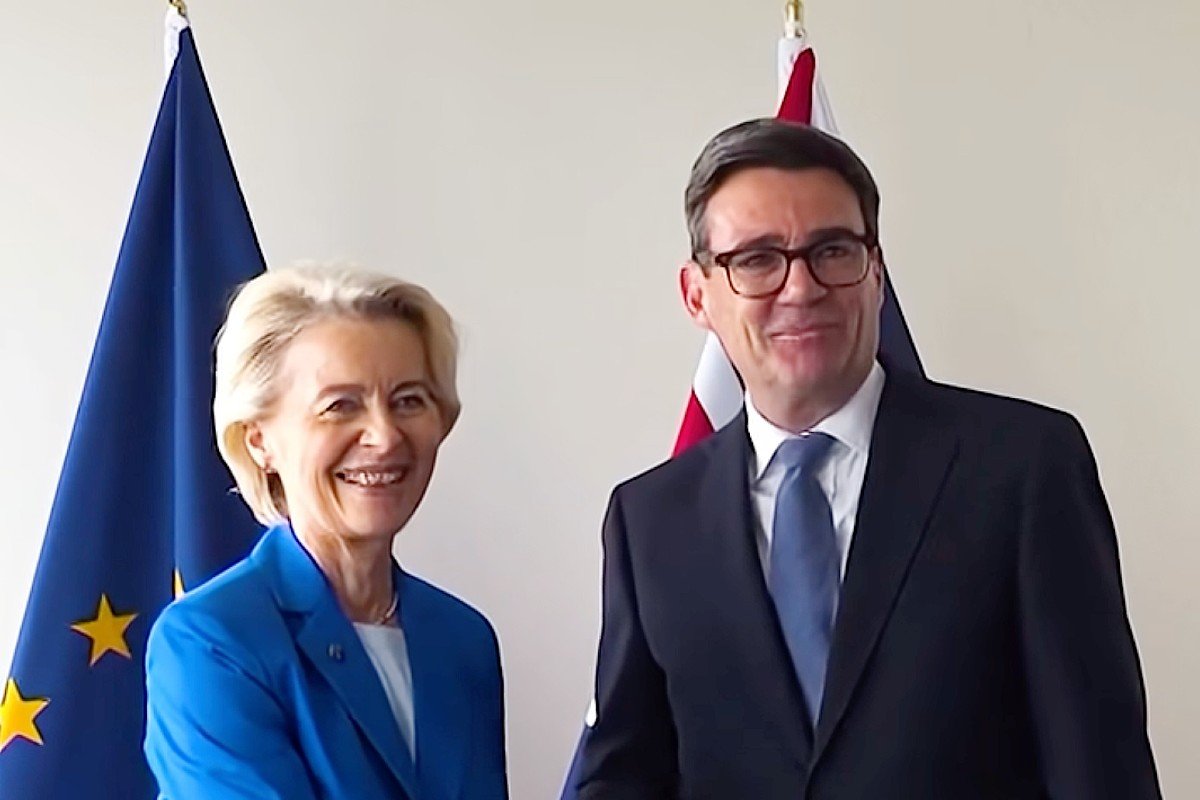
For the first time since Brexit, the government has put Britain’s long-term relationship with the EU back on the table. Andy Burnham has opened the discussion beyond the current reset, with options ranging from carrying on much as we are through a customs union and single-market membership to joining the EU again.
And in a statement to Parliament on Monday, he went further, promising a serious national dialogue about those options. He told MPs that maintaining the status quo wasn’t good enough, and that the British public would be the “boss” at every stage.
It’s certainly a discussion we need. But before deciding where it should lead, we should probably learn the most important lesson from 2016: winning a vote isn’t enough. We need to know what we’re voting for, and if we eventually choose membership, we need something much more important than a narrow majority. We need durable consent for membership.
Leave described an action, not a destination. People may have voted to leave the EU, but they weren’t all voting for one agreed version of Brexit. They could imagine single-market access, controls on immigration, sovereignty, regulatory independence, frictionless trade – or some combination of them. The problem was that not all of those things could be delivered together, and we didn’t really confront the contradictions until after the vote.
That ambiguity helped Leave get their majority, but it also helped create the dissatisfaction that followed. There might have been a majority for leaving, but there wasn’t a majority for one particular Brexit. Theresa May and then Boris Johnson had to grapple with what Brexit actually meant, and to this day, there are people arguing that what we got wasn’t the Brexit they’d voted for.
If Britain moves towards the EU again, we mustn’t make the same mistake in reverse. In June, YouGov found 55% supported joining, against 34% opposed. But when people were asked about joining without our former opt-outs, support fell to 35% with 43% opposed. That gap matters. It means we’ve got a lot of talking to do about what joining actually means.
I think the language is important here. I’d rather talk about joining than re-joining, because it wouldn’t involve simply reversing Brexit, regaining the membership we had before. We’d be applying to join the EU again from scratch, under conditions negotiated when the time comes. We should expect none of the special arrangements we accumulated during our previous membership to return.
So let’s talk about the difficult bits the YouGov poll highlighted. We may as well start with the big one: joining almost certainly means accepting the euro at some point. And there are other important questions to consider. What would Schengen mean for Britain and Ireland? How much would we contribute to the EU budget? Which laws and institutions would we be signing up to?
And we absolutely have to talk about immigration and free movement, because we know how important they were in 2016. Freedom of movement works both ways. Yes, EU citizens would regain rights to live and work here, but equally, British citizens would also regain corresponding rights across Europe. If we’re not prepared to accept that, we need to know now.
We can’t have people voting to join and discovering afterwards that what they voted for wasn’t what they thought they were getting. We’ve done that once and now we’re contemplating reversing it. Do it again, and we’re simply creating the grievance for the next Farage to come along and exploit: this isn’t what I voted for.
There’s no constitutional mechanism that can guarantee that some future government won’t try to take Britain out again. What protects us from that isn’t some clever constitutional lock. It’s having enough people who knew what they were getting into, voted for it and remain comfortable with the choice they made. That’s what I mean by durable consent.
This mustn’t all be about obligations and what we might have to give up. We also need to make a positive case for joining, and I think we’ve spent far too much of our relationship with Europe asking, essentially, what’s in it for us?
I’d like us to turn that around. What can Britain contribute to the EU? What can we do with our European neighbours that we can’t do nearly as effectively on our own, despite our precious sovereignty?
Climate change doesn’t stop at national borders. Neither do security threats. Russia’s invasion of Ukraine has made it very clear that what happens in Europe affects us too, because we are in Europe. These countries are our neighbours. The political uncertainty we’ve seen in the US is another very good reason for Europe to have the ability to act collectively. That doesn’t mean choosing Europe instead of America. We’ll continue to have an important relationship with the US, particularly on security and intelligence. But America isn’t in Europe. We are.
There’s science and research, energy and climate change, security and defence – all areas where we can achieve more together. And Britain has so much to contribute: one of Europe’s largest economies, considerable diplomatic and military capabilities, world-class universities, financial expertise, strengths in renewable energy and a globally influential arts, music and film sector. It’s not just about what Europe can do for us. Britain can be a force for good in Europe too.
And if we decide to join again, I don’t want us to go back demanding British exceptionalism at every turn. If exceptions are negotiated, fine. But we shouldn’t start from the assumption that Britain somehow needs to be treated differently. I’d much rather we said: we want to be part of this. We want to be in the centre of it, not standing on the edge, half in, half out.
None of that means the answer to the discussion Burnham has opened is predetermined. He’s put several options on the table and we should look seriously at all of them. A customs union could remove some barriers to trade in goods, but there would still be border checks and VAT and customs paperwork. Single-market participation could bring much closer economic integration, while requiring Britain to follow many rules that we’d have little influence in making.
But I don’t want this discussion about our new relationship with the EU to be politicians, campaigners, newspapers and social media users shouting at each other for the next few years. I’d like to see citizens’ assemblies held all around the country, bringing together broadly representative groups of ordinary people to hear evidence, question experts and actually talk these things through.
There’s a useful precedent for taking the preparation seriously. Before Scotland’s 2014 independence referendum, the Scottish Government published Scotland’s Future, setting out in detail what it believed an independent Scotland would look like. Some of its assumptions were contested, but at least there was an attempt to say: this is what we’re asking you to vote for.
We should expect that level of seriousness from both sides. Those arguing against joining shouldn’t just be able to say “stay out” and allow everyone who agrees with them to imagine a different version of what staying out means. We’ve done that once.
There doesn’t actually have to be another referendum. A government elected on an explicit pledge to seek EU membership could claim a mandate to do it. But Burnham himself has said it must be done “with the consent of the public”, without yet saying what form that consent should take.
If there is another referendum, though, all the difficult discussion needs to come first. The vote should be the point at which we decide, not the point at which we start working out what we’ve decided. The last thing we want to do is paralyse Parliament again like we did in the aftermath of the referendum.
It’s worth remembering Britain would go into any subsequent accession process in a very different position from any current candidate countries. We were members for 47 years. We have mature democratic and legal institutions, and despite Brexit we remain aligned with the EU in many areas. But all that being said, I don’t think anybody can sensibly promise a timetable now.
What matters first and foremost is getting our own decision right. I want Britain to join the EU. But I don’t want us to scrape over the line with 52% and congratulate ourselves on winning, only to discover afterwards that substantial numbers of people voted for something quite different in their heads.
If Britain chooses to join, I want us to do it wholeheartedly. Not as the awkward country on the edge of Europe, forever asking what special deal we can have, but as a country that has decided this is where it belongs and this is where it intends to play a full part.
That, for me, is the test. Not whether we can win another referendum, but whether we can establish durable consent for membership.
There has never been a greater need for grassroots journalism that investigates the stories that really matter, holds power to account and champions the voices of everyday citizens. We are proudly powered by volunteers but what we do isn’t free.
STAND WITH US for independent, citizen-led journalism that makes democracy stronger, and you will even get some exclusive benefits.
Anna is Editor-in-chief of East Anglia Bylines and a director of the Bylines Network. She is also Chair of Suffolk for Europe.
Before retiring to Suffolk, Anna lived in London all her life, where she spent many years as a learning and development practitioner.
We are a not-for-profit citizen journalism publication. Our aim is to publish well-written, fact-based articles and opinion pieces on subjects that are of interest to people in East Anglia and beyond.
East Anglia Bylines is a trading brand of Bylines Networks Limited which is separate to, but allied with, Byline Times.
Learn more about us
© 2021-2026 East Anglia Bylines. Powerful Citizen Journalism. ISSN 3049-9771
PRIVACY MATTERS. Yes to basic analytics, but no to marketing tracking. We only want to know how many readers we get and from where [see more]. We use this data to understand our community’s interests and support the growth of independent news.
Manage your cookie preferences below:
Essential cookies enable basic functions and are necessary for the proper function of the website.
Google Tag Manager simplifies the management of marketing tags on your website without code changes.
Statistics cookies collect information anonymously. This information helps us understand how visitors use our website.
Google Analytics is a powerful tool that tracks and analyzes website traffic for informed marketing decisions.
Service URL: policies.google.com (opens in a new window)
You can find more information in our Privacy Policy and Privacy Policy.
© 2021-2026 East Anglia Bylines. Powerful Citizen Journalism. ISSN 3049-9771
About the Author