Bangor Daily News
Maine news, sports, politics, election results, and obituaries
For three years, Zachary Borg has been waiting for Maine’s highest court to decide if he will return to prison.
Borg was found guilty of felony aggravated assault, along with several misdemeanors, and sentenced to two years in prison in Penobscot County in 2022. He appealed the ruling and was released on post-conviction bail, having already served about a year prior to his sentencing.
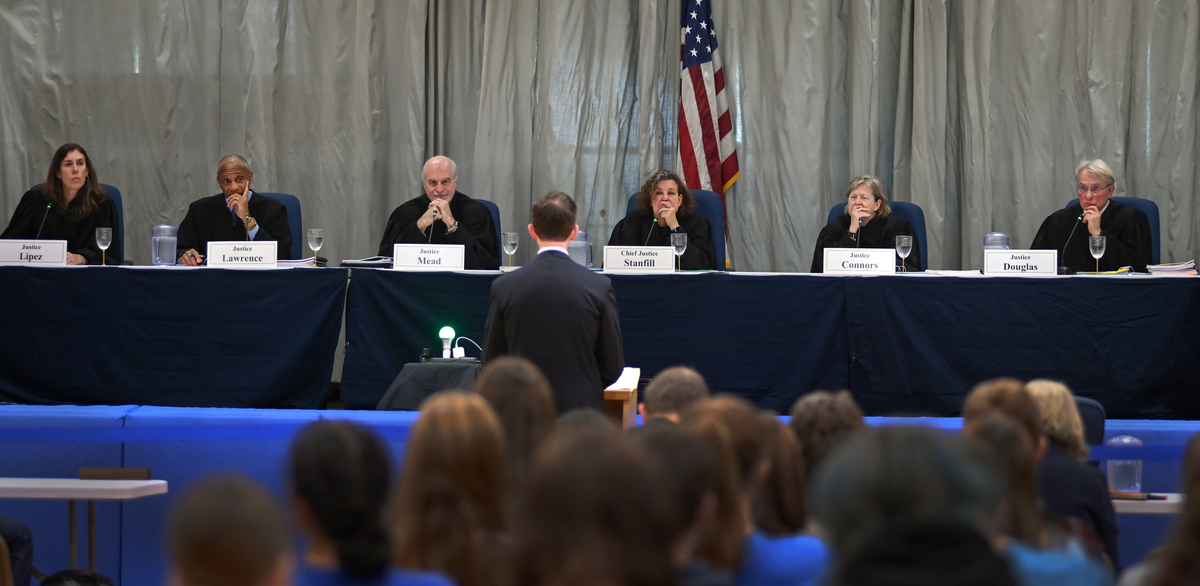
The Maine Supreme Judicial Court heard oral arguments in his case on Oct. 5, 2023. More than three years later, it still has not issued a decision.
“Borg still has this other year of incarceration hanging over his head, not knowing if it’s going to get flipped or not,” said Penobscot County Deputy District Attorney Chelsea Lynds, who prosecuted the case.
Borg’s case is one of many that are pending before the state’s highest court that in recent years has taken longer to issue decisions, data shows. As a result, people are waiting months or even years for verdicts that come with serious ramifications, including ones that could either release them from prison or lock them back up. The decisions could also set precedent in other cases, creating ripple effects through the state’s judicial system.
It took the court an average of 162 days to issue decisions in adult criminal cases in 2025, compared with 59 days in 2020, according to data collected by Maine Indigent Defense Center.
“If they uphold this, then what, he’s just going to be plucked out of his life and go to prison for another year?” Lynds said of Borg’s case. “It’s just not right. How do you even build a life knowing that that’s a potential threat?”
Borg declined an interview. His attorney, Harris Mattson, is now a judge and declined a request for an interview through judicial branch spokesperson Barbara Cardone.
Lynds charged Borg with aggravated assault after his daughter survived a fentanyl overdose in 2021, as endangering a child is only a misdemeanor charge. After Borg’s conviction, other district attorneys filed felony charges in similar cases, Lynds said. Those cases also cannot move forward without a ruling in Borg’s appeal.
“We have all these cases that are just like at a dead standstill,” Lynds said. “We have cases that are two to three years old that cannot move forward because we don’t have a decision on the Borg case.”
The state’s supreme court only hears appeals from lower courts, including everything from divorces to child protective custody to civil disputes to criminal cases. Maine is one of eight states in the country that does not have an intermediate appeals court, meaning the high court is required to hear every appeal that comes forward.
The court does not maintain a list of cases awaiting decisions, Cardone said. It also does not have calendars of oral arguments prior to 2024.
The supreme court heard more oral arguments last week, which meant it was “unlikely to be able to respond to these questions until next week,” Cardone said Oct. 7, the day after she was asked for comment on the decision delays.
Some delays leave people found guilty of crimes sitting in prison or jail for years even when their conviction could be vacated. A Penobscot County man, Derric McLain, was in prison for four years after being convicted on drug charges. Three of those years were spent waiting for the supreme court to decide his case before his conviction was vacated in 2025.
Meanwhile, a case about sexual assault of a child was argued in December 2024 and still has no decision. Another about who has access to Maine beaches has no answer two years later.
One of the highest profile cases that’s still waiting for a ruling concerns the constitutional right to a lawyer. The case, heard in an expedited appeal, was presented in oral arguments on Oct. 7, 2025.
“If you had asked me a year ago, if a year from now there wouldn’t be a decision, I would have naively said, ‘Of course there’s gonna be a decision,” indigent defense attorney Robert Ruffner said.
The issues before the court are whether Mainers’ Sixth Amendment rights to a fair and speedy trial were violated due to how backed-up the state’s court system is and if people accused of committing crimes were unlawfully detained. The court must also decide if low-income people can be released from jail and have charges dismissed if the state is unable to provide a lawyer.
The delay means there is still no relief for the hundreds of low-income people in Maine who are waiting weeks or months without lawyers, which is slowing down the legal process for everyone. If the high court upholds the original order from Kennebec County Superior Judge Michaela Murphy, people stuck waiting for a lawyer can be released from jail or have their case dismissed.
“It appears that the trial court is punting rather than deciding the issue that’s in front of them,” Ruffner said.
A similar crisis in Massachusetts was resolved by its supreme court in about two and a half months in 2004.
Even cases involving children are taking longer than they should. Julian Richter, a lawyer for child protective custody cases, said recent cases he has taken to the supreme court have come back in about four months, without an oral argument.
It’s difficult to tell clients there is no expected timeline, said lawyer Taylor Kilgore, who also works in child protective cases for parents and represents children as a guardian ad litem. Kilgore has had cases take more than six months for a decision.
“I don’t want to call it a black hole, but from our side of things, it kind of is,” Kilgore said. “I send off all of these briefs and this information, and the court says, ‘Thank you, we’ve received them.’ Then I have no idea what that schedule looks like either, and I don’t even get hints of it along the way.”
There are a number of factors likely contributing to the delayed rulings.
One of the biggest culprits is the consistent underfunding of the judiciary, multiple lawyers told the Bangor Daily News.
Maine ranks 45th in the nation for judicial salaries, according to the National Center for State Courts. The state also needs 54 more court clerks, who manage documents and schedules and assist judges, according to a 2022 study. There’s also a statewide shortage of marshals, who provide security. Some positions have been funded, but the full need hasn’t been met, Chief Justice Valerie Stanfill said earlier this year.
Additionally, the supreme court had an incomplete panel of justices for 18 months during the last few years. Working without seven justices can slow the decision process.
Appellate lawyer Rory McNamara blames Gov. Janet Mills for that holdup. Mills knew two retirements were coming and still delayed appointing new justices, he said.
“To me, it shows a disdain, a little bit, for the court,” McNamara said. “Everybody has a quick list of who they want to appoint to the court, go ahead and do it. It doesn’t take much to confirm a judge and to be waiting that long says, ‘Well, it’s not really that important to me.’”
Stanfill questioned why there was a year-long vacancy for one of those seats during her 2025 State of the Judiciary address.
“The Governor has always taken seriously her responsibility to nominate the strongest candidates to the bench,” Mills spokesperson Ben Goodman said. “At times, nominations have been affected by the legislative schedule or circumstances beyond the Governor’s control.”
For example, Mills waited to see if Julia Lipez would be nominated to the U.S. Court of Appeals in 2024, Goodman said. But when it didn’t happen, Mills appointed Lipez to the state’s supreme court and she was confirmed in March 2025.
Chief Deputy Attorney Christopher Taub was appointed to the court by Mills in 2026, after the legislative session ended, so he could fulfill his duties, Goodman said.
Another hurdle lawyers pointed to is the rise in full, high-quality decisions, rather than short memorandums, that the court has issued since Stanfill was sworn in as chief justice in June 2021. All seven justices were appointed in 2020 or later.
“They’ve taken more care to get the law right, and I know that that takes more time,” McNamara said. “But there are ramifications for the system when that happens.”
There is no one fix, lawyers told the BDN. More funding and any amount of transparency would be steps to help, they said.
“I find everyone in the system to be very well-intentioned and trying really hard and acknowledging that the problems exist and trying to come up with the answers the best we can,” Kilgore said. “A little additional transparency on what that process looks like would be helpful to all of us, or an explanation of why it can’t be more transparent.”
Marie Weidmayer is a reporter covering crime and justice. A transplant to Maine, she was born and raised in Michigan, where she worked for MLive, covering the criminal justice system. She graduated from… More by Marie Weidmayer
Your email address will not be published.
About the Author