Sunday, October 18, 2026
Search
18 October 2026 12:48 am WAT
By Omoniyi Salaudeen and Lateef Dada, Osogbo
Nigeria’s political landscape is currently undergoing a profound structural shift as the 2027 presidential campaigns gather momentum. The ruling All Progressives Congress (APC) is consolidating power not merely by winning elections, but by systematically drawing heavyweights from across party lines into its orbit.
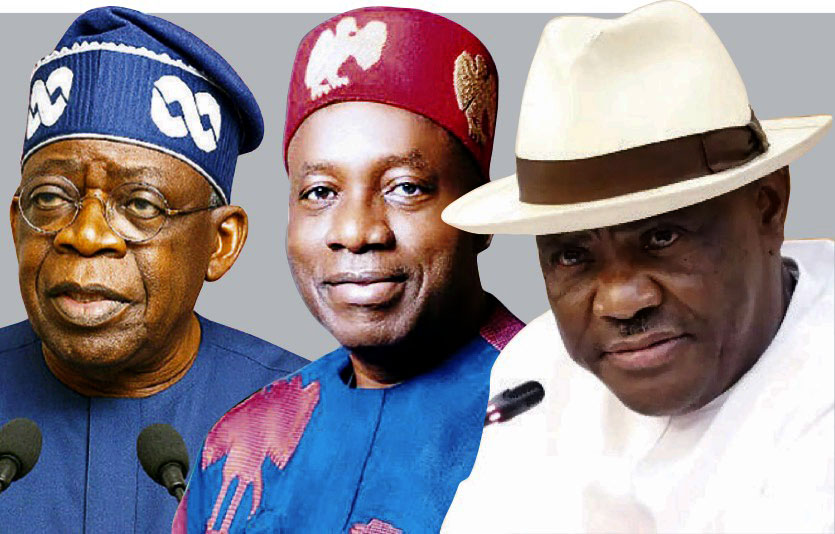
Capitalising on deep fractures within the opposition, President Bola Ahmed Tinubu on Wednesday inaugurated a reconstituted Presidential Campaign Council that redraws traditional party boundaries. The council notably features key cross-party figures appointed as State Campaign Directors General: Governor Ademola Adeleke of Osun State (Accord Party), Governor Charles Soludo of Anambra State (All Progressives Grand Alliance – APGA), and Nyesom Wike, leader of the Peoples Democratic Party’s internal opposition bloc and current FCT Minister.
With these inclusions, the APC effectively commands cross-party structures and state machineries across 34 states.
But beyond the euphoria of this rainbow coalition, the development raises critical questions about the health of Nigeria’s multiparty democracy. The question is no longer how many states fall under the ruling party’s sway, but whether opposition parties retain the vigour to offer voters a meaningful alternative.
While the expanding alliance underscores the APC’s formidable dominance, it also highlights a troubling decline in competitive politics. Does this realignment reflect genuine national spread or a systemic contraction of democratic choice? Some call it unifying politics; others see it as desperation to retain power.
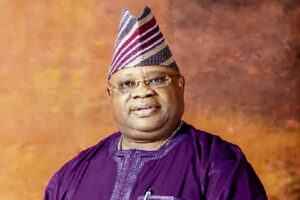
The interpretation of the rainbow coalition depends on whose interest is involved. Senator Rufai Hanga, representing Kano Central and now a member of the Presidential Campaign Council, dismisses the desperation tag: “In politics, when you are gunning for something, you can use any technique to get it. So, I do not see any desperation in the rainbow coalition. It is about individuals trying to secure their interests. All politicians are desperate. Whosoever is looking for something in politics is desperate. Delivering their states is what is needed. If they can deliver their states, it is good for us.”
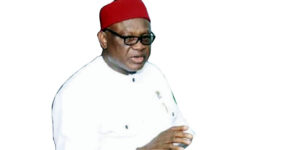
Leader of Afenifere Renewal Group, Hon. Wale Oshun situates it in historical context: “There is nothing to suggest desperation in this context. There was a time President Shehu Shagari formed a government of national unity by bringing in members of the opposition and giving them positions. So, it is a question of Nigerians taking decisions as they go along.
“Politics is dynamic. People make up their minds at various times on what pays them or what they think benefits the country. As long as there is no coercion, I would say those who joined the coalition did so in exercise of their right to be part of the ruling party. If you want to be part of a government of unity, there is no harm in working for that government of unity.
“There was a time when the South-East and the North allied to form a government, while the South-West led by Chief Obafemi Awolowo decided to be in opposition. Opposition parties have the right to provide opposition. But if the opposition decides on its own to be divided, inasmuch as there is no coercion, then no one can blame the government. Nobody has been able to prove they are being coerced to join the government.”
But Chief Chekwas Okorie, founder of APGA, sees desperation and betrayal: “I will be more aligned with those who are reading desperation into what the Tinubu administration is doing, gathering opposition endorsements as if endorsement is victory at the polls. That endorsement is going out of fashion.
“Specifically with regard to the role Soludo is playing, Igbo people are known to be Republican in their approach to many issues. The average Igbo person has his own opinion and expresses it without having to consult any godfather, leader, Imam or church leader. He makes up his mind on what he wants to do. And that is why people regard Igbo as democratic in nature.
“The case of Soludo is scandalous. His role is a betrayal of APGA, which I founded. When APGA was founded, the policy we enunciated was that the presidential ticket of APGA would remain in the South-East until our aspiration for the presidency is actualised on the platform of that party or any other party. It was based on that policy that Chief Odumegwu Ojukwu became our candidate for the 2003 presidential election. Unfortunately, after that, every successive APGA government has betrayed that policy.
“And when they come up with this argument that coalition alliance is to align the people of the South-East with the centre, I tell them they are suffering from some amnesia, because Igbo people have aligned with the centre in various ways.
“In the First Republic, Igbo people coalesced on the platform of NCNC and went into coalition with the Northern Peoples Congress (NPC) and formed a government that was inclusive and national in nature. There was nothing like winner-takes-all. In the Second Republic, Igbo people coalesced on the platform of NPP and used it as a forum for constructive engagement and went into accord with the NPN. It was on the basis of that platform that the late Chief Ume Ezeoke became Speaker of the House of Representatives and Dr Alex Ekweme became Vice President. That combination has never repeated itself since then.
“In the Third Republic, Igbo people were misled into investing 100 per cent of their political capital in the PDP. And for 16 years of PDP in government, there was no single federal-sponsored infrastructure project that was completed in the South-East. By the time Buhari took over, the South-East was littered with uncompleted projects. Yet, all these people talking about alliance with the centre were there when the South-East suffered unprecedented neglect under the PDP. Now they want us to align with the centre. It is either you lose your platform for constructive engagement as was done in the First and Second Republics, or you support your own person to be at that centre. These are the only two options. I regard all of them as saboteurs.”
However viewed, the APC’s political architecture for 2027 relies heavily on political capture, a strategy where incumbent power absorbs potential opposition figures through alignment and strategic appointments. By installing opposition heavyweights as state coordinators for a ruling-party presidential bid, the APC neutralises local resistance without formally dissolving rival parties.
For the APC, this strategy guarantees that state-level logistics, local government machinery and grassroots mobilisation networks traditionally reserved for opposition defence are placed directly at the service of the incumbent president. In effect, it paralyses rival parties at the grassroots, with sitting state governors now leading Tinubu’s own campaign.
Yet this expanding footprint is less a product of overwhelming ideological popularity than a symptom of systemic weakness within the major opposition. The persistent internal crises that plagued the Peoples Democratic Party (PDP) before 2023 have worsened, while efforts to build a unified opposition mega-party have repeatedly stumbled over leadership rivalries, regional ticket balancing and platform disputes.
In this emerging power game, opposition figures aligning with the centre view it as a survival imperative — driven by federal allocation dynamics, security cooperation and administrative incentives.
Critics, however, warn that the erosion of competitive opposition poses serious risks to democracy. When 34 out of 36 state executive structures align behind a single presidential candidate, the checks and balances of a multi-party system begin to falter. A democracy without a viable opposition, they say, ceases to be a platform for voter choice and risks becoming a procedural exercise that merely ratifies a pre-arranged electoral victory.
Factors that will determine coalition’s success
Primarily, the chances of the APC sustaining this rainbow coalition depend on how effectively it manages competing interests, accommodates influential allies, and responds to public concerns about the economy, security and governance.
Wike has argued that the platform is intended to mobilise support for Tinubu without requiring members to join the APC. This could widen the president’s base. However, political endorsements do not automatically translate into votes. The crucial test is whether the new allies can mobilise supporters at polling units and sustain that support on Election Day.
Another factor is how conflict between Wike and APC governors is managed, one of the coalition’s most significant internal challenges. If not well managed, the Progressive Governors’ Forum’s opposition to the alliances could weaken APC support at any level. The dispute centres on Wike’s position that politicians can support Tinubu for president while backing candidates from other parties in governorship and legislative elections.
This raises three critical questions: Will APC governors cooperate with a coalition they fear could undermine their own candidates? Can Wike mobilise support for Tinubu without challenging the authority of APC state structures? Will coalition members agree on a common strategy for presidential, governorship and legislative elections? The answers to these questions matter because support for the same presidential candidate does not necessarily mean agreement on other contests.
Wike’s model offers cross-party cooperation where politicians support the same presidential candidate without abandoning their parties. Yet opposition from APC governors illustrates how difficult it is to sustain such an arrangement when participants have competing interests at other levels.
There is also the problem of political loyalty. History shows that alliances built around influential personalities become vulnerable when interests diverge. A politician may support Tinubu nationally while remaining loyal to another party at state level. Another may join the coalition to protect personal interests or negotiate a stronger position within the ruling establishment. In this scenario, disputes over party structures and access to influence could weaken cooperation.
Other News
More importantly, organisational strength is only one part of the equation. Voters will assess the administration’s record — the cost of living, purchasing power, unemployment, insecurity, electricity supply and the perceived benefits of reforms. A coalition may attract influential politicians, but it cannot assume their supporters will automatically follow. The distinction between political gladiators and voters’ independent decisions will be manifest in the months ahead.
Voters’ behaviour and the ultimate test
As Nigeria approaches 2027, the critical question is whether voters will choose based on party loyalty, regional affinity and personality, or by judging the incumbent’s performance.
Historically, party allegiance, ethnic identity, religious considerations and regional interests have played significant roles. Parties have relied on established bases, while candidates have consolidated regional influence. However, these traditional considerations now compete with growing concerns about economic hardship, insecurity, unemployment and the cost of living.
Nigerians have weathered severe macroeconomic adjustments – fuel subsidy removal, exchange rate unification and escalating food inflation. The incumbent’s handling of inflation, purchasing power, jobs, infrastructure, security and public services will feature prominently.
Yet dissatisfaction with an incumbent does not automatically translate into support for the opposition. Voters may be unhappy but remain unconvinced that alternative candidates have the experience, credibility or solutions to address the challenges.
Consequently, opposition parties must present coherent policy alternatives, demonstrate internal unity and convince Nigerians that a change of government would produce tangible improvements. While opposition parties are capitalising on the current economic hardship, offering a reversal of subsidy removal, criticism alone will not win voters’ confidence.
Ultimately, the 2027 election will test the relationship between political identity and electoral accountability. While it is impossible to predict what consideration will determine the vote inside the polling booth, the Tinubu administration’s performance will be a central issue. On one hand, the ruling party will face questions about its records. On the other, opposition parties will face questions about their unity, credibility, alternatives and capacity to govern. Voters must weigh these against established loyalties.
Economic hardship is real; it alone does not determine how voters will resolve competing considerations. Speaking with Sunday Sun, Senator Hanga expressed confidence that APC will deliver victory to Tinubu. “We will win Kano by the grace of God. Having Kwankwaso as Obi’s deputy holds no water; we will win Kano. There is nothing to suggest that we cannot beat them. I think APC is on its way back to power. We only pray that when it comes back, we have a smooth, fruitful and peaceful dispensation,” he said.
Geopolitical dynamics
The inclusion of these figures is not merely a collection of high-profile names; it is a calculated effort to neutralise historical opposition strongholds.
Osun has historically been a fiercely contested battleground. Adeleke’s alignment under Accord while integrating into the federal machinery creates a unique local dynamic. For the APC, securing Osun removes a major thorn in the South-West, ensuring the President’s home base presents a united, friction-free front.
The development has been welcomed on both sides. The Director of Media and Information for the APC in Osun, Kola Olabisi, stated that the party fully supported any arrangement aimed at ensuring President Tinubu’s victory: “We will not oppose any arrangements to ensure re-election of President Bola Tinubu.”
Similarly, the State Chairman of the Accord Party, Victor Akande, described Governor Adeleke’s new assignment as a call to service, noting that the role demands political maturity, mutual understanding, and unwavering commitment to the broader interests of Osun and the nation. He said the appointment reflects confidence in Adeleke’s capacity to bridge political and social divides, drawing from his goodwill, people-oriented leadership, and trust built with citizens over the years.
Akande acknowledged that the cross-party appointment might spark mixed reactions, but urged residents to view it objectively within the framework of political engagement, national interest and the necessity of fostering constructive relationships across party lines.
For the South East, Anambra serves as a bridge to the centre. The South-East has traditionally been an uphill battle for the ruling party, dominated by regional sentiment and third-force movements like the Labour Party. Soludo commands significant intellectual and administrative capital in Anambra. Having him coordinate within the federal campaign provides the APC with a rare bridge into the South-East mainstream, signalling that absolute opposition isolation is no longer viable for state development or federal negotiation.
Like Osun Accord, Anambra State APGA also welcomed Soludo’s appointment, promising total commitment to Tinubu’s re-election. “In Anambra, it is Tinubu for President, APGA for Senate, House of Representatives, and State House of Assembly,” the party declared.
APGA expressed confidence that Soludo’s intellectual capacity, organisational skills, and political influence across the South-East would help mobilise support for Tinubu’s Renewed Hope Agenda.
At the inauguration of the campaign council in Abuja, Soludo said: “APGA believes in the unity of Nigeria. We believe in the security of Nigeria. We believe in the shared prosperity of Nigeria. And that is part of the reason we are throwing our weight behind the president, who symbolises these three pillars — for the Nigeria of today and the Nigeria of tomorrow.”
By virtue of its strategic position, Rivers State is regarded as the crown jewel. Wike’s integration, retaining his FCT portfolio while commanding Rivers networks, remains critical. Rivers represents immense strategic and financial leverage in the Niger Delta. By anchoring Wike to the centre, the ruling party neutralises what was traditionally a formidable PDP war chest in the nation’s economic heartland.
Opposition’s counter-strategy
The opposition’s immediate counter strategy is renewed alliance talks among Atiku Abubakar, Peter Obi and Seyi Makinde. On Wednesday, six opposition parties reportedly opened consultations with these contenders ahead of 2027. The question is: Can they translate this into a workable alliance capable of challenging the APC, or will personal ambitions, party interests and leadership disagreements undermine the process again?
The issue goes beyond announcing consultations. Opposition parties have repeatedly shown interest in a common front, but the harder task has been agreeing on who should lead, which platform to use, how candidates will emerge and how power will be shared.
Progress will depend on whether actors move from general expressions of unity to binding agreements. Atiku, Obi and Makinde have their own platforms and constituencies. If the coalition settles on one candidate, the others must decide whether to support that person, negotiate alternative roles or continue with individual ambitions.
The G100 Opposition Summit, which preceded the latest consultations, has called for sustained dialogue and a coordinated defence of multiparty democracy. A joint statement about national renewal will not be enough. The coalition must explain how policies will be funded, how parties will be held accountable and how disagreements will be managed. It must also show that candidates and supporters can work together beyond the presidential election — including legislative contests and governance itself.
Fear of Sabotage
The ruling All Progressives Congress (APC) faces severe structural risks of internal sabotage and covert betrayal, despite its headline strategy of building a broad cross-party coalition.
While President Tinubu’s co-optation of prominent southern figures aims to lock down southern electoral blocs, it simultaneously generates deep resentment among traditional northern elites. These northern actors feel their historical influence is being diluted as federal patronage shifts toward southern allies, creating latent friction and a silent revolt that threatens peak voter turnout.
In Nigerian elections, sabotage rarely manifests as open defection. Instead, it operates through covert mechanisms. Lukewarm governors control local structures like traders’ association and transport unions, allowing them to promote preferred candidates while ignoring the presidential ballot. Economic discontent from subsidy removal, currency flotation, and rising food costs provides northern leaders with political cover to execute calculated non-cooperation without facing an explicit political breach.
Furthermore, fluid party boundaries — exemplified by cross-party allies retaining original affiliations — undermine strict party discipline, enabling northern actors to build parallel arrangements with the opposition.
These national vulnerabilities are mirrored at the sub-national level through intense local power struggles, as illustrated in some North-Central states. In Niger State, for instance, disputes over legislative primaries, high-handedness allegations, and local economic pressure complicate gubernatorial alignment with federal policies. In Benue State, a bitter feud between Governor Hyacinth Alia and SGF George Akume has fractured the local party into competing camps, compromising grassroots mobilisation and resource distribution. Similarly, in Kogi, disputes over power rotation and senatorial nominations expose fault lines, encouraging split-ticket voting and silent voter suppression.
Ultimately, top-down federal alignments and cross-party strategies cannot easily override localised power struggles. When state executives, federal appointees, and local aspirants clash in zero-sum battles for dominance, the resulting friction fractures the ruling party’s mobilisation machinery and leaves it vulnerable to election-day sabotage.
Tags:
Get breaking news, exclusive stories, and live updates delivered straight to your phone. Join thousands of readers already following us on Whatsapp Channel and Telegram.
Get live updates & exclusive stories delivered straight to your phone.
Get breaking news, exclusive stories, and live updates delivered straight to your phone. Join thousands of readers already following us on Whatsapp Channel and Telegram.
NHIA earns 2026 special recognition award for industry impact as Sen. Abaribe graces occasion
18th October 2026
Niger NSCDC deaths: Suspended commandant admits ‘costly mistake’, apologises
18th October 2026
Reform success must surpass N77trn 2025 real estate contribution – Mixta Africa
18th October 2026
A/ Ibom: Eno honours his former teacher after 50 years
18th October 2026
2027: I’m more scared of APC’s internal contradictions than Atiku, Obi – Shettima
18th October 2026
Nigeria moving backwards, millions struggling to survive – Peter Obi
18th October 2026
2027: Wike says Tinubu’s re-election key to full economic recovery
October 18, 2026
2027: LP unveils, governorship, dep gov candidates in Lagos
October 18, 2026
INEC: Coalition hails Tinubu’s nomination of new officials
October 18, 2026
Defend Tinubu’s reforms with results, Shettima tasks APC leaders
October 18, 2026
Subscribe to Our Newsletter
FOLLOW US
© 2026 The Sun Nigeria – All Right Reserved.
About the Author