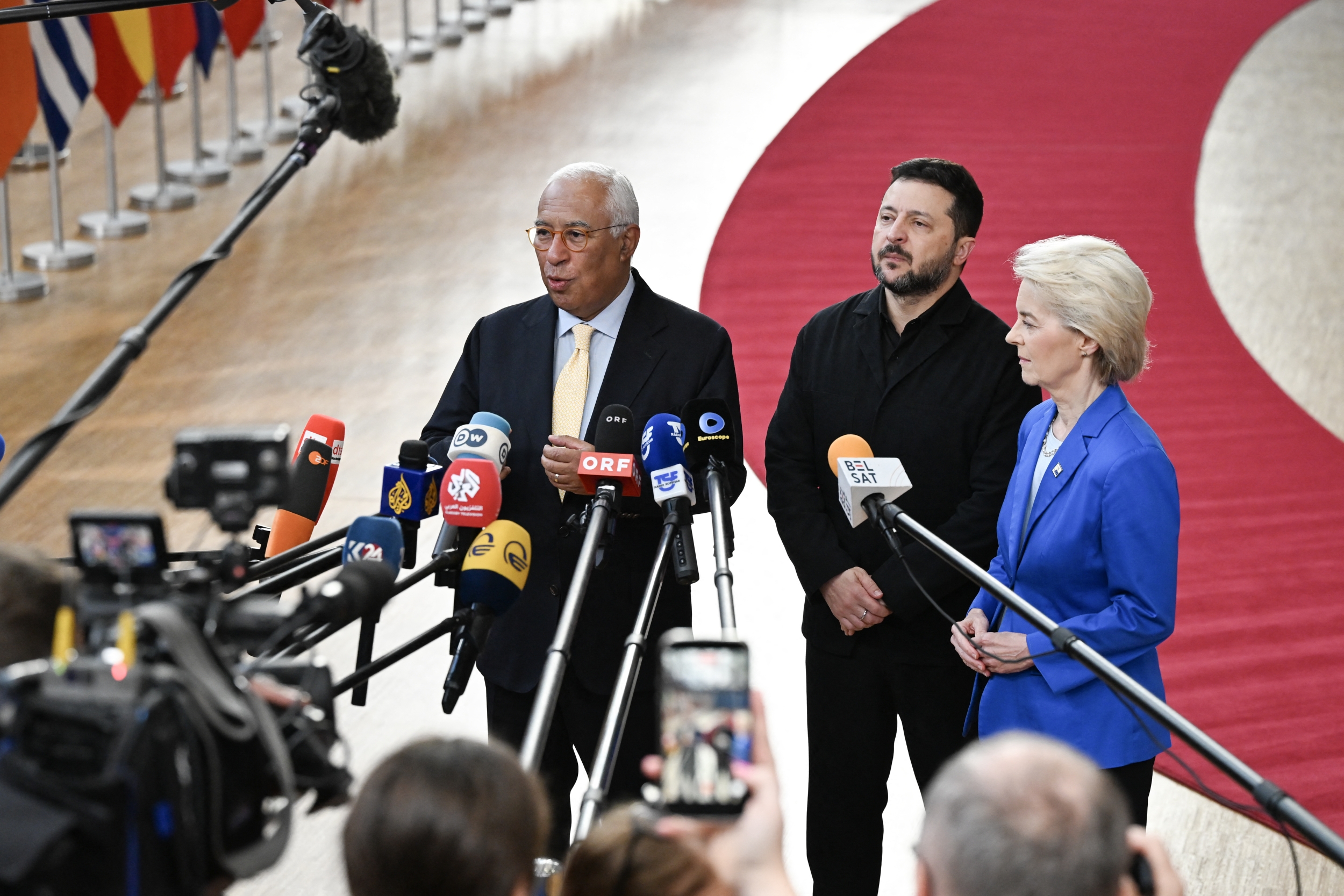
BRUSSELS — Ukrainian President Volodymyr Zelensky stepped into the EU Council building in Brussels on Friday flanked by European Commission President Ursula von der Leyen and European Council President António Costa, delivering remarks that doubled as a pointed contrast to the strain pulling at his relationship with Washington. The summit unfolded against the backdrop of one of the most turbulent diplomatic weeks between Kyiv and the White House since Russia launched its full-scale invasion.
Walking alongside the bloc’s top officials at the entrance to the summit, Zelensky expressed gratitude for the EU’s unwavering backing in terms that left little room for ambiguity. “I’m so thankful that we have such huge support from EU Council, Commission and leaders — real leaders — so that they stay with us from the very beginning of this war,” he said. Trump went unmentioned by name, yet the implicit comparison ignited discussions across Brussels during one of the most volatile stretches in recent Kyiv-Washington relations. When a journalist asked Zelensky whether Trump was leveraging Ukraine as a scapegoat for soaring diesel costs ahead of the November 3 midterm elections, the Ukrainian president paused, offered a measured smile, and replied simply: “This is my answer.”
The week’s friction originated on October 9, when Trump announced on Truth Social that he had concluded a deal with Russian President Vladimir Putin to begin releasing Russian diesel into U.S. and global markets. The opening tranche was set at over 300,000 metric tons, with phased deliveries planned to total as much as 4.8 million metric tons. The U.S. Treasury simultaneously issued a temporary license waiving sanctions on Russian diesel exports through April 2027.
Trump attributed rising U.S. fuel costs in part to Ukrainian strikes on Russian refineries — a framing that most energy analysts and European officials rejected, pointing instead to the ongoing U.S.-Iran conflict as the primary driver of supply disruptions, particularly after hostilities restricted shipping through the Strait of Hormuz and the Red Sea. Bipartisan criticism in Congress mounted swiftly, with lawmakers noting the contradiction of purchasing Russian fuel weeks after the administration had signed new Russia sanctions legislation into law.
European governments responded with immediate alarm. Germany declined to align with Washington’s approach. The EU moved in the opposite direction, with its foreign ministers formally adopting the bloc’s 22nd sanctions package on October 12 — the single largest expansion of the Russia sanctions list since the full-scale invasion began. The measures blacklisted nearly 1,600 individuals and entities within Russia’s military-industrial complex, with more than half linked to ballistic missile production chains, along with drone manufacturers and shipyards servicing submarines. Zelensky publicly characterized the diesel arrangement as a betrayal, and the sharp criticism prompted some EU diplomats to urge him privately to lower the rhetorical temperature, warning the public attacks on Trump were “not helpful” to ongoing negotiations — a request Kyiv showed no inclination to honor.
The rupture deepened when Trump posted on Truth Social on October 11 that Russia and Ukraine had reached an immediate energy ceasefire, declaring it effective immediately and urging both sides not to break it. Ukrainian officials disclosed that Kyiv had first learned of the ceasefire from Trump’s post rather than through any prior diplomatic coordination. Zelensky told Axios the announcement “was news for me,” but said Ukraine would back the agreement if Moscow complied. Kyiv suspended strikes on Russian oil refineries in the days that followed.
Russia did not comply. On the night of October 13 into 14, Russian forces launched the most intense combined assault on Ukraine’s energy grid since the previous heating season ended, using 39 ballistic missiles and more than 120 attack drones and loitering munitions. All three of Kyiv’s combined heat and power plants were hit directly, along with energy facilities in Kharkiv and the surrounding region. More than 600,000 people lost electricity. Von der Leyen made clear where the EU placed blame, telling summit participants in Brussels that the bloc had supported the energy ceasefire but had not seen Russia respect it for even a single moment. On October 15, Zelensky announced Ukraine would resume its refinery campaign, declaring the ceasefire dead after three days during which Moscow continued striking Ukrainian infrastructure without pause.
The October 14 assault exposed a critical gap in Ukraine’s defenses. CNN reported on October 15, citing a source familiar with the situation, that Ukraine had fully depleted its stockpile of interceptor missiles for the U.S.-made Patriot air defense system. That source told CNN that nearly all of the ballistic missiles in the overnight attack went unintercepted due to the shortage. Earlier access by CNN journalists to a Patriot position inside Ukraine had already revealed that some launchers had not fired for roughly six weeks, a reflection of how long the depletion had been accumulating. The shortage was compounded by the U.S.-Iran conflict, which drew heavily on global Patriot interceptor production and U.S. stockpiles. Trump declined to redirect available American reserves toward Ukraine.
On the margins of the Brussels summit, Zelensky signaled that Kyiv could moderate its position on the energy ceasefire if Washington agreed to deliver additional Patriot interceptors — a clear indication that air defense supplies have become a live bargaining chip in a diplomatic standoff that shows no signs of resolution.
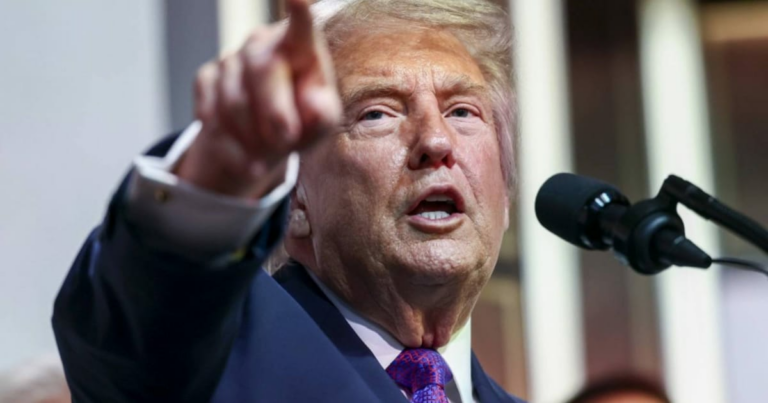
Trump’s language toward Zelensky has grown notably more combative. In a Newsmax interview broadcast Thursday, the president said he found the Ukrainian leader “more difficult to deal with than Putin” without once acknowledging Russia’s invasion. On October 10, Trump publicly called for Ukraine to replace its president, a remark that drew swift condemnation from European capitals.
Standing alongside EU leaders in Brussels, Zelensky framed the months ahead in terms of both strategic urgency and resolve. “We want to end this war as quick as possible. We don’t see now signals from Russian side that they are ready for this,” he told reporters after the summit session. He appealed to European leaders to address a projected 2027 budget gap estimated at €70 billion (approximately $79 billion) — a figure that captures the full weight of sustaining Ukraine’s defense through another year of war, with Washington’s reliability now an open question across European capitals.
© {{Year}} Latin Times. All rights reserved. Do not reproduce without permission.
About the Author