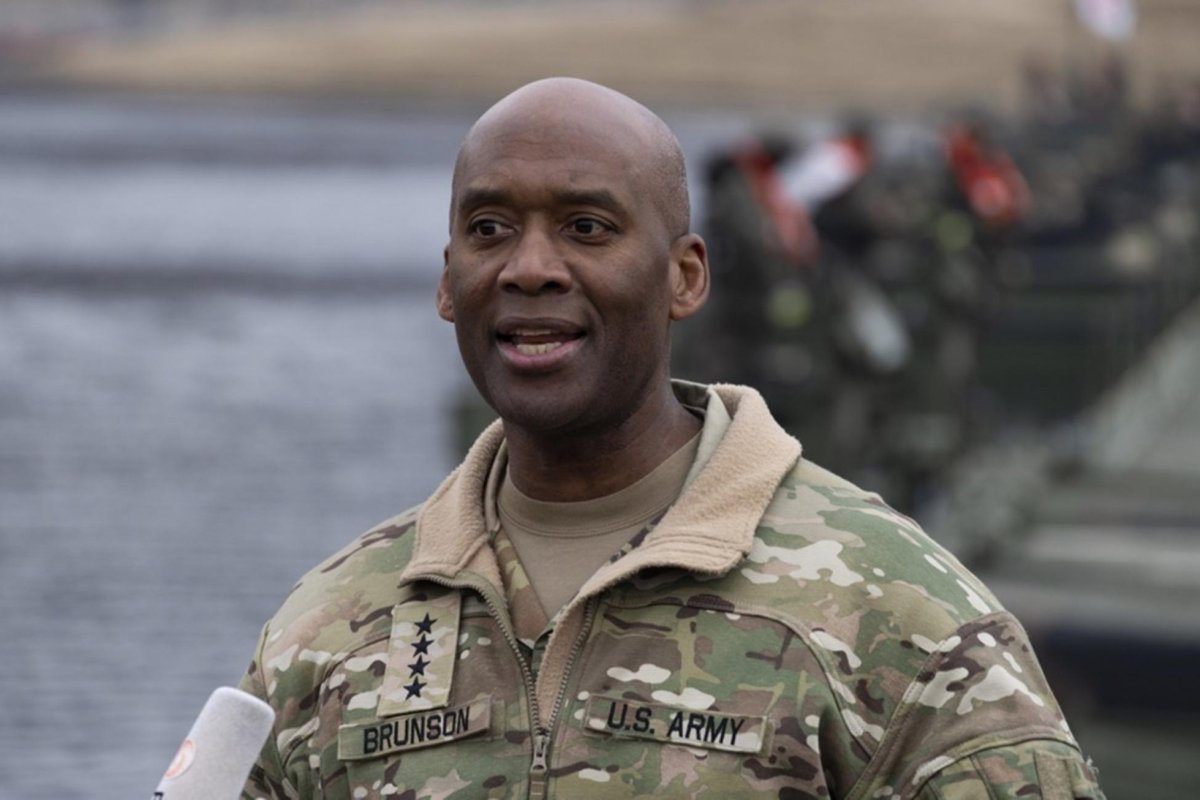
Oct. 18 (Asia Today) — Remarks by Gen. Xavier Brunson, commander of U.S. Forces Korea and the United Nations Command, have sparked controversy over South Korean territorial sovereignty and the authority of the U.S.-led command in the Demilitarized Zone.
Brunson’s assertion that South Korea begins at the southern boundary fence of the Demilitarized Zone prompted criticism from South Korean officials and lawmakers, highlighting longstanding questions about the division of responsibilities between Seoul and the United Nations Command under the Korean War armistice.
The United Nations Command issued an urgent clarification Sunday, declaring that South Korea’s sovereignty was not in question.
South Korea’s Defense Ministry, however, described Brunson’s statement as his personal view and reiterated the government’s position on territorial sovereignty.
The controversy has emerged alongside differences between Seoul and Washington over the conditions for transferring wartime operational control of South Korean troops from the United States to South Korea.
Together, the disputes have renewed debate about authority within the Demilitarized Zone and the future command structure of the U.S.-South Korea alliance.
Brunson’s remarks raise questions over DMZ authority
The dispute originated during a seminar at a Washington think tank Wednesday, when Brunson discussed the United Nations Command’s jurisdiction in the Demilitarized Zone.
Referring to the fences erected on either side of the Military Demarcation Line, Brunson asked where the Republic of Korea begins and ends.
“From a United Nations Command perspective, the Republic of Korea begins at the southern fence,” Brunson said, explaining that he was responsible for administering the area to maintain the armistice.
The Demilitarized Zone was established under the 1953 Korean War armistice agreement as a military buffer extending approximately 1.2 miles north and south of the Military Demarcation Line.
Brunson’s remarks prompted concern that the United Nations Command’s armistice-related authority was being equated with the legal boundaries of South Korean sovereignty.
The controversy centered on whether military administrative authority within the Demilitarized Zone should be interpreted as affecting South Korea’s territorial jurisdiction.
United Nations Command clarifies sovereignty position
As criticism intensified, the United Nations Command issued a formal statement Sunday declaring that “the Republic of Korea’s sovereignty is not in question.”
The command said Brunson’s remarks were intended to explain the responsibilities assigned to the United Nations commander under the armistice agreement concerning the Demilitarized Zone and the Joint Security Area.
It emphasized that the command exercises military and civil administrative responsibilities, along with responsibilities concerning civilian relief, in the portion of the Demilitarized Zone south of the Military Demarcation Line.
The statement said those responsibilities are military and administrative in nature and neither change South Korea’s sovereignty nor seek to address sovereignty questions.
The command also reaffirmed its commitment to strengthening the U.S.-South Korea alliance and defending South Korea and its people.
The clarification distinguished the command’s responsibilities for maintaining the armistice from the sovereign authority of the South Korean state.
South Korean Defense Ministry distances itself from remarks
South Korea’s Defense Ministry also sought to clarify the issue, describing Brunson’s comments as the commander’s personal view.
The ministry reiterated that the government’s position on territorial sovereignty remained firm.
It said Seoul would continue close consultations with the United Nations Command to ensure that South Korea’s exercise of sovereignty within the Demilitarized Zone could coexist with the command’s responsibilities for armistice management.
The remarks also drew criticism from ruling party lawmakers.
Rep. Kim Byung-joo of the Democratic Party, who serves as a presidential adviser on national defense policy, said Saturday that Brunson had crossed a line by infringing on South Korea’s territorial sovereignty.
Kim called for Brunson to withdraw the statement and apologize to the South Korean people.
Sovereignty and armistice authority are legally distinct
At the center of the controversy is the distinction between national territorial sovereignty and administrative powers established under the Korean War armistice.
Article 3 of South Korea’s Constitution defines the country’s territory as the Korean Peninsula and its adjacent islands.
The United Nations Command, meanwhile, exercises military management responsibilities under the armistice agreement, including access controls and maintenance of the cease-fire arrangements within the Demilitarized Zone.
The existence of those responsibilities does not mean that territory south of the Military Demarcation Line falls outside South Korea’s constitutional territorial claims.
Nor does the command’s authority to administer armistice arrangements extinguish South Korean sovereignty over the area.
The two authorities arise from different legal frameworks.
Nevertheless, practical questions can emerge where their responsibilities overlap.
Access authorization, infrastructure construction and military activities within the Demilitarized Zone may involve both South Korean government authority and the United Nations Command’s armistice management responsibilities.
The controversy has underscored the need to clarify consultation procedures and the limits of each side’s authority.
Wartime operational control adds another layer of tension
The dispute has been compounded by differences over the timing and conditions for transferring wartime operational control to South Korea.
Seoul has been pursuing an early transition, provided that previously agreed conditions are satisfied.
U.S. commanders have emphasized the need to consider changes in the security environment and the South Korean military’s ability to conduct operations under revised war plans.
At the same Wednesday seminar, Brunson said the conditions governing the transition had changed.
“None of us can say the conditions haven’t changed,” Brunson said. “The conditions have changed, and because we have changed the plan, there are new standards.”
His remarks suggested that assessing South Korea’s readiness for wartime operational control should involve not only previously established conditions but also updated operational plans and evolving security threats.
Defense Minister Kang Shin-chul told lawmakers during a parliamentary audit Thursday that the ministry had protested Brunson’s public remarks to the U.S. side.
However, the remarks alone do not establish that Washington has formally opposed the transfer or changed the two governments’ existing agreements.
Three command roles complicate alliance management
Brunson simultaneously serves as commander of U.S. Forces Korea, the United Nations Command and the South Korea-U.S. Combined Forces Command.
The arrangement is commonly described as a triple-hatted command structure.
Although the three organizations have distinct legal foundations and missions, they are led by the same commander.
That arrangement can amplify the diplomatic and political impact of public remarks concerning the Demilitarized Zone, armistice responsibilities and wartime operational control.
Even if wartime operational control is transferred and a South Korean general assumes command of the future Combined Forces Command, the United Nations Command’s responsibility for maintaining the armistice would remain a separate issue.
The transition would therefore require clear arrangements governing the respective roles of the two commands and their coordination over matters involving the Demilitarized Zone.
The latest controversy illustrates the challenge of maintaining stable armistice arrangements while respecting South Korea’s territorial sovereignty and military decision-making authority.
With the United Nations Command having clarified that its responsibilities do not alter South Korean sovereignty, attention is likely to turn from the dispute over Brunson’s wording to the institutional arrangements governing overlapping authority.
The central question is how Seoul and Washington can reconcile the United Nations Command’s armistice responsibilities with South Korea’s sovereign authority as the allies consider the future of their combined military command structure.
— Reported by Asia Today; translated by UPI
© Asia Today. Unauthorized reproduction or redistribution prohibited.
Original Korean report: https://www.asiatoday.co.kr/kn/view.php?key=20261018010005734
About the Author