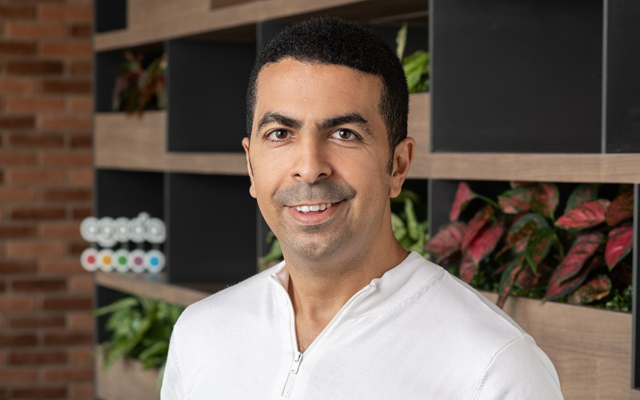
As the Middle East’s travel market expands beyond luxury tourism, Agoda’s vice president of supply, Tarik Fadil, discusses changing Asian traveller preferences, growing interest in secondary destinations and the importance of localisation for accommodation providers What major changes are you seeing in the Middle East travel market?
We are seeing a few significant changes. The first is greater diversity in the types of customers visiting the region, alongside a broader range of accommodation and travel experiences.
The Middle East has traditionally been perceived primarily as a luxury destination. However, sustained investment in infrastructure has helped expand the market beyond luxury, with more midscale and affordable accommodation options, activities and experiences. These broader offerings are attracting new types of travellers.
We are also seeing greater diversity in travellers’ origins. In 2025, searches on Agoda for the Middle East were 20 per cent higher than in 2024.
The other major change is the growing importance of localisation and personalisation. A one-size-fits-all approach no longer works. Accommodation partners need to adapt their offerings, including food, payment methods and the guest experience, to suit different customer groups.
In short, the market is diversifying in terms of both its offerings and its customers, making localisation increasingly important.
India is one of the key Asian markets for the Middle East. Which other Asian markets are driving growth?
There is no single clear winner. India remains an important traditional market and continues to grow steadily, with further potential. China is also performing well. South Korea, Indonesia and Malaysia are also growing strongly. Four or five years ago, these markets accounted for a smaller share of the mix. Today, some of our accommodation partners rank South Korea among their top one or two source markets.
These travellers often require a high degree of localisation. For many Asian travellers outside India, a trip to the Middle East is a longhaul journey. When people travel longhaul, they want the experience to be as frictionless as possible. The region has an advantage because visa processes are easy for many travellers and there are numerous direct flights from different parts of Asia.
Which Middle Eastern destinations are popular with Asian travellers and are any emerging destinations attracting more interest?
The established hubs remain important. If we look at cities rather than countries, Dubai, Istanbul, Doha and Riyadh continue to be major destinations. At the same time, we are seeing encouraging growth in secondary destinations.
In the UAE, for example, searches for Fujairah in 2025 were more than 41 per cent higher than in 2024. Searches for Ras Al Khaimah increased by more than 33 per cent, while Ajman recorded growth of more than 35 per cent. This points to rising interest, particularly among domestic and regional travellers, in destinations beyond the main hubs.
This is not limited to the Middle East. We are seeing a similar pattern globally, including in Asia. In the first half of 2025, more than 34 per cent of searches in Asia were for secondary destinations. Travellers increasingly want to explore new areas, creating opportunities for destinations that may previously have received less attention.
We are working closely with accommodation partners in places such as Fujairah, Ras Al Khaimah and Ajman to help them strengthen their offering. We also work with tourism industry partners, including local tourism authorities, to help them attract Asian travellers and use market insights to understand what these customers want.
The broader trend is diversification, not only in the origins of visitors but also in the destinations they choose within the region. Travellers are increasingly looking beyond the established hubs.
How has the recent geopolitical situation impacted the market and how is recovery progressing?
There has been an impact, particularly on longhaul travel. This has been a global trend rather than something limited to the Middle East.
The region has benefited from relatively resilient domestic and intra-regional demand, which has helped support our partners. Another positive factor is that long-term development plans have remained in place. Investments announced or under way before the conflict are continuing.
For example, work at Al Maktoum International Airport is continuing as part of its long-term ambition to become the world’s biggest airport. Ras Al Khaimah is also continuing its development plans, including the target of having 20,000 hotel rooms by 2030. These are encouraging signals that the region remains focused on its long-term growth.
The region has demonstrated resilience, and that has helped the recovery. It is difficult to give a precise timeline for a full return to last year’s levels, but continued investment and improving connectivity are positive indicators.
How is Agoda helping independent hotels and smaller accommodation providers in the Middle East compete with large international brands?
We are focusing on three main areas. The first is data and insights. Large hotel chains may have the resources to purchase market research, but independent properties often do not. We share insights with them about Asian markets, for example, and help them identify which customer groups are most relevant to their properties.
We also explain what different travellers may expect from their stay, from food preferences to the check-in process and the overall hotel experience. For example, understanding the expectations of Japanese guests can help a property tailor its services more effectively.
The second area is visibility and marketing tools. We provide independent hotels with tools that help them present their properties effectively on Agoda and reach customers. Our approach is targeted, and rather than asking a hotel to market itself to everyone, we work with the partner to identify its priority segments and then focus on marketing exposure and campaigns accordingly.
For instance, if a hotel wants to attract more South Korean or Indonesian guests, we can help it understand when those travellers are most likely to travel, including public holidays and school breaks. That allows the property to plan its campaigns around periods when families or couples are more likely to take a trip.
Thirdly, a few years ago, Agoda had one office in the region, in Dubai. Today, we have three offices in the MEA region (the UAE, Saudi Arabia and Egypt), and we also have a presence in Turkey. Being present in these markets helps us work more closely with independent accommodation providers and support their growth. Large hotel chains may have regional headquarters in Dubai, but independent properties benefit from more direct, local support.
How important are alternative accommodation options such as villas and apartments?
They are very important. The trend began during the Covid-19 pandemic and has continued since then. I see two main drivers.
First, the mix of source markets is changing, and travellers from different countries have different expectations about where they want to stay and what they expect from accommodation. An Indian traveller may have different requirements from a Japanese traveller. This increases the importance of having a broad range of accommodation types.
Second, people visit the Middle East for more than leisure or business. They travel for family visits, events, wellness breaks and other experiences, each of which can create demand for different types of accommodation.
At Agoda, we have invested significantly in this segment. We now have more than 200,000 alternative accommodation options in the region, and that number continues to grow. This segment is becoming increasingly important.
How are travellers using AI to plan their holidays, and how is Agoda adapting to this trend?
AI is becoming increasingly important in everyday life, and travellers are using it when considering and planning trips. One data point we have seen is that around 63 per cent of Asian travellers say they use AI when planning a trip. They use it to explore where they want to go and what kind of travel experience they are looking for.
AI is also changing how people search. Traditionally, a traveller might have searched for a ‘five-star hotel in Dubai near the Burj Khalifa’. Searches are increasingly becoming more intent-led, such as looking for a weekend break close to home with good food or a particular type of experience. AI tools then suggest options based on that intent.
This makes it critical for accommodation partners to provide clear, relevant content that reflects what different customers are looking for. They also need strong localisation strategies so that when an AI tool recommends a property, the information is relevant to the traveller and helps them make a booking.
Onyx Hospitality Group earns industry recognition across APAC
12th Global Tourism Economy Forum Macao 2026 announces key speakers and agenda highlights
Phuket gets its first all-inclusive Riu experience
Discover Sentosa your way with four distinctive stays
From beaches to boardrooms: Travel preferences in Asia are changing
MGMC 2026 unlocks new MICE opportunities in Moscow
Crisis · Resilience · Evolution: Building a tourism economy for a shared future
Advertise with us
Is Your Business Listed On TTGmice Planner Online?
TTG Asia
September-October 2026
PATA Travel Mart 2026
TTG Asia, TTGmice
Cruise Supplement 2025
TTG Asia Luxury
June 2026
TTG Travel Awards 2025
All Rights Reserved
About the Author