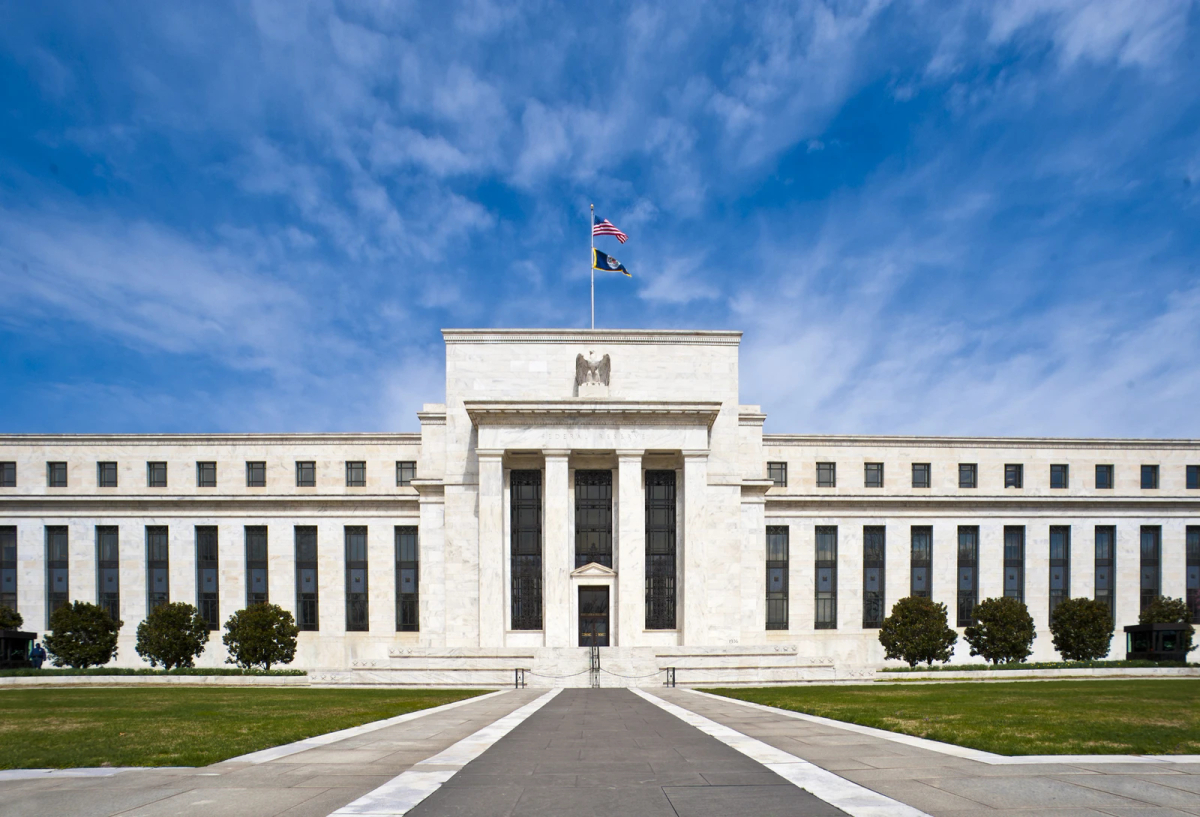
U.S. think tank the Brookings Institution has published a comprehensive institutional reform proposal for sharply reducing the Federal Reserve’s asset holdings. It estimates that by overhauling the mechanism for supplying liquidity to banks while simultaneously easing regulations on the cash banks hold on hand, the Fed’s total assets could be cut from the current roughly $6.8 trillion (about ¥1,075.5 trillion) to about $4.5 trillion (about ¥711.7 trillion).
The paper was written by Chris Hughes, a nonresident fellow at the Brookings Institution’s Hutchins Center on Fiscal and Monetary Policy. He estimates that reserve balances within the financial system could also be reduced from the current roughly $3 trillion (about ¥474.5 trillion) to around $1 trillion (about ¥158.2 trillion). Noting that Fed Chair Kevin Warsh places importance on shrinking the balance sheet and has established a working group to study how to achieve it, Hughes argued that this is a good opportunity to undertake bold institutional reform.
Hughes stressed that “there are not many opportunities to review the Fed’s operating system. This opportunity should not be wasted.” He projected that if the reforms are realized, “the Fed’s asset size relative to gross domestic product (GDP) would be the smallest since 2008, and the interest paid to banks would fall to about one-third.” In recent years, the Fed has fallen into unprecedented losses due to the growing burden of interest payments on its asset holdings.
The centerpiece of the proposal is a shift away from the current “ample reserves” system. Under this system, the Fed supplies large amounts of funds to the financial system and steers short-term interest rates through complex policy tools and periodic asset purchases. Hughes proposes replacing this with a new “flexible reserves” system that supplies liquidity nimbly in response to market funding demand.
The ample reserves system was built after the global financial crisis about 20 years ago. The Fed conducted large-scale bond purchases to complement a policy rate cut to near zero, aiming to stimulate the economy and stabilize markets. It also made massive asset purchases during the COVID-19 pandemic, with its holdings expanding from under $1 trillion to $9 trillion (about ¥1,423.5 trillion) in 2022. It has since been reducing its bond holdings.
Note: Yen conversions are reference figures mechanically calculated at ¥158.2 per dollar.
Many Fed officials believe that although the asset size is large, the ample reserves system functions effectively in actual market conditions. Many also take the view that banks holding large amounts of cash are more resilient during financial instability. New York Fed President John Williams said in a September 22 speech that the current system “has proven highly effective at controlling interest rates and maintaining the smooth functioning of key financial markets.”
Meanwhile, Chair Warsh and others who are critical of large-scale asset holdings believe that the Fed’s massive holdings of Treasuries and mortgage-backed securities (MBS) distort financial markets and involve it too heavily in the formation of long-term interest rates. However, Warsh himself acknowledges that the current system was built over many years and cannot be changed in a short period.
In his paper, Hughes argued that “a large, fixed reserve balance is not necessary for the effective conduct of monetary policy. A smaller permanent reserve balance, complemented by flexible lending facilities, can adequately meet the need.” Specifically, he recommends removing the usage cap on the Standing Repo Facility, which supplies funds quickly to eligible financial institutions, and setting an interest rate above the rate paid on reserve balances. He also included the creation of a new “term liquidity facility” that would supply four-month funds through auctions against a broad range of collateral.
He further mentioned the need to maintain the discount window, an emergency lending tool, and to shift asset holdings from being centered on long-term bonds to being centered on short-term Treasuries. For the target rate in policy operations, he called for adopting the Secured Overnight Financing Rate (SOFR) rather than the federal funds (FF) rate.
In parallel with introducing such a new system, he also emphasized the need to reduce financial institutions’ demand for reserves themselves through a review of bank regulations and changes to how the Treasury operates the Fed’s checking accounts. “The new liquidity supply system and policies to curb reserve demand are mutually complementary, and a permanent balance sheet reduction cannot be achieved with either alone,” he wrote.
He urged the Fed’s working group to present a concrete roadmap toward asset reduction rather than merely listing options. “Overhauling the operating system involves multiple policy tools and authorities, so strong leadership from the chair is essential,” he said, indicating that legislation by Congress could also be an option if necessary.
If realized, the Fed’s involvement in the Treasury market would shrink, potentially improving the price discovery function of long-term interest rates. In short-term funding markets, reserve balances would fall sharply while reliance on flexible funding tools such as the Standing Repo Facility would increase. For financial institutions, this would mean changes in daily funding costs and liquidity management methods, and if accompanied by looser bank regulations, it would also affect the management of capital adequacy ratios and liquidity coverage ratios. However, Chair Warsh himself acknowledges that institutional change takes time, and whether the working group’s conclusions will lead to concrete measures remains uncertain.
The news and data on this website are for reference only and do not constitute investment advice or an offer to buy or sell. Information is sourced from exchanges and public sources, and may be delayed, interrupted, or updated. While we strive for accuracy, we do not guarantee timeliness, correctness, or completeness. Content may include external links for which we are not responsible. By using this site, you agree that we and our partners are not liable for any losses. Investment carries full responsibility; please carefully assess risks and consult professionals. If there are errors in the content, please contact us for correction.
About the Author