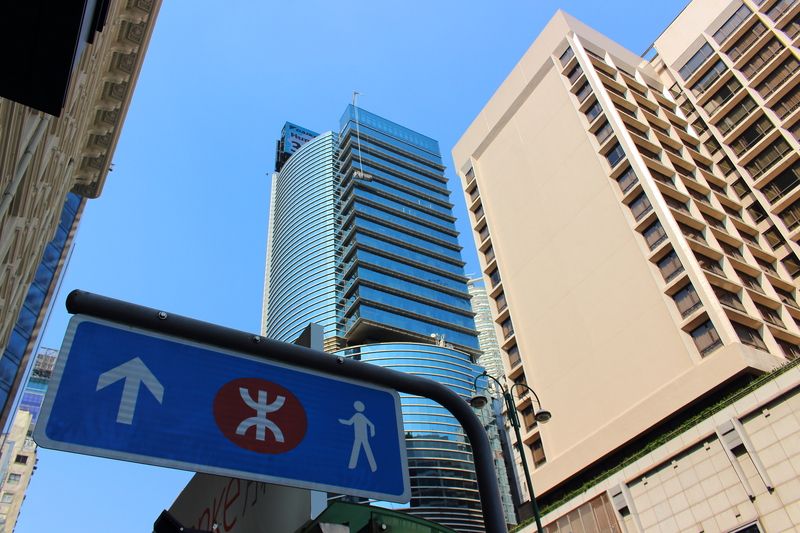
Hong Kong’s mass transit operator MTR Corporation is looking to tap onshore renminbi liquidity in China for a loan of up to Rmb30bn (US$4.5bn), widening its funding base as a multiyear railway expansion drives heavy borrowing needs.
The proposed seven-year facility is expected to fund MTR’s planned projects in the Northern Metropolis, Hong Kong’s planned development near the border with China. The facility will bring onshore lenders in the mainland into MTR’s financing mix alongside the international banks and bond investors that have already provided funding.
Prospective lenders are expected to participate through non-resident account structures, allowing the borrower to access potentially lower-cost onshore renminbi liquidity from Chinese and international banks while also carrying symbolic significance ahead of the 30th anniversary of Hong Kong’s handover next July.
“A deal from a prominent borrower such as MTR could support the internationalisation of the renminbi by showing a further cross-border use for the currency and linking onshore bank liquidity with Hong Kong financing demand,” said a banker in Hong Kong.
Hong Kong has long positioned itself as the leading offshore renminbi hub. Its first five-year plan, unveiled in September, makes strengthening that role a core goal, with measures to improve liquidity arrangements and expand renminbi products. A facility drawn through non-resident accounts would fit that direction.
“A large renminbi loan from a Hong Kong bellwether would be a useful demonstration that onshore funding can be deployed offshore for infrastructure,” said another loan banker at a Chinese bank.
But bankers cautioned that symbolism alone would not settle the matter.
“It helps with relationships and goodwill, but MTR is a commercial borrower. The numbers have to work after swap costs and fees,” said a Hong Kong-based senior loan banker. “A successful deal could still set a precedent. If MTR does it, other Hong Kong corporates and quasi-sovereign names could take a closer look at onshore renminbi loans.”
While the cost of borrowing onshore in China could be potentially appealing, it would come with challenges.
Onshore lenders in China are restrained by rules meant to curb aggressive competition. These rules require syndicated lenders to comply with the market interest rate pricing self-disciplinary mechanism, which does not set a numerical lending floor but discourages aggressive undercutting.
Moreover, the appeal of an onshore loan will hinge on more than the headline interest rate.
“Onshore renminbi liquidity would broaden MTR’s options, but would not necessarily make the facility cheaper than other borrowings,” said a senior loan banker at a Chinese bank. “As a listed company, MTR is still assessing the all-in funding cost, including fees and the cost of swapping the proceeds back into Hong Kong dollars.”
Offshore renminbi, or Dim Sum, loans in Hong Kong could be more competitively priced than onshore facilities in China with an easing of CNH Hibor, some bankers said.
One-week CNH Hibor fell on Wednesday to 1.405%, its lowest since September 25, with most tenors up to three months also easing this month. One-week CNY Hibor was quoted at 1.39% on Friday.
Earlier this year, MTR issued a string of bonds in multiple currencies, diversifying its investor base and obtaining competitively priced funding after swapping foreign currency proceeds back into Hong Kong dollars.
At its August interim results briefing, MTR said it had taken advantage of low interest rates and tight credit spreads while extending its average debt maturity to almost 10 years. Its weighted-average borrowing cost fell to 3.5% in the first half from 3.7% a year earlier.
In June it raised €3bn (US$3.37bn) in three equal tranches of eight, 12 and 20 years, with coupons of 3.25%, 3.625% and 4.13%. In April it sold an HK$18.888bn (US$2.8bn) triple-tranche issue paying 2.88%, 3.3% and 4% for five, 10 and 30-year maturities.
Its A$2bn (US$1.34bn) Kangaroo bond in January comprised two equal tranches of five and 12 years, with coupons of 4.89% and 5.58%. These were its first bonds in euros, Hong Kong dollars and Australian dollars.
A bank loan, however, could offer more drawdown flexibility than bonds, letting MTR match funding to construction spending rather than receive the proceeds upfront.
“That could reduce the cost of holding unused cash, but any savings would depend on the facility’s availability period, drawdown terms and fees, which are still under discussion,” the senior loan banker at the Chinese bank said.
MTR faces heavy upfront spending on new railway projects and upgrades to its existing network, including links serving the Northern Metropolis. The government pledged in its September policy address to accelerate the area’s development.
The first phase of the Northern Link is expected to cost HK$38.9bn, excluding financing costs. MTR said in September it was discussing funding and other arrangements with the government for the remaining Main Line and Spur Line works, targeting a simultaneous opening by 2034 at the latest.
MTR has healthy liquidity buffers. At end-June, it had HK$11.4bn of cash and deposits, HK$16.7bn of investments and more than HK$19bn of undrawn committed facilities. It arranged about HK$58bn-equivalent of external funding in the first half.
MTR also has a recent syndicated loan benchmark. In September last year, it raised an upsized HK$30bn seven-year debut green loan, its first syndicated loan since June 2016. The deal drew 40 banks in general syndication, reflecting strong appetite for Hong Kong blue chips.
That borrowing offered top-level all-in pricing of 67bp based on an interest margin of 60bp over Hibor.
All websites use cookies to improve your online experience. They were placed on your computer when you launched this website. You can change your cookie settings through your browser.
About the Author