Home » Western Sahara »
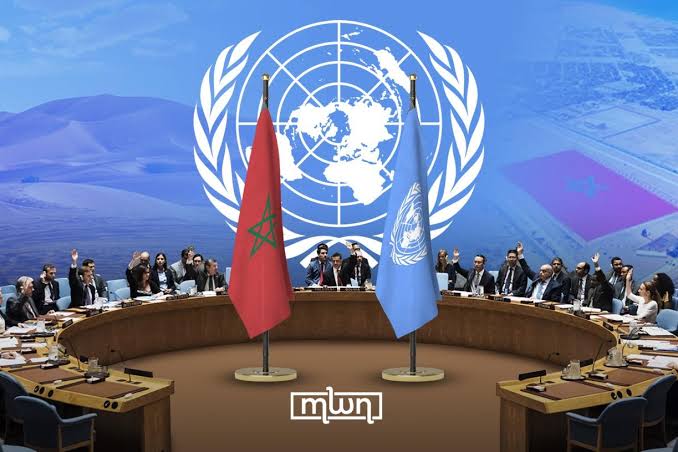
Illustration depicting a UN Security Council meeting, with Moroccan and United Nations flags displayed prominently beneath the UN emblem. (Designed by MWN team)
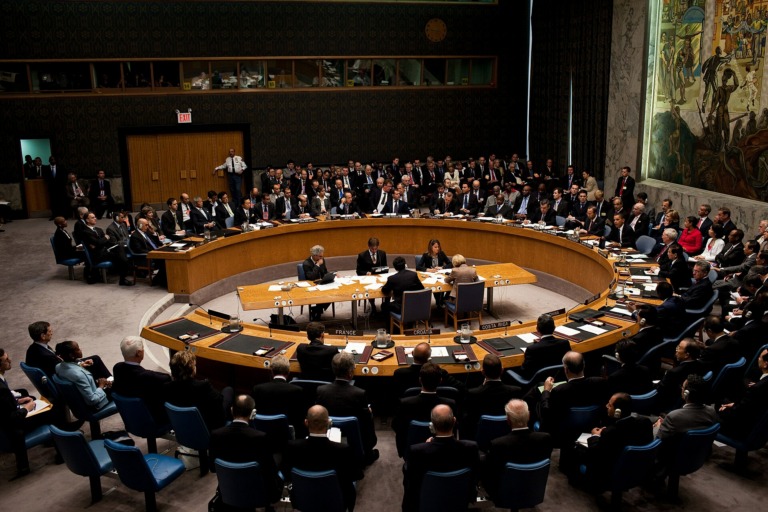
Marrakech – As the UN Security Council’s October 31 vote on Western Sahara approaches, and as draft texts circulate every year ahead of the mission’s annual renewal, a United States zero draft has begun reaching Council members.
Washington holds the pen on the file. The text, dated October 20 and circulated to members on October 22 according to the Polisario Front, cannot be independently verified and remains an informal document in circulation rather than a tabled resolution.
The zero draft recalls and reaffirms Resolution 2797 (2025). It notes recognition by a growing number of member states of Moroccan sovereignty over Western Sahara. It welcomes the efforts of Personal Envoy Staffan de Mistura and the United States in facilitating three rounds of direct negotiations in Washington and Madrid between Morocco, the Polisario, Algeria, and Mauritania.
The text welcomes the expansion and update of Morocco’s Autonomy Proposal, which served as the basis for those rounds, with a view to achieving what it calls “a just, lasting and mutually acceptable resolution to the dispute, consistent with the UN Charter and principles, including self-determination.”
The draft welcomes President Donald Trump’s leadership on conflict resolution and takes note of his call for the parties to engage without delay, using Morocco’s Autonomy Proposal as the only framework. It then states plainly that “genuine autonomy under Moroccan sovereignty is the only feasible solution to the question of Western Sahara.”
It condemns the May 5, 2026 attack on the town of Es-Smara, and deplores “the failure of one party to engage substantively in the negotiations.” It takes note of a strategic review of the mission, recognizes that the mandate reflects tasks not implemented for more than two decades, and underlines the need for a clear, explicit, and unconditional commitment to cease hostilities.
On the humanitarian file, having considered the Secretary-General Antonio Guterres’ October 1 report, the draft voices deep concern over the protracted displacement in the Tindouf camps, states that the situation cannot responsibly be sustained, and presses that continued international funding be directed toward “individual, voluntary, durable solutions.”
A mission renamed and a mandate wound down
The operative provisions carry the sharpest changes. The draft would rename the mission from the United Nations Mission for the Referendum in Western Sahara (MINURSO) to the United Nations Mission for Western Sahara (MINUSO), dropping the reference to a referendum.
It would terminate the peacekeeping mandate on April 30, 2027, and continue the mission as a special political mission from May 1 to October 31, 2027.
It requests the Secretary-General to submit, by December 15, 2026, detailed proposals on the mandate, structure, staffing, and resources of that political mission, including reporting, mine action, support to the political process, and re-use of existing mission support structures.
The draft also directs the Secretary-General to begin the phased drawdown of the mission’s uniformed component without delay, with a reduction of no less than 50% of authorized uniformed personnel by January 31, 2027, alongside the closure and consolidation of team sites.
It recognizes the importance of continuity in senior leadership and institutional knowledge. It restates full support for the Secretary-General, the Personal Envoy, and the United States as facilitators, with Morocco’s expanded and updated Autonomy Proposal as the only basis, and affirms the Envoy’s lead role.
The text requests the Personal Envoy to consult a broad range of Sahrawi constituencies, including interlocutors outside the negotiating parties, in the territory, the camps, and the diaspora. It calls on the parties to engage constructively using the proposal as the only basis for negotiation.
It requests the UN refugee agency (UNHCR) to complete registration of the Tindouf refugee population within six months, without interference from any entity and with unimpeded access.
It expresses the intention to consider further measures should the parties fail to engage, invites member states to support the negotiations, requests regular briefings on the transition, and decides to remain seized of the matter.
Rabat’s reading, and the Polisario’s rejection
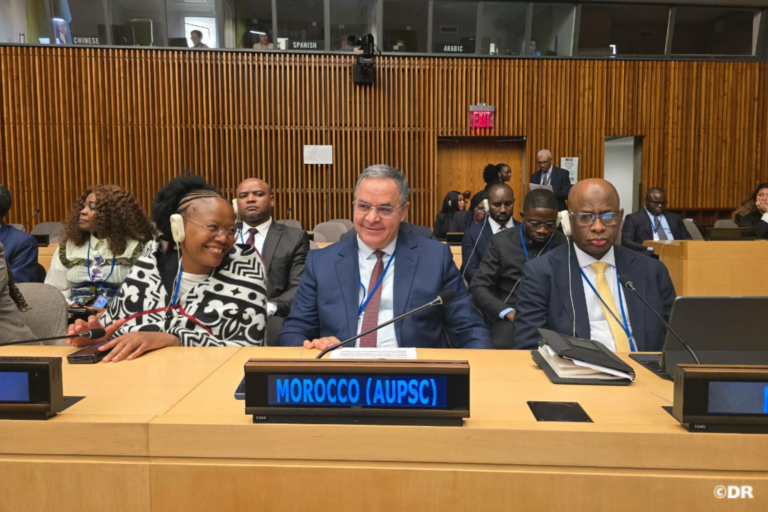
The draft follows Resolution 2797, adopted last year, which Morocco has read as a historic milestone. Addressing the UN Fourth Committee on October 13, Ambassador Omar Hilale, Morocco’s Permanent Representative, described the resolution as a shift from the logic of managing the Sahara question to that of resolving it, and called it “an irreversible turning point” compared with all previous Council texts.
He said the resolution had consecrated the Moroccan Autonomy Initiative as the only basis for settling the regional dispute and, for the first time, inscribed autonomy within the framework of Moroccan sovereignty.
Hilale framed the moment as one that demands accountability from each party. He argued that Council resolutions must be implemented, discussions must be held without preconditions, good faith must be acted upon, commitments must be honored, and the ceasefire must be restored and observed.
On the camps, he called the situation the world’s second-longest refugee crisis and warned it could not continue for another half-century, pointing to voluntary repatriation, resettlement in a third country, or local integration as the durable solutions provided under international law. Any stalling or conditionality, he said, would be illegal in law, immoral in politics, and condemnable in humanitarian terms.
Hilale also pushed back on calls for a referendum, which he said betray an insidious denial of Security Council resolutions, reminding what he termed the forgetful that the Council had definitively buried any idea of a referendum a quarter-century ago. He described the Polisario’s claim to represent the camp population as a shameful usurpation of their political rights and a flagrant capture of their democratic will.
The circulating text visibly rattled the separatist Polisario, which scrambled to denounce it within two days, a speed that betrayed how much the draft unsettles the group’s position.
In a letter dated October 22 to Council President Aglaia Balta of Greece, the front’s UN representative, Sidi Mohamed Omar, complained with evident urgency that the zero draft fully reflects the national position of the penholder as well as that of Morocco – which he insisted on branding the “occupying state,” the same tired formula the group recycles each year.
He labeled the text “another extremely dangerous, unprecedented departure” from international law, yet offered the Council no alternative beyond a return to the deadlocked formulas it has already discarded.
Omar fell back on the claim that the Council’s framework is not restricted to Resolution 2797 (2025) but rests on the entirety of its relevant resolutions – a selective reading that ignores how the Council has steadily moved the file away from the referendum fiction the front still clings to.
He reached back to 1991, recalling that MINURSO was created under Resolution 690 on the mutual agreement of the two parties within the UN-OAU Settlement Plan, and protested that altering the mandate to align with Morocco’s position compromises what he called “the decolonization effort,” a phrasing Rabat rejects outright given that the Sahara returned to the kingdom half a century ago through the Green March and the Madrid Agreement.
The front then resorted to threats. Omar warned that the zero draft “cannot constitute a basis for any deliberations on MINURSO or the peace process in Western Sahara,” and that if it passed without substantive changes, the Polisario “would have no choice but to disengage from the peace process as a whole.”
The ultimatum only confirmed the very conduct the draft deplores: one party refusing to engage substantively while the other puts a detailed autonomy plan on the table.
He closed by repeating the group’s self-anointed status as the sole legitimate representative of the Sahrawi people – a claim Hilale had already dismissed as a usurpation of the population’s democratic will – invoked the International Court of Justice (ICJ) on self-determination, and appealed to stakeholders to safeguard a process his own threat to walk away would collapse.
Read also: UN Fourth Committee Adopts Sahara Resolution Consecrating Resolution 2797
Copyright 2026 Morocco World News. All rights reserved. Morocco World News is not responsible for the content of external sites.
Read about our approach to external linking.
Login to your account below
Please enter your username or email address to reset your password.
All Right Reserved © 2026 Morocco World News .
About the Author