More
Follow Us
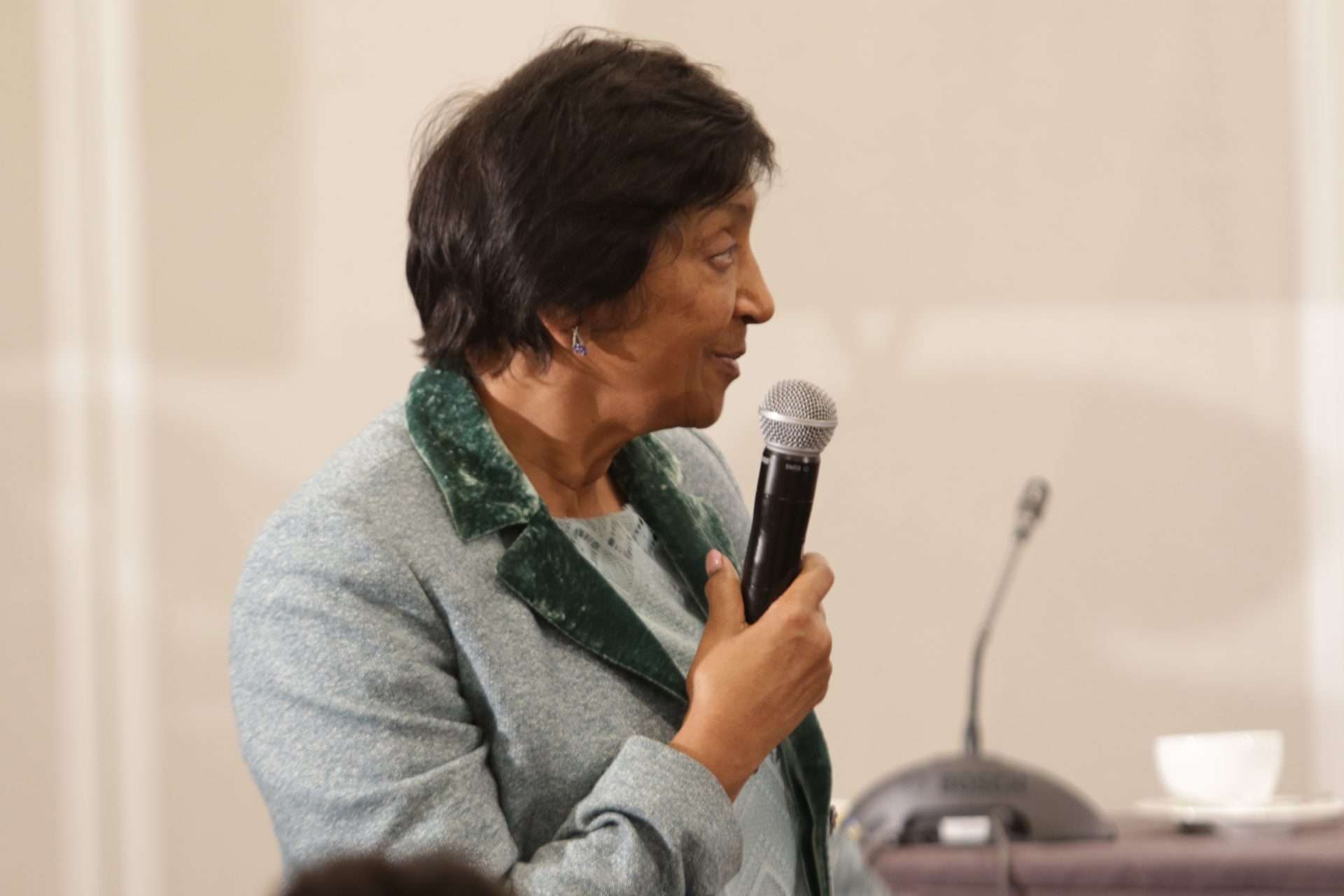
Priests Against Genocide sent a letter of congratulation to the 2026 Nobel Peace Prize laureate Navi Pillay.
Wayamo Foundation / Wikimedia Commons
The number of Catholics in Africa surpassed the number in Europe for the first time. According to statistics published by Agenzia Fides to mark World Mission Sunday on 18 October, the lates available figures from 2024 show the number of Catholics worldwide grew to 1.44 billion after the addition of 16.69 million new Catholics.
There were 288.31 million Catholics in Africa and 287.24 million in Europe. In previous years, 20 per cent of the world’s Catholics have been in Africa and 20.3 per cent in Europe. There are 678.87 million Catholics in the Americas.
The World Mission Sunday statistics also recorded a slight increase in the number of priests worldwide to 407,421, the first increase the past five years: the addition of 1,676 priests in Africa, 1,065 in Asia and 199 in the Americas outweighed the fall of 2,483 in Europe and of 32 in Oceania. However, numbers of seminarians and religious sisters declined, with Africa the only continent recording an increase in each category.
Priests Against Genocide (PAG) congratulated the South African jurist Navanethem “Navi” Pillay on winning the 2026 Nobel Peace Prize for her efforts to promote peace and international law.
In a letter signed by Bishop Jan De Groef and 12 priests and abbots from across Africa, on behalf of over 2,700 PAG members in 68 countries, the group told the new laureate: “When the news reached us, it felt like a moment of grace.”
The priests said many of their members “sit with people who have lost everything to violence, wars and genocides and wonder whether anyone in the wider world is listening”. They continued: “Your life has been an answer to that question.”
Recalling her role as a young lawyer in apartheid South Africa defending detainees “when the law itself was an instrument of oppression”, the priests said young people need to know that “one person’s faithfulness to the truth can make a difference”.
Caritas Zambia raised concerns about the exclusion of local communities in the granting of mining concessions to foreign companies and called for respect for local land rights. Zambia and other African governments and foreign investors face a backlash from community rights activists for ignoring the needs of local communities and placing profits over people.
Caritas convened a meeting of civic society groups last week in the country’s mineral-rich north to address concerns about how communities can derive economic benefit from natural resources found in their land.
“There must be no development without the people,” Caritas said in a statement issued last week. Mining activities “must benefit people, protect land and empower communities” amid the global race for Africa’s critical minerals, which campaigners say is draining wealth from the continent.
“If the people are brought into the conversation now, before the bulldozers arrive or displacement of people, mining will improve the lives of communities living in mineral-rich areas,” the Caritas statement said, adding that “we must not forget the critical people who live where those minerals are found”.
Strong interfaith relationships are essential to the work of the Church in West Africa, according to a Nigerian nun who served for six years in Mali’s Diocese of San.
Sr Martha Nkiruka Umenechukwu DDL said Muslims joined Christians in celebrating religious festivities and attended programmes at a Catholic retreat centre where she worked between 2016 and 2022 delivering empowerment talks for girls.
“While Mali is majorly Muslim, I saw a very healthy relationship between Muslims and Christians. Most of the girls who came for our empowerment talks were Muslim. And many people who attended conferences at our retreat centre were Muslim,” she told ACI Africa last week.
“During Christmas, the priest or the bishop would go to the leader of Muslims, inform him that we were having a celebration and invite them. And they would come. The same would happen when it was Muslims having a celebration. We would attend and celebrate together. After that, everybody would go back to their faith,” she said.
The Diocese of San serves communities in south-central Mali, where Catholics are a minority. Sr Nkiruka also recalled the difficulties girls face in the communities where she served, particularly limited access to education and early marriage.
“Many girls I saw had never stepped into a school. Others had dropped out of school and engaged in farming to support their families,” she noted. She added that it was common in the communities she encountered to find girls who were already married and raising children by the age of 16.
Through her empowerment programme, Sr Nkiruka gathered girls for discussions about the importance of pursuing education. “I am happy that talking to them created some impact. Some call me to inform me of their progress in school. One of the girls we rescued called me yesterday, telling me that she will be graduating from college next week,” she said.
A Kenyan nun said that an international study of seminarians’ “spiritual maturity” has shown “gaps, tensions, and areas that require further attention” in existing formation programmes.
Sr Leonida Katunge, a member of the Sisters of St Joseph and the African coordinator of the Spiritual Maturity of Religious Leaders Research Project, said the research initiative had found strengths and weaknesses in the existing system and merited expansion.
From 2016 to 2022, researchers worked with 18 seminaries in North America and studied more than 1,500 seminary students over a three-year period, using a range of measures to examine character, virtue and spiritual development. Sr Leonida said the study revealed that spiritual formation is far from “one-size-fits-all”, arguing this merits wider study in African settings.
She said it is important to understand how people develop spiritual maturity, whether seminaries and theological institutions in Africa adequately integrate African pastoral realities into the formation of religious leaders, and whether the formation provided actually yields leaders whose Christlikeness is visibly demonstrated in how they live, lead and serve.
Bishop Barani Eduardo Hiiboro Kussala of Tombura-Yambio called for a free and fair election in South Sudan on 23 December, warning that any problems with the vote could drag the country back into civil war.
“No political office is worth a single South Sudanese Life,” the bishop told The Tablet. He said the pre-election atmosphere was one of “hope mixed with anxiety” and voiced the wish that the people would be able to express “their democratic rights, choose their leaders, and see independence deliver peace, security, education, employment and dignity”.
He continued: “Having accompanied our people through years of suffering and uncertainty, I understand both their hope and their caution. They want an election, but they also want confidence that the process will be peaceful and credible.”
Looking beyond the polls, the Bishop Kussala framed the election as “a crucial learning opportunity” for the country’s young democracy.
“A school for democracy is an election through which citizens and leaders learn to disagree without becoming enemies,” he explained. “It should be free, fair, inclusive, transparent and peaceful. Citizens must be able to vote without intimidation, candidates must compete under clear rules, and electoral disputes must be resolved through credible and lawful procedures.”
The bishop addressed a range of issues, including the largely unfulfilled promise that came with independence in 2011, the progress and setbacks to peace, and the kind of person South Sudanese should elect as president. He urged the country’s leaders to view power “as a duty to serve, not a privilege to enjoy”, and called on citizens not to let political differences destroy their communities.
Seeking peace “does not mean ignoring injustice or remaining silent before evil”, an Ethiopian bishop said in an appeal for an end to violence.
Bishop Lisane-Christos Matheos Semahun, who leads the Ethiopian Catholic Eparchy of Bahir Dar-Dessie – territory caught in recent fighting between rebel groups and government forces – issued a pastoral letter calling for peace on 6 October.
“It means defending human dignity, protecting the vulnerable, seeking truth, rejecting hatred and opening paths towards reconciliation and healing,” the bishop said.
Violence has surged in parts of the Amhara, Benishangul-Gumuz and Afar regions covered by his eparchy, as well as in neighbouring Tigray, threatening communities nearly four years after the 2022 Pretoria agreement meant to end the war between Ethiopia’s government and the Tigray People’s Liberation Front.
Human rights organisations have documented gross violations during the violence over the past decade: one in 10 women in Tigray has been subjected to sexual violence. Researchers at Ghent University estimate that wartime violence, famine and lack of medical access have killed between 162,000 and 378,000 people, with some estimates reaching 600,000.
“Every life lost is a tragedy,” said Bishop Semahun in his pastoral letter, describing himself as “deeply saddened” by the scale of the conflict.
Illegal settlers vandalised olive groves close to the only Christian village in the West Bank and threatened a group of diplomatic observers including a French archbishop.
Fr Bashar Fawadleh, parish priest of Taybeh, issued a “statement of concern” last week warning that “many people have faced serious difficulties accessing their land” to harvest olives due to interference from settlers who have also stolen or damaged olive trees.
“The olive harvest is both an economic necessity and an important expression of our identity and perseverance,” he said. “Many families will produce far less olive oil than they need for their own households.” He said this threatened the Christian presence in the Holy Land: “Every lost harvest places additional pressure on people striving to remain on their land and preserve their way of life.”
On 17 October, armed Israeli settlers attacked a group of Palestinians near Taybeh and confronted a delegation of European politicians and diplomats observing the olive harvest there. Archbishop Vincent Dollmann of Cambrai, in northern France, was part of the delegation.
The priestly ordination of Deacon Basil Hadde SJ in India’s Chhattisgarh state, notorious for hate crimes against Christians, was postponed indefinitely after local authorities demanded documents concerning the conversion of his family in 1995.
Hadde, a member of the Kodaku tribal community, was due to be ordained on 14 October at Dhanwar Parish in the central state’s Balrampur district. A day prior to the ordination, local administrative officials reportedly questioned the legality of his conversion to Christianity and stalled the ordination.
The action reportedly followed a complaint by two persons who sought to prevent him from becoming a priest, as they felt it could encourage more conversions among members of the Kodaku community.
Hadde had told the officials that he had embraced Christianity along with his parents in 1995, before Chhattisgarh introduced its anti-conversion law. At that time prior permission from civil authorities was not required for religious conversions.
However, they refused to listen and directed the Dhanwar Parish to cancel or postpone the ceremony until documentary evidence establishing the legality of the deacon’s conversion was produced. The Society of Jesus said it would pursue legal remedies to establish the legality of Deacon Hadde’s conversion.
Police in western India arrested a priest on charges of sexual assault against five boys. Fr Siprian Pinto of St Vincent Ferrar parish in Valencia, Mangaluru was arrested on 15 October after one of the alleged victims’ families filed a complaint at Mangaluru South Police Station. The victim alleged that Pinto had touched him inappropriately on several occasions. When he confided in four of his friends, all testified they had had the same experience. Their parents approached the local bishop who instructed them to lodge a police complaint.
Bishop Jean Michaël Durhône of Port-Louis in appealed for peace in Mauritius after the island was assailed by violent protests exacerbated by the shooting of a 27-year-old mother.
“I am a brother of Mauritius … a brother and sister of everyone living in Mauritius, a country that is going through a very difficult time,” he said in a message on 13 October.
“We are witnessing a situation of suffering and anger,” the bishop continued, referring to demonstrations triggered by water shortages and living costs which escalated after a policeman shot and injured a supermarket cashier on 9 October.
Élodie Thomas, who has a two-year-old daughter, was injured while travelling home from her part-time job in a mini-bus at the time of the shooting. A police sergeant was provisionally charged in connection with the incident which left Thomas in intensive care. A team of 13 interdisciplinary specialist doctors flew from India to Mauritius on 13 October to help extract the bullet from Thomas.
“We must take this situation seriously and ensure that people remain safe,” Durhône said. “There are many people of goodwill working for peace. We are trying to bring everyone together so that peace can return to the country, a peace built on a commitment to non-violence.”
A greener future cannot be built on “injustice” the bishops of the Philippines said on Indigenous Peoples Sunday 2026. In a statement for the occasion on 11 October, the bishops’ Commission on Indigenous Peoples said extractive industries and large-scale infrastructure must never “sacrifice ancestral domains, watersheds, forests, livelihoods and community well-being”.
Noting how the growing demand for minerals used in the transition towards cleaner energy impacted Indigenous Peoples’ ancestral lands, community rights and the environment, the commission identified four urgent challenges. These include protecting threatened ecosystems and Indigenous communities, confronting fossil fuel expansion and the climate crisis, ensuring a just energy transition, and promoting accountability in environmental governance.
“The growing demand for critical minerals must not become another justification for displacement, environmental destruction or violations of Indigenous Peoples’ rights,” the commission said. It added that Indigenous Peoples must be respected as rights-holders and genuine partners in decisions affecting their lives.
A Redemptorist priest in Ecuador died while celebrating Mass after a large crucifix detached from the wall behind the altar and fell on him. Fr Patricio Alfredo Sánchez Molinari CSsR was celebrating Mass on the evening of Saturday 17 October at the Church of Our Lady of Perpetual Succour in Guayaquil, in southern Ecuador.
The liturgy was livestreamed via Facebook and a woman’s voice was heard crying “Father, Father … Call an ambulance!” In a statement, the Archbishop of Guayaquil Cardinal Luis Cabrera Herrera OFM said the archdiocese was united in prayer for the eternal rest of Fr Sánchez who had “departed for the House of the Father, to enjoy his presence and glory”.
The Holy See’s representative at the United Nations in New York condemned materialist and nationalist ideologies that prevent the unity of the human family from becoming a lived reality.
“Racism, racial discrimination, xenophobia and related intolerance constitute a direct affront to the dignity and unity of the human family,” said Archbishop Christophe-Zakhia El-Kassis at the UN General Assembly on 8 October. He highlighted several areas of concern, the first being that migrants, refugees and asylum-seekers face racism, xenophobia and discrimination.
Pope Leo, he emphasised, had affirmed that those who seek safety and a better life “cannot and must not find the coldness of indifference or the stigma of discrimination”. Another concern related to prejudices in the digital sphere: “Online platforms can amplify hatred and polarisation,” he warned. He said all religious intolerance, including Christianophobia, must be “firmly rejected”.
The Spanish Catholic Church beatified 20 martyr priests killed in Ibiza in 1936 in odium fidei during the Spanish Civil War. “The only reason they were killed was because they were priests. Witnesses denied the existence of any other cause,” said the Dicastery for the Causes of Saints in a statement.
Cardinal Marcello Semeraro, the prefect of the dicastery, presided over the beatification Mass held in Ibiza Cathedral alongside several bishops and many priests. “The words of Jesus are particularly powerful: ‘On my account you will be brought before governors and kings as witnesses to them’,” he said. “We are not exalting the heroism of individuals who were exceptionally strong, but rather the fidelity of people who abided in love and would not allow the hatred of other people to take possession of them.”
The priests were killed by Spanish Republican soldiers between August and September 1936. Four years later, their remains were re-buried in St Mary’s Cathedral, Ibiza, where they remain today. The priests accounted for 20 of the 53 clergy serving in Ibiza at the time. Juan Torres Torres, the youngest priest, died aged 24, two months after his ordination.
The three senior bishops in the French bishop’s denounced last weekend’s nationwide rioting as “unacceptable violence” and called for dialogue and respect for justice.
Led by Cardinal Jean-Marc Aveline of Marseille, the conference presidency issued a statement on Monday saying it “expresses its support and solidarity with those who have suffered injuries, condemns the spiral of violence and calls on believers to pray for dialogue and peace”.
The statement, also signed by vice-presidents Archbishop Bishop Vincent Jordy of Tours and Bishop Benoît Bertrand of Pontoise, said: “These scenes of rioting plunged the country into shock, fear and despair, raising numerous questions about the root causes of this crisis.”
They urged the French “not to be drawn into the spiral of this deadly violence” and prayed that “legitimate demands will be heard and addressed”. They expressed their solidarity “with all those who have suffered injuries, as well as with the many shopkeepers who have been victims of this vandalism”.
The demonstrations on 17 October involved more than 550,000 protesters and resulted in up to 2,400 arrests and damage estimated in the hundreds of millions of euros.
A two-year study of Church archives found that Abbé Pierre – the late priest often voted France’s most popular person since found to have been a serial abuser – was a mentally ill sexual pervert protected by the French Church and his charity for the poor Emmaus.
The historical study, which stops in 1972, said he had been forcibly interned in 1957 in a Swiss psychiatric clinic for his mental illness, probably a bipolar disorder not well understood at the time. This was compounded by sexual abuse as a child, which presumably led to perverse behaviour in which, in one bishop’s words, “young girls were scarred for life”.
These facts were hidden at the time. Abbé Pierre was buried with national honours in 2007. His abuse became public in 2024 and Emmaus removed his name from its logo.
“In 1972, he disappeared from the Church’s radar,” historian Axelle Brodiez-Dolino, one of the two authors of the book titled “I have a very big secret to tell you”, told La Croix. “Abbé Pierre remained in close control until 1964, then things gradually loosened,” she said. The two institutions that had hushed up his past lost control of him as his popularity soared in the 1980s and 1990s.
The Catholic Church in Poland will increasingly depend on priests from Africa due to a decline in the number of seminarians, according to a senior priest and academic.
Fr Andrzej Kobylinski, an associate professor and head of the Department of Ethics at Cardinal Stefan Wyszyński University in Warsaw, said Polish seminaries are “more and more deserted” with many forced to merge or close.
Writing for the blog “Notes from Poland” and the weekly Tygodnik Powszechny, Fr Kobylinski said the changes were happening “at such an alarming rate that at present over a dozen seminaries will need to be closed”.
Describing the situation as a “vocations crisis”, he said the church in Poland would have to work “intensively” with dioceses in Africa to recruit more priests. This would be “an enormous historical change, since it was Poland and Europe which once sent missionaries to Africa”.
In 2026, 196 priests are due to be ordained in Poland – 12 fewer than last year and 205 fewer than in 2013. There will be no ordinations at all in seven dioceses because of a lack of seminarians.
Kobylinski said Africa and “possibly India” were the main places for recruitment, although “the experiences of German and Italian dioceses show that priests from India find it harder to settle in Europe”. He claimed that Latin American priests weren’t an option because “the Catholic Church there is facing its own crisis of a mass exodus to Pentecostal churches”.
Cardinal Christoph Schönborn was delayed at Vienna’s Schwechat airport as his Bible set off the security alarm three times. Writing in the Austrian weekly Heute, the former Archbishop of Vienna said that after he repeatedly set of alarms security staff found that the offending item was the Bible in his rucksack. When he asked how this could be, they said: “The AI says it. Maybe the AI sees something dangerous and explosive in the Bible.”
Cardinal Schönborn, 81, didn’t lose his sense of humour but said that “nevertheless, it’s a bit scary to me”. AI is being used almost everywhere and there are those who warn about it and want stricter regulation, he observed. The Bible too questions some of the things “we humans get up to” – but “how does such an assessment of the Bible come about?”
Stay updated — add us as a preferred news source on Google:
Abbé Pierre
Cardinal Christoph Schönborn
CATHOLIC NEWS
Ethiopia
France
India
Islam and Christianity
Mali
martyrdom
Mauritius
mining
Nobel Peace Prize
Palestinians
racism
Seminaries
South Sudan
The Catholic Church in Africa
The Catholic Church in India
The Catholic Church in Poland
Tigray
United Nations
vocations
West Bank
World Mission Day
Zambia
MOST READ ARTICLES
1
Dame Imelda Staunton’s alma mater threatened with closure
2
Obituary: David Palmer, Composer of ‘Holy Boy’
3
Horror without words
4
How I responded to the call to the diaconate
5
Attack on Bible convention violates ‘fundamental rights’, say Indian bishops
6
Still hope for future even if old model of Church is dying, says Irish priest
FROM THE EDITOR’S DESK
RELATED ARTICLES
The International Catholic News Weekly
THE TABLET
Subscribe
Advertise
Jobs
About us
Permissions
Help
Privacy policy
Contact us
FOLLOW US
About the Author