HARARE, Zimbabwe— African countries are paying an increasingly heavy price to service their debts despite declining overall debt levels, raising fresh concerns about a global financial system that civil society organisations say continues to prioritise creditors over development, writes Winston Mwale.
The African Forum and Network on Debt and Development (AFRODAD) says the 2026 Annual Meetings of the International Monetary Fund (IMF) and World Bank Group in Bangkok, Thailand, offered limited evidence of the structural reforms needed to address Africa’s debt challenges.
At a press briefing on Oct. 21, AFRODAD officials presented their assessment of the meetings, highlighting rising debt-service costs, persistent fiscal pressures, shortcomings in existing debt restructuring mechanisms and emerging opportunities for developing countries to strengthen their collective bargaining power.
The briefing also examined the inaugural Governing Council meeting of the Borrowers’ Platform, which brought together more than 30 developing countries in what AFRODAD described as a potentially significant development in efforts to rebalance relations between borrowers and creditors.
However, the organisation cautioned that the platform’s establishment, while welcome, should not be mistaken for a fundamental transformation of the international financial architecture.
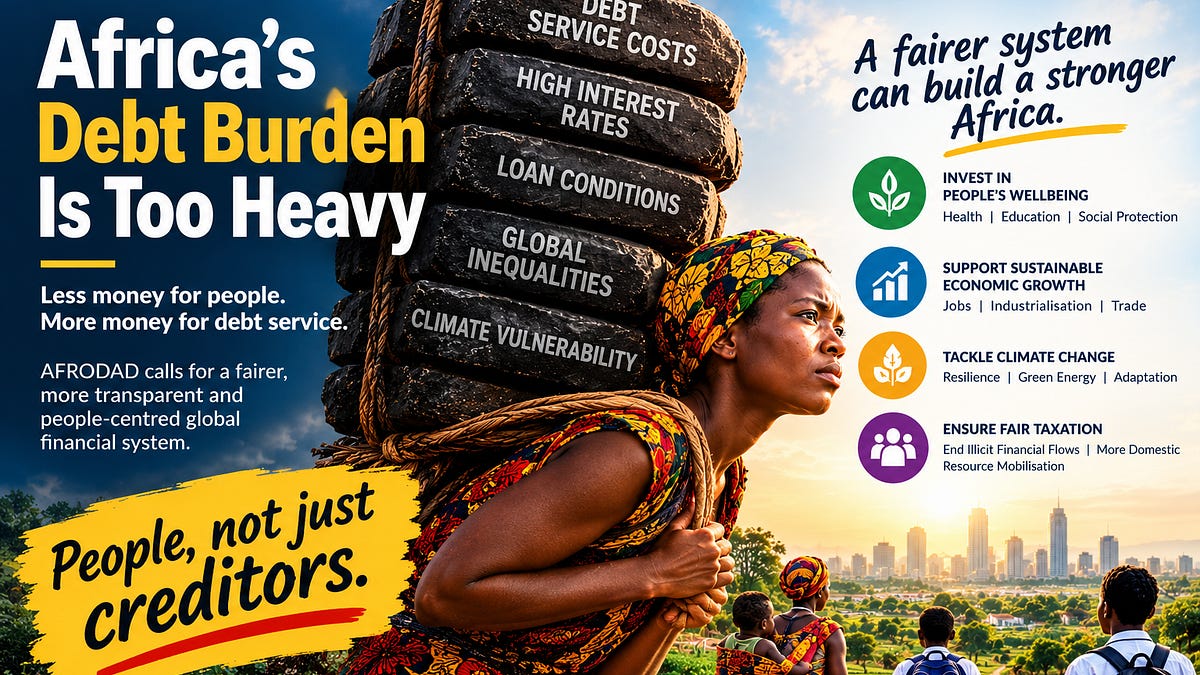
Its central argument was that African countries need more than adjustments to existing lending arrangements. They require a system that addresses the cost of borrowing, provides timely debt relief, protects essential public expenditure and gives developing economies a meaningful voice in determining international financial rules.
AFRODAD Executive Director Janet Zhou identified three major takeaways from the Annual Meetings: rising debt-service costs, the establishment of the Borrowers’ Platform and the continued resistance of the global financial architecture to substantive reform.
Citing IMF Managing Director Kristalina Georgieva, Zhou said average debt-service costs in low-income countries had risen from 6% to 14% of government revenue over the past decade, despite an overall decline in debt levels.
The figures illustrate a central contradiction confronting many developing economies: reducing outstanding debt does not necessarily translate into lower repayment pressures.
AFRODAD attributes this partly to high borrowing risk premiums and weaknesses in existing debt management and restructuring frameworks, including the conditions attached to IMF programmes.
The consequences extend beyond national balance sheets.
As governments devote larger portions of their revenue to creditors, fewer resources remain available for health care, education, social protection, infrastructure and productive investment.
For countries already struggling with limited fiscal space, the growing cost of debt servicing threatens their ability to finance long-term development.
Zhou said the meetings had largely reaffirmed existing approaches rather than demonstrating a willingness to fundamentally change them.
She pointed to the International Monetary and Financial Committee’s continued reliance on familiar language concerning the G20 Common Framework, alongside revisions to the joint IMF-World Bank Debt Sustainability Framework for Low-Income Countries.
Although the revised framework represents its first overhaul since 2017, AFRODAD believes it falls short of addressing deeper structural problems.
The organisation argues that changes to technical assessments cannot, on their own, resolve inequalities in how countries access finance, negotiate debt treatment or influence international financial decisions.
Yungong Theophilus Jong, AFRODAD’s Policy, Advocacy and Research Manager, said the meetings reflected continuity and refinement of the existing financial system rather than the structural transformation demanded by African civil society.
He presented figures illustrating the scale of the continent’s fiscal challenges.
According to the statistics cited during the briefing, interest payments on public debt exceed spending on health, education or both in four out of five sub-Saharan African countries.
By the end of 2025, external public debt servicing in sub-Saharan Africa accounted for approximately 18.2% of export earnings, while 28 of the region’s 48 countries were either at high risk of debt distress or already experiencing it.
These pressures, Jong argued, expose the limitations of financial programmes that require governments to consolidate their budgets while simultaneously pursuing development objectives.
He criticised the continued emphasis on fiscal consolidation, describing it as austerity that can deepen hardship and contribute to rising living costs.
AFRODAD maintains that governments should not be expected to restore debt sustainability primarily through expenditure adjustments that weaken public services and constrain economic opportunities.
During the Annual Meetings, participants discussed improvements to debt sustainability assessments, including stronger stress testing, the treatment of domestic debt and greater consideration of climate and development financing needs.
Jong acknowledged these discussions but questioned whether they would produce meaningful change.
In AFRODAD’s assessment, such adjustments leave the IMF, World Bank and other established international financial institutions at the centre of decision-making without sufficiently addressing the unequal power relationships within the system.
The organisation is consequently calling for greater transparency in how debt sustainability assessments are conducted.
It wants the IMF and World Bank to publish the costs and risks underpinning their analyses, explain the fiscal adjustments assumed in their projections and clearly identify the thresholds that signal approaching debt distress.
This information, AFRODAD argues, would enable governments, parliaments and citizens to better understand the implications of borrowing decisions and proposed economic reforms.
It would also help establish when debt restructuring should begin.
Rather than waiting until financial difficulties become prolonged crises, the organisation wants restructuring initiated earlier, once debt becomes unsustainable.
One of AFRODAD’s strongest recommendations concerns the protection of essential public expenditure during debt-related adjustment programmes.
Jong called for binding social spending floors that increase over time and receive the same level of enforcement as other conditions attached to IMF and World Bank disbursements.
Such commitments would establish minimum expenditure protections for sectors including health and education, reducing the likelihood that governments respond to debt pressures by cutting services relied upon by vulnerable populations.
The proposal reflects a broader concern that fiscal consolidation can shift the burden of debt adjustment onto ordinary citizens.
For AFRODAD, debt sustainability must therefore be assessed not only through repayment indicators but also through governments’ ability to meet development obligations.
The organisation wants this principle reflected in a reformed global financial system, including through a proposed United Nations Framework Convention on Sovereign Debt.
Linked to the Sevilla Outcome Document and the Common African Position on Debt, the proposed convention would provide a more inclusive forum for decisions concerning lending, restructuring, borrowing costs and the treatment of sovereign credit risk.
Jong argued that African countries should participate on equal terms in shaping these rules instead of operating within arrangements predominantly influenced by creditor interests.
AFRODAD also wants the international system to address what it considers excessive perceptions of African borrowing risk, which contribute to higher financing costs.
The organisation maintains that borrowing conditions should reflect countries’ economic realities rather than assumptions that disproportionately disadvantage African economies.
Despite its criticism of the Annual Meetings, AFRODAD identified the establishment of the Borrowers’ Platform as an important opportunity.
More than 30 developing countries participated in its first Governing Council meeting in Bangkok, where members established structures, rules and priorities for cooperation.
The initiative is intended to create space for advocacy, technical cooperation and peer learning among borrowing countries.
AFRODAD participated in an open session and delivered a statement on behalf of Global South networks.
Its recommendations included sharing experiences from loan negotiations and strengthening domestic legal and policy frameworks to improve debt transparency.
Zhou said greater coordination could help developing countries address a longstanding imbalance in international debt negotiations.
Creditors have historically been better organised, allowing them to exercise considerable influence over the rules governing sovereign lending and restructuring.
Borrowers, by contrast, have often negotiated individually, limiting their ability to advance common positions.
The new platform could begin addressing that disadvantage by enabling countries to exchange technical knowledge, identify shared challenges and coordinate advocacy.
However, Zhou cautioned against overstating its immediate significance.
The platform has not committed to collective debt negotiations or to advancing the proposed UN Framework Convention on Sovereign Debt.
Questions also remain about whether it can develop beyond a technical cooperation mechanism into an institution capable of influencing international financial rules.
AFRODAD wants more African countries to join and use the initiative to strengthen their bargaining power.
It also believes the platform should complement existing continental frameworks, particularly the Common African Position on Debt.
During engagements with the African Union, AFRODAD identified shared interest in advancing that position and supporting member states to align domestic legislation and policies with regional and continental priorities.
Borrowers’ Platform members also committed to taking their agreed positions into international forums, including the African Union, G20, Group of 77 and UN General Assembly.
These commitments could provide African governments with additional opportunities to coordinate their positions across multiple negotiating spaces.
Catherine Mithia, AFRODAD’s Policy, Advocacy and Research Officer responsible for Sovereign Debt Management, examined developments under the Global Sovereign Debt Roundtable and the G20 Common Framework.
The roundtable, established in 2023 and co-chaired by the IMF, World Bank and G20 presidency, brings together borrowing countries, official bilateral creditors and private lenders to address challenges surrounding debt sustainability and restructuring.
Its seventh Co-Chairs’ Progress Report, released during the Bangkok meetings, highlighted efforts to standardise the treatment of different creditor groups and improve coordination during restructuring negotiations.
According to the report, most restructuring cases initiated in 2021 and 2022 are largely complete, although some commercial creditor negotiations remain outstanding.
Ghana and Zambia are among the countries still dealing with residual negotiations.
Ethiopia, meanwhile, has concluded an agreement with official creditors and is progressing with bilateral arrangements.
Its negotiations with bondholders have involved disagreements over comparability of treatment — the principle intended to ensure that different creditor groups provide broadly comparable debt relief.
Mithia noted that Ethiopia reached a new agreement in principle with a bondholder committee in June 2026. The committee represented approximately 45% of its defaulted $1 billion Eurobond.
Although the Official Creditor Committee subsequently assessed the terms as comparable, the bond exchange remained pending when the seventh progress report was published.
For AFRODAD, these experiences demonstrate that improvements in administrative coordination do not necessarily translate into timely economic relief.
Mithia said the roundtable remains a voluntary forum whose agreements are nonbinding.
Consequently, it cannot compel creditor participation or prevent individual creditors from delaying negotiations.
AFRODAD also remains concerned about procedural weaknesses within the G20 Common Framework, particularly where different categories of lenders are involved.
The organisation argues that prolonged negotiations impose substantial costs on borrowing countries, including continued debt-service obligations, accumulating interest and extended periods of economic uncertainty.
While international institutions may regard the completion of procedural milestones as progress, AFRODAD believes assessments must also account for the social and economic consequences experienced during restructuring.
It pointed to Zambia and Ghana, where debt adjustment processes included domestic debt reductions that affected pension funds.
Senegal’s debt situation emerged as another major concern during AFRODAD’s assessment.
According to Mithia, Senegal has requested treatment under the G20 Common Framework, becoming the fifth African country to seek assistance through the mechanism.
The request follows the discovery of previously undisclosed borrowing, estimated by the IMF at more than $11 billion, while S&P Global placed the figure closer to $13 billion.
Senegal has also reached a staff-level agreement with the IMF on a proposed $2.2 billion programme, although the arrangement still requires approval from IMF management and its Executive Board.
AFRODAD fears the country could face difficulties similar to those experienced by earlier African applicants.
These include lengthy restructuring negotiations, disputes over comparability of treatment and fiscal conditions attached to IMF support.
The significant share of Senegalese debt held by Eurobond investors could further complicate negotiations.
AFRODAD is therefore urging the IMF to consider suspending fiscal consolidation requirements and introducing a debt-service standstill while Senegal awaits programme approval and restructuring.
Such measures, the organisation argues, would provide breathing space for the country to rebuild its economy, strengthen revenue mobilisation and establish a sustainable repayment strategy.
The Senegalese case also raises broader questions about whether the international debt system can respond quickly enough when countries encounter serious financial difficulties.
Mithia also questioned the IMF-World Bank Group’s three-pillar approach to countries experiencing debt-related financial pressures.
The initiative seeks to provide additional fiscal space for countries facing liquidity challenges while they maintain specified macroeconomic reforms.
However, AFRODAD argues that many African countries face deeper solvency problems rather than temporary shortages of available financing.
The distinction is significant.
A liquidity problem arises when a country struggles to meet immediate payment obligations, while a solvency problem concerns its underlying capacity to repay debt sustainably over time.
AFRODAD warns that treating solvency challenges as temporary liquidity constraints risks postponing necessary debt resolution.
It could also encourage governments to rely increasingly on domestic borrowing, potentially crowding out private investment and deepening dependence on local financial markets.
The organisation cited its research on domestic debt challenges in countries including Kenya and Senegal.
It argues that debt cancellation, where appropriate, and mechanisms allowing repayment standstills during restructuring negotiations should receive greater consideration.
Without such measures, AFRODAD fears that countries may remain trapped in cycles of refinancing and adjustment without resolving the underlying debt burden.
Diana Mochoge, AFRODAD’s Policy, Advocacy and Research Officer responsible for Domestic Resource Mobilisation, challenged the tendency to equate economic growth with meaningful economic transformation.
She said discussions at the Annual Meetings placed considerable emphasis on macroeconomic indicators without adequately examining what those figures mean for ordinary people.
From AFRODAD’s perspective, stronger economic performance should be measured partly by improvements in livelihoods, public services, employment opportunities and resilience to economic shocks.
Mochoge noted that climate-related disasters and epidemics featured prominently in discussions about countries’ vulnerability and revenue mobilisation.
However, she argued that insufficient attention was given to how governments can build the financial capacity to respond to such shocks while already facing significant debt pressures.
One proposal discussed during the meetings involved automatic debt suspension clauses, which would allow debt repayments to be temporarily paused when a country experiences a qualifying shock.
AFRODAD supports greater consideration of such mechanisms but believes governments must also prepare before emergencies occur.
Mochoge called for dedicated budgetary resources for climate shocks and other emergencies, alongside stronger social protection systems.
She also emphasised citizen participation in national budgeting to help safeguard minimum allocations for essential services.
The World Bank’s emphasis on investment, particularly in manufacturing and job creation, also featured in AFRODAD’s assessment.
Mochoge acknowledged the importance of investment but questioned the growing reliance on private capital as the primary solution to Africa’s development financing challenges.
AFRODAD argues that private investment should not substitute for efforts to mobilise domestic resources or ensure that African countries receive greater development benefits from their existing wealth.
The continent’s mineral resources, for example, represent an important potential source of public revenue.
Mochoge said the African Union had similarly emphasised the need to use Africa’s resources to support economic transformation.
She also highlighted the importance of making existing continental institutions more effective, including the African Continental Free Trade Area and monetary institutions established by the AU.
For AFRODAD, stronger political commitment to operationalising these institutions could help improve regional economic integration and revenue mobilisation.
The organisation also wants governments to protect investment in productive sectors, particularly as domestic borrowing places additional pressure on national budgets.
Progressive taxation formed another major part of AFRODAD’s response to the Annual Meetings.
Mochoge warned that fiscal adjustment conditions can encourage governments to introduce regressive taxes on everyday goods and services, placing additional pressure on lower-income households.
She cited products such as bread and sugar as examples of essential commodities whose taxation can disproportionately affect ordinary citizens.
Instead, AFRODAD wants greater emphasis on taxing wealthy individuals and ensuring multinational corporations contribute their fair share.
The organisation views fairer taxation as an essential component of domestic resource mobilisation and a means of reducing dependence on external borrowing.
Mochoge also highlighted ongoing negotiations toward a UN Framework Convention on International Tax Cooperation.
She said the proposed convention could help address the fair allocation of taxing rights, multinational corporate taxation and illicit financial flows, including carbon-related concerns raised in the discussions.
AFRODAD wants governments to protect the ambition of the negotiations and resist attempts to weaken the proposed framework.
The organisation directed that message particularly toward the United Kingdom, ahead of its 2027 G20 presidency, and the IMF.
It believes stronger international tax cooperation could help African governments secure additional revenue while reducing the disproportionate tax burden carried by ordinary citizens.
Despite expressing disappointment with the overall outcomes in Bangkok, AFRODAD identified several openings for continued advocacy.
One concerns the United Kingdom’s forthcoming G20 presidency in 2027.
According to Zhou, AFRODAD held formal engagements with the UK Foreign Ministry and other governments interested in restoring debt reform to the international agenda.
The UK has indicated that debt restructuring and refinancing will be priorities during its presidency, creating an opportunity for renewed attention to weaknesses in the G20 Common Framework.
AFRODAD also welcomed language from the International Monetary and Financial Committee calling for debt transparency among all stakeholders, including private creditors.
Although it considers the commitment insufficient on its own, the organisation believes it provides a basis for demanding greater accountability.
The African Union, Borrowers’ Platform and ongoing UN negotiations represent additional opportunities to advance a coordinated reform agenda.
Taken together, AFRODAD’s assessment suggests that the central question emerging from the 2026 Annual Meetings is no longer simply how African countries can manage their debts more efficiently.
It is whether the international financial system is prepared to change the rules that shape how those debts are accumulated, priced, negotiated and repaid.
For the organisation, meaningful progress will require earlier and more effective restructuring, stronger protection of public expenditure, fairer international taxation, greater domestic resource mobilisation and a stronger collective voice for borrowing countries.
The establishment of the Borrowers’ Platform may offer a starting point.
But AFRODAD’s message is that Africa’s development ambitions cannot depend indefinitely on incremental reforms to a financial architecture that continues to leave many countries spending more on servicing debt while struggling to finance the needs of their people.
No posts
About the Author