Former United States President Barack Obama has accused President Donald Trump of making costly foreign policy decisions, arguing that the war with Iran has increased economic pressure on American households while creating fresh security risks around one of the world’s most important oil shipping routes.
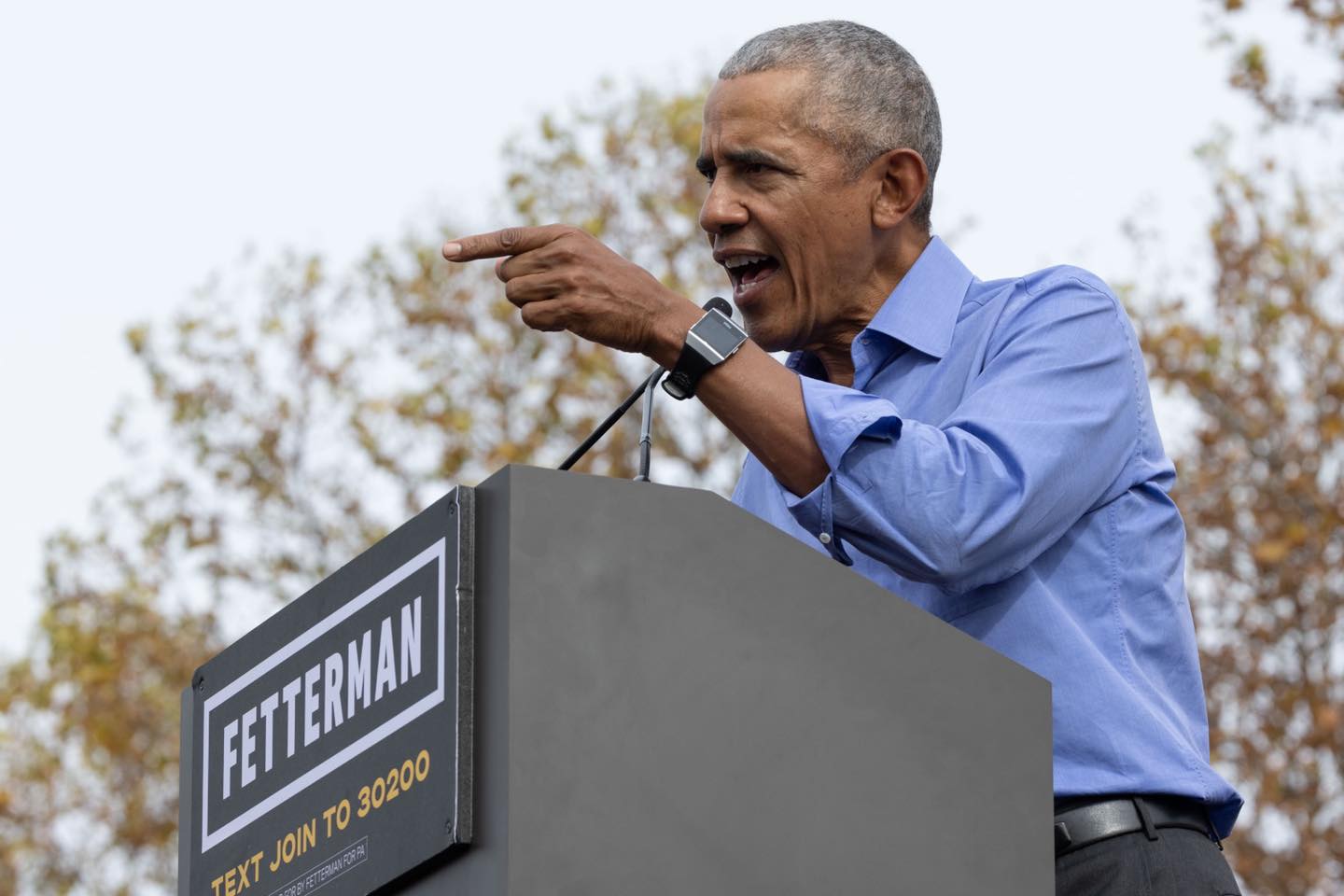
Speaking at a Democratic campaign rally in Cleveland, Ohio, on Saturday, October 24, 2026, Obama described the conflict as unnecessary and questioned why Trump abandoned diplomatic efforts to constrain Iran’s nuclear programme. He also criticised the administration’s trade tariffs, saying American consumers ultimately bear their costs.
“The current president chose to make a series of bad decisions. Most importantly, he decided to start an unnecessary war that nobody asked for and nobody voted for,” Obama said.
His intervention comes ten days before the November 3, 2026, midterm elections, turning the conflict with Iran into a central argument in the Democrats’ attempt to challenge Trump’s record and win greater influence in Congress.
Obama’s strongest criticism focused on Trump’s 2018 withdrawal from the Iran nuclear agreement, formally known as the Joint Comprehensive Plan of Action (JCPOA), which was negotiated during Obama’s presidency.
The agreement placed restrictions on Iran’s nuclear activities and provided for international monitoring in exchange for sanctions relief. Trump argued that it was inadequate, including because it did not sufficiently address Iran’s missile programme and regional activities.
Obama maintains that diplomacy offered a way to limit Iran’s nuclear ambitions without military confrontation.
“Iran didn’t have nuclear weapons because I had put a deal in place that everybody acknowledged kept them from getting nukes, and I didn’t have to fire a missile to do it. I just had to engage in diplomacy,” he said.
The distinction is central to his argument: military action may damage infrastructure and demonstrate force, but its long-term value depends on whether it produces a more secure and sustainable outcome.
However, the effectiveness of the former nuclear agreement and the consequences of withdrawing from it remain subjects of political dispute. Obama’s remarks represent his assessment of the conflict, not proof that diplomacy alone would have prevented the present war.
Obama also highlighted the strategic consequences of the conflict, citing American casualties, attacks on military bases and allies, pressure on missile stockpiles and Iran’s leverage over shipping through the Strait of Hormuz.
The narrow waterway between Iran and Oman is a major corridor for global oil and liquefied natural gas shipments. Disruption can push up energy prices, raise shipping and insurance costs and increase uncertainty for countries dependent on imported fuel.
“This is the reason why the price of oil is up … This is the reason the price of diesel is up,” Obama said
The economic consequences extend beyond the United States. Higher oil prices can increase transport, production and food distribution costs in fuel-importing economies, including Kenya. The scale of that impact, however, depends on international prices, exchange rates, taxes and domestic supply conditions.
Obama’s criticism also targeted Trump’s trade policy, arguing that tariffs can raise costs for consumers and manufacturers that rely on imported components.
“When you impose tariffs, consumers pay the tab,” he said.
The argument challenges the administration’s claim that tariffs can strengthen domestic industry and improve America’s trade position. Their actual effects vary according to the products targeted, the availability of alternative suppliers and whether businesses absorb the additional costs or pass them on to customers.
Obama’s intervention is therefore more than a personal exchange between two political rivals. It is an attempt to connect decisions on war and trade with everyday economic pressures.
Obama urged voters to use the November 3, 2026 elections to limit what he described as excesses by the Trump administration.
“This election is our last best chance to at least rein in some of the foolishness of this administration. It’s the circuit breaker in the system. We need to flip that circuit breaker,” he said.
The political test is whether voters accept the Democrats’ argument that the administration’s decisions have worsened economic and security conditions, or whether Republicans can persuade them that Trump’s approach will ultimately deliver stronger national security and economic gains.
For Obama, the central question is whether military power and aggressive trade measures are producing lasting benefits or shifting the costs to households while leaving major strategic problems unresolved.
F.K.
© Copyright 2026 Mediamax Network Limited
About the Author