Concise price update on Syrian anis seeds and Indian star anise with latest EUR quotes, supply drivers, weather in Syria and 3‑day trading outlook.
Current indicative quotations in EUR:
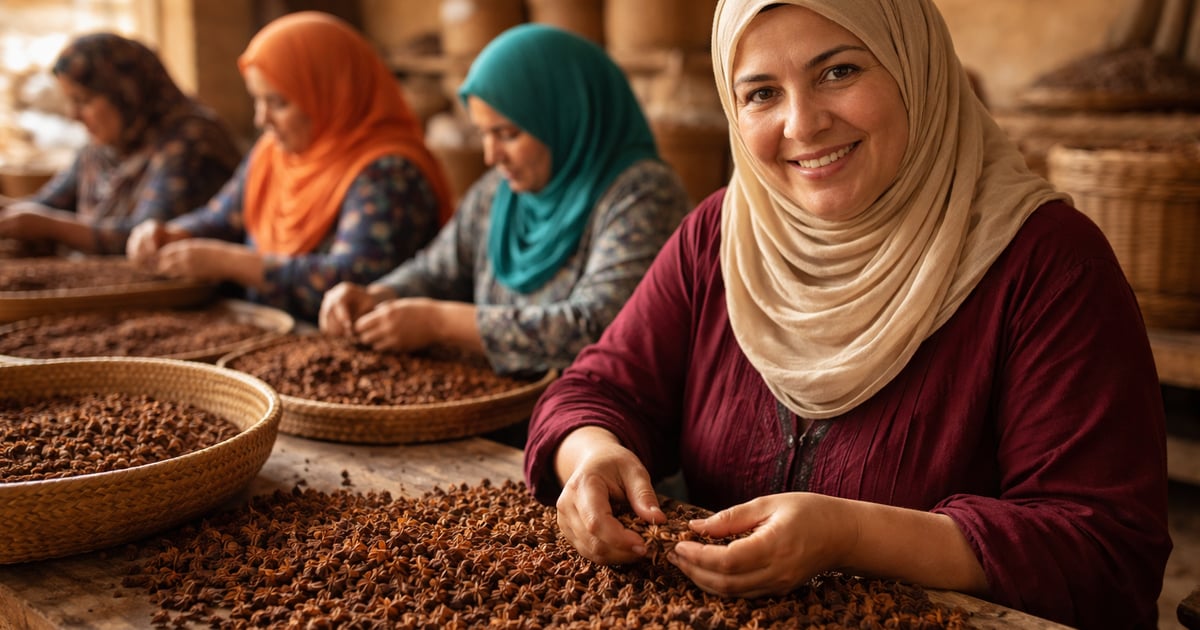
Syrian anis seeds FCA Dordrecht have eased by around 0.04 EUR/kg over the last week of October, extending a gradual softening trend from mid‑month. Indian organic star anise FOB New Delhi is stable at 6.17 EUR/kg, holding close to recent highs and widening the premium over Syrian seeds.
For Syria, the broader 2026 crop year has benefited from abundant rainfall since December 2025, driving above‑average cereal production and generally improved vegetation conditions in key northern and western farming zones. While anis is a niche spice compared with cereals, these moisture conditions support seed and herb production capacity, preventing weather‑driven tightness on the supply side.
The EU remains a structurally import‑dependent market for anise and related seeds, with extra‑EU imports under customs code 09096100 posting a weighted average price of about 3.74 EUR/kg between early 2022 and March 2026. Current Syrian FCA quotations sit slightly below this multi‑year mean, suggesting that Syrian origin is competitively priced and likely to find buyers, especially among processors and beverage producers looking to optimise input costs.
On the demand side, European consumption of spices and herbs has continued to grow, with Europe accounting for roughly one‑fifth of global imports and the region increasingly sourcing from developing countries, including the Eastern Mediterranean. Despite Syria’s broader economic crisis, artisanal and industrial demand for anis in regional beverage and confectionery production remains steady, but purchasing power constraints at home limit the scope for domestic price inflation to offset export‑market competition.
Recent weather reports for Syria indicate below‑average temperatures and isolated showers across much of the country at the end of October, following a spell of unstable, cooler‑than‑normal conditions earlier in the week. Seasonal outlooks for autumn 2026 point to rainfall around to above normal in many regions, with heightened risk of localized heavy events but generally supportive moisture for winter planting.
For anis producers, the current pattern is broadly favourable: intermittent showers recharge soils and help with the new season’s field preparation without significantly threatening already harvested seed stocks. In traditional anis areas used for flavouring arak and other spirits, such as villages in the Damascus and Qalamoun hinterland, the climate remains cool and relatively dry in late October, suitable for storage and post‑harvest handling. No acute weather‑related supply shocks are visible over the coming days.
The wider Syrian agricultural balance in 2026 shows a rebound in cereal output and a reduced need for imports, reflecting better rainfall and improved crop performance. However, macro‑economic fragility and logistics constraints continue to shape export flows for higher‑value niches such as anis seed. Sanctions and financing hurdles limit some trade channels, even as EU imports from Syria in 2025 were still valued at about 165 million EUR across all goods.
In the global anis complex, US terminal markets show relatively steady dollar‑denominated wholesale prices into late October 2026, underscoring a lack of major international supply shocks. EU border statistics confirm a persistent import requirement for anise, badian and related seeds, with aggregate import values well above export values, reinforcing the structural deficit. Against this backdrop, Syrian anis at 3.38 EUR/kg FCA competes not only with other Mediterranean origins but also with Indian and Egyptian seed, while Indian organic star anise continues to trade as a premium specialty segment.
Over the next three days in Syria, forecasts point to continued relatively cool conditions with patchy showers, especially in western and northern governorates. These conditions are neutral to slightly positive for stored anis stocks and field work, and no immediate weather‑driven disruptions to trade logistics are signalled.
Six markets, one page. Daily from the Hamburg desk.
Commodity Board Europe is an independent commodity market intelligence platform providing global production data, price insights and market analysis for agricultural and food commodities.
Europe
India
About the Author