Key developments on Nov. 5:
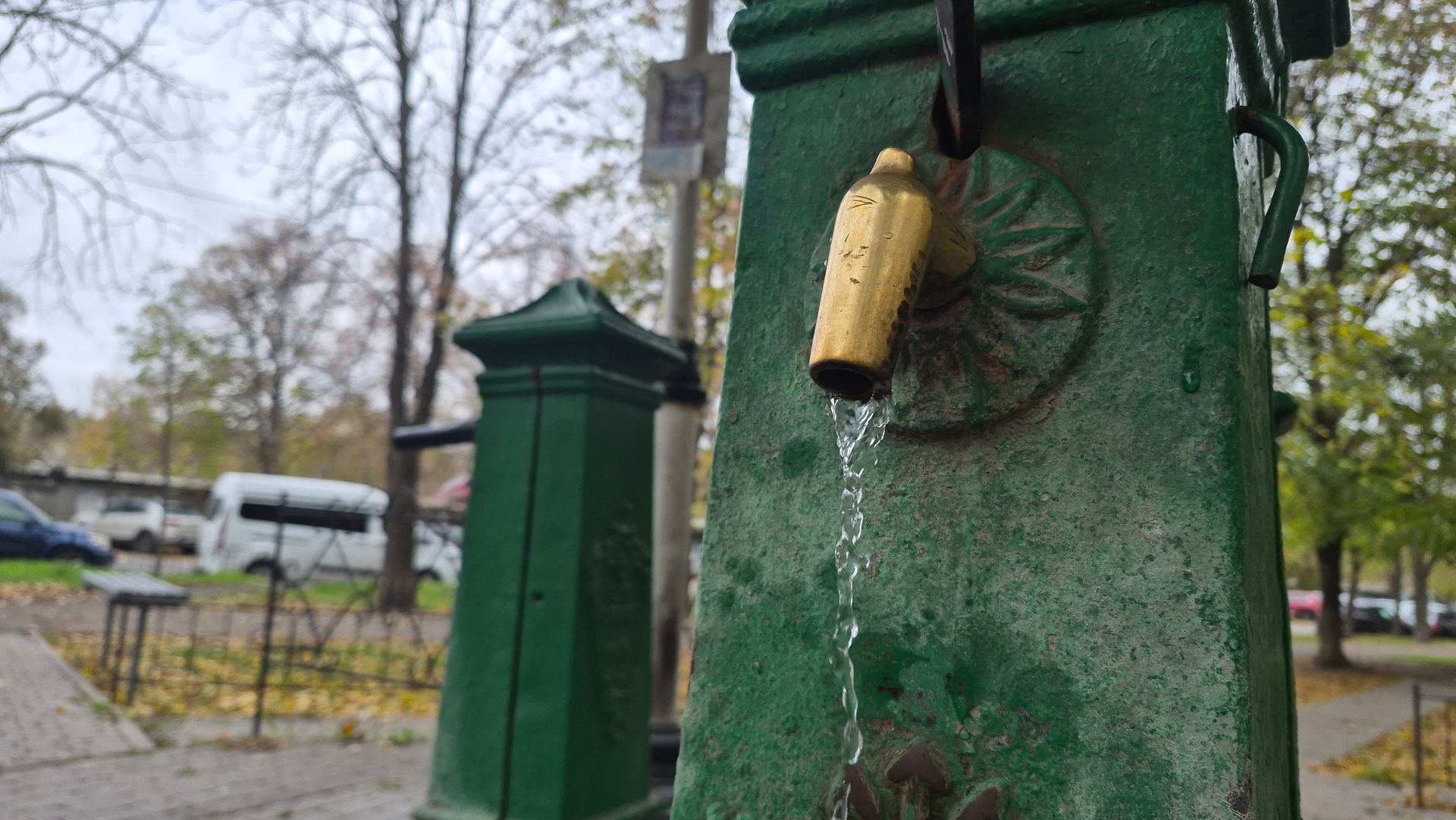
Kyiv residents faced renewed water supply disruptions on Nov. 5, as voltage fluctuations following Russian attacks also affected metro operations, local authorities said.
With the arrival of autumn, Russian forces launched a new wave of attacks on Ukraine's energy infrastructure, which was already under heavy strain from damage sustained during previous attacks.
As electricity consumption rises with colder weather, Russia carried out on Nov. 3 its largest attack on energy facilities in 2026. Following the strike, water supplies were cut off across Kyiv for more than 24 hours.
Kyivvodokanal, the municipal utility responsible for water supply and wastewater services in Kyiv and the surrounding region, said at around 1:30 p.m. local time that power outages at its facilities had disrupted water supplies across all districts of the capital.
Mayor Vitali Klitschko said at 3:13 p.m. local time that water pressure in the capital's supply system was gradually returning to normal, with service being restored in areas affected by the outages.
"The problem is that the energy grid is not stable and is being repaired at the moment. The damages are the consequences of the attacks over the last 3 months. Meanwhile, repair work is limited because of constant attacks," Oleksandr Kharchenko, director of the Energy Industry Research Center, told the Kyiv Independent.
Kharchenko previously told the Kyiv Independent that the capital was facing severe water outages because Russian forces destroyed power generation at three combined heat and power plants in January 2026. Before then, the plants were able to power Kyiv's water system, which requires huge amount of electricity.
At the same time, Kyivvodokanal lacks backup power generation to operate Kyiv's large pumping stations. Diesel generators have been installed at smaller pumping stations, but as the Kyiv Independent previously reported, they are not powerful enough to run larger pumping stations.
Power supply disruptions also affected Kyiv's metro system. Around noon, train services on the line running across both banks of the Dnipro River were temporarily suspended due to voltage fluctuations, the Kyiv City State Administration (KMDA) said.
Train services resumed at 1:05 p.m. local time, but trains were running at nine-minute intervals, compared with the usual three to five minutes at that time of day.
Russia resumed its energy blitz on Kyiv in late September, bringing rolling power outages back to the capital as winter approaches.
The bodies of 43 Ukrainians have been recovered from the rubble in the village of Komyshuvakha in Zaporizhzhia Oblast, with 33 more people still missing as of Nov. 5, three days after Russian forces attacked the settlement with heavy aerial bombs, authorities said.
With the final death toll yet to be officially established, the strike on the front-line village is already one of the deadliest single Russian attacks since the start of the full-scale invasion four and a half years ago.
Early in the morning on Nov. 5, Ukraine's National Police reported that 42 bodies had been retrieved, with President Volodymyr Zelensky adding later that the death toll had risen to 43.
Russian forces struck Komyshuvakha several times with aerial bombs on the morning of Nov. 2, initially hitting a school building where local residents had gathered to receive humanitarian aid. One of the bombs was a 3-ton FAB-3000, which contains more than 1,000 kilograms of explosives and has a blast radius of up to 250 meters.
Most of the missing are expected to be also killed, especially given the explosive force of the bombs dropped on Komyshuvakha.
One missing woman, 56-year-old Olha, was discovered alive and well on Nov. 5, regional police chief Artem Kysko reported on Facebook on Nov. 5.
Following the first strike, Russian forces dropped another nine aerial bombs on a shelter where people were taking refuge, Zelensky reported at the time.
The president called it an "exceptionally horrific strike," saying it was proof Russia did not want to de-escalate the situation.
"Russian forces could not have been unaware that local residents who remained in Komyshuvakha received humanitarian aid there every week," Zelensky said.
According to Ukraine's State Emergency Service, rescue workers and police officers had arrived at the scene when the threat of another Russian strike emerged. The rescuers took shelter, but Russian forces carried out further strikes on the same site.
Two rescue workers, Denys Konovalenko and Oleksii Sushchevskyi, both 44, were among those killed, the State Emergency Service said.
A 53-year-old military medic from Zhytomyr, Oleksandr Zaryashchuk, was also killed in the strike, said Suspilne Zaporizhzhia. Serving as a medic since 2024, Zaryashchuk was in the village when the first bombs struck. He hurried to the attack site to help the wounded, his daughter his daughter Oleksandra Vaskivska told Suspilne.
"I started writing to Dad, and he did not answer…," Vaskivska said.
His body was identified in the morgue only on Nov. 4, she said.
"And then I saw a video where my father was in the shelter in the last minutes before the second strike. You could see him going down there with other people."
For weeks, many Ukrainians living with chronic illnesses have been doing something they likely never imagined: asking strangers online to buy their medicine and mail it to them.
As Russia escalated its strikes on businesses in Ukraine, including pharmaceutical producers and distributors, Ukrainians with chronic illnesses took to social media to ask people in other cities less affected by the attacks to buy medicine that had run out at their local pharmacies.
One Threads user wrote: "Is there anyone in Odesa who can help? I need someone to pick up medicine from a pharmacy and send it via Nova Poshta. It’s the only pharmacy that has a critical medication for my mom."
Other complaints on social media say that new deliveries are selling out within hours as people buy up medications to stockpile or resell.
Ukrainians last saw pharmacy shelves this empty in the first weeks of Russia’s full-scale invasion in 2022. The market adapted quickly then, spreading stock across the country. Now the industry itself is under attack, part of a wider Russian campaign against civilian infrastructure that appears aimed at wearing down the economy and public morale as the front line sees little movement.
Since August, Russian strikes have damaged warehouses belonging to the country's largest pharmaceutical logistics companies, as well as the factories that supply them. Russia hit pharmaceutical warehouses and logistics facilities seven times in September alone, and the strikes continued into October, Ukraine's Health Ministry told the Kyiv Independent.
The country isn't facing a nationwide drug shortage yet, but experts warn that patients with chronic conditions could see gaps in supply in the coming weeks as pharmacy stocks run down. Warehouses can be restocked. Destroyed factories can't be replaced quickly. One of them, in the northeastern city of Sumy, made drugs that no other Ukrainian producer did.
"Such a high frequency of attacks over a relatively short period indicates that these are not isolated incidents, but rather systematic strikes against Ukraine’s civilian pharmaceutical infrastructure," the Health Ministry's press service told the Kyiv Independent.
Poland's Internal Security Agency (ABW) detained six people suspected of working for Russian special services, Tomasz Siemoniak, Poland's minister-coordinator of special services, said on Nov. 5.
"The group illegally supplied Russia with significant amounts of military-grade materials used to produce ammunition and weapons systems," Siemoniak said.
The detainees include five Polish nationals aged between 25 and 52 and a 37-year-old Russian woman, according to Siemoniak. Four of the six have been placed in pretrial detention on espionage charges, while the remaining two have been placed under noncustodial preventive measures, he said.
The arrests come amid a broader investigation into suspected espionage and sabotage in Poland. According to Siemoniak, nearly 100 people have been designated as suspects in such cases since Jan. 1, 2024. In the latest operation, officers searched 21 locations across the Warmia-Masuria, Pomerania, and Greater Poland provinces between Oct. 21 and Nov. 2.
A Ukrainian woman from Kharkiv has died while being illegally detained in a Russian pretrial detention center in occupied Crimea, according to a Nov. 5 statement by a Kharkiv language school she co-founded.
Oleksandra Kazarovytska, who was 44 years old, had returned to occupied Sevastopol to help her parents sell their apartment, according to the statement of the Kharkiv language school where she served as director of studies. Her parents had planned to relocate to Turkey after selling their home.
Kazarovytska was born in Sevastopol, and her parents continued living in occupied Crimea after Russia illegally claimed to have annexed the peninsula in 2014.
According to the statement, Kazarovytska was illegally detained by Russian occupation authorities when, "correspondence with a volunteer from the very beginning of the full-scale invasion was found," on her phone.
She was then taken to pre-trail detention where she was held in solitary confinement, likely in occupied Simferopol.
According to Russian occupation authorities, Kazarovytska committed suicide on Oct. 25 after being held in solitary confinement for three months. She was buried in Sevastopol on Nov 4., the Russian occupation authorities claimed.
"It is impossible to imagine that a young, talented, bright person was so cruelly torn from life," her former colleagues said in their statement.
A prominent Latvian supporter of Russia's invasion of Ukraine who emigrated to Russia two years ago, was sent to participate in Russia's war in late October after being forcibly conscripted into the Russian military, Russian opposition outlet The Insider reported on Nov. 5.
After Russia's full-scale invasion began in 2022, 59-year-old Sergei Mulivanov was a vocal critic of what he described as Latvia's, "oppression of Russians," and strong support for Ukraine, according to the Insider.
Mulivanov advocated for the suspension of Latvian support to Ukraine, the promotion of Russian language education in Latvian schools, and the reinstatement of Russian television and radio stations within Latvia.
After moving to Russia, Mulivanov moved to the Moscow region and was granted Russian citizenship, according to Russian media quoting the man's friends and family. He found work as a courier but became involved in criminal activities, knowingly or unknowingly transporting stolen currency.
In April, Mulivanov was arrested by Russian police and charged with fraud, charges to which he pleaded not guilty. While in pre-trial detention, Mulivanov signed a military contract and was subsequently sent to participate in the Russian invasion he had previously vocally supported.
Mulivanov's friends and lawyer claim he was tricked into signing the contract.
On Oct. 28, Russian authorities investigating Mulivanov's case informed him and his lawyer that he was being sent to war, as is typical for suspects who agree to join the military in lieu of criminal prosecution
Since he was sent to the front, Mulivanov has been out of contact for six days, his friends and family claim.
Russia's combat losses in October 2026, estimated as reaching 54,400 soldiers lost, were greater than in any other month since Moscow launched its full-scale invasion of Ukraine in 2022, Ukraine's General Staff said.
We are the news team of the Kyiv Independent. We are here to make sure our readers get quick, essential updates about the events in Ukraine. Feel free to contact us via email with feedback and news alerts.
This story exists because readers chose to back it. Behind it is a newsroom that will not look away — and a community of people who make that possible. It's thanks to 35,000 members that our reporting stays free for everyone to read, and we can continue our reporting. Will you be one of them?
About the Author