Print Edition
Americans are both proud and critical of our higher educational system. More American universities are highly ranked than those in other countries. More international students come here than to any other country. And basic research at U.S. universities has earned more patents and Nobel Prizes than elsewhere.
Yet trust in colleges and universities has dramatically declined. Costs have dramatically increased and more parents are questioning the return on investment.
Antisemitism and intolerance have been alarming and horrible.
Administrative bloat has ballooned. Student loan defaults are on the rise and undermining home purchases, etc.
Dozens of college presidents have been forced out. Boards of trustees are troubled and confused by the growing list of criticisms from parents, alumni and government officials. Meanwhile, at least 300 colleges have closed or virtually shut down, including Mills College, Goddard College, Hampshire College, Iowa Wesleyan University, Birmingham-Southern and the Monterey Institute of International Studies.
Notable trends:
Is American higher education still the best in the world? Probably. But American colleges and universities are expensive, and universities around the world are getting better. In South Korea, more young people are going to university than in the U.S. China notably graduates at least seven times as many engineering students as we do.
A bookcase of recently published studies highlight the challenges facing American higher education. Last month, Yale released a “Report of the Yale Committee on Trust in Higher Education.” Also last month, prominent Republican U.S. Rep. Elise Stefanik, a Harvard graduate, published a stinging attack on America’s most famous universities. Her unsubtle title telegraphs her views: “Poisoned Ivies: The Inside Account of the Academic and Moral Rot of America’s Elite Universities” (NY: Threshold, 2026).
These studies conclude that trust in higher education has declined, while costs have jumped, admission procedures have become opaque, and on many campuses, free speech has become threatened and a sense of community diminished.
Most universities, Stefanik writes, “have succumbed to decades of moral decay, academic laziness, and radical groupthink. They’ve become hollow, empty and soulless.” She criticizes these institutions for being slow to deal with antisemitism, and complains that a majority of the faculty are partisan Democrats.
Stefanik is right to raise these questions, yet Harvard did well preparing her for a career in public service. Ivy League colleges and universities have produced hundreds of Republican and conservative leaders over the past generations. Princeton, for example, has produced Republican Secretaries of State George Shultz and James A. Baker, Defense Secretaries Donald Rumsfeld and Pete Hegseth, conservative Supreme Court Justice Samuel Alito and pro-Trump entrepreneur Jeff Bezos. Were these notable conservatives and capitalists “poisoned” at Princeton?
I was a visiting professor at Princeton several years ago. I saw the opposite of what Stefanik complains about. I encountered hardworking students and faculty, impressive research, and an enormous concern for civility and respect in political discussions. Moral decay and intellectual laziness I did not see.
While it is true that faculty at elite universities are more likely to register as Democrats, boards of trustees and big donors are, in my experience, much more likely to be, or to lean, Republican.
Many Americans believe a college or university education costs too much and takes too long. Higher education needs to be more efficient. Elite colleges and universities have become amenity rich with expanded student services of all kinds. Expanded athletic teams and facilities and technology services have grown disproportionately to classroom teaching. Curbing administrative bloat is critical. Flattening the pyramid is a sensible leadership strategy.
The Yale faculty report deals with a wide range of issues, from grade inflation to the need to ban electronic devices in classrooms. It calls special attention to the vital importance of ensuring that students have the freedom to express contrarian views in the classroom and on campus. The mission at Yale, the report reiterates, is to safeguard “the right to think the unthinkable, discuss the unmentionable, and challenge the unchallengeable.”
Yet the reality in recent years, at Yale and at many colleges and universities, there has been an unfortunate trend of self-censorship where students and faculty alike fear voicing a minority or unorthodox opinion. Students suggest this may be due to fear of grading reprisal, hostile rebuke from other students or compliance officers of various kinds.
The search for truth requires the presence of contending as well as controversial thought. Suppressing the exchange of ideas, whether through censorship or disruption, threatens not only freedom of speech but also the search for truth.
I like the view of University of Chicago scholar Ralph Nicholas, who suggests “Nonsense should be criticized wherever it occurs, but we cannot always be as sure as we would like about what nonsense is.”
Declaring an idea as wrong or foolish does not make it so. Hateful or stupid speech needs to be defeated by argument. Hateful and hurtful actions are a different matter. Campuses can and must ban protesters from disrupting the normal proceedings of classrooms, lectures and campus life in general.
A college ceases to be a special place of learning unless it has a consistent and resilient commitment to free speech, tolerance and open inquiry.
Trust cannot be legislated. It must be earned, again and again, by professors who act professionally and by institutions that do not impose a political litmus test of any kind.
America is blessed with a remarkable range of higher education opportunities and new technologies promise they will get even better. Higher education needs all the reappraisals it is getting. Efficiencies are needed.
Ideological openness and balance are crucial.
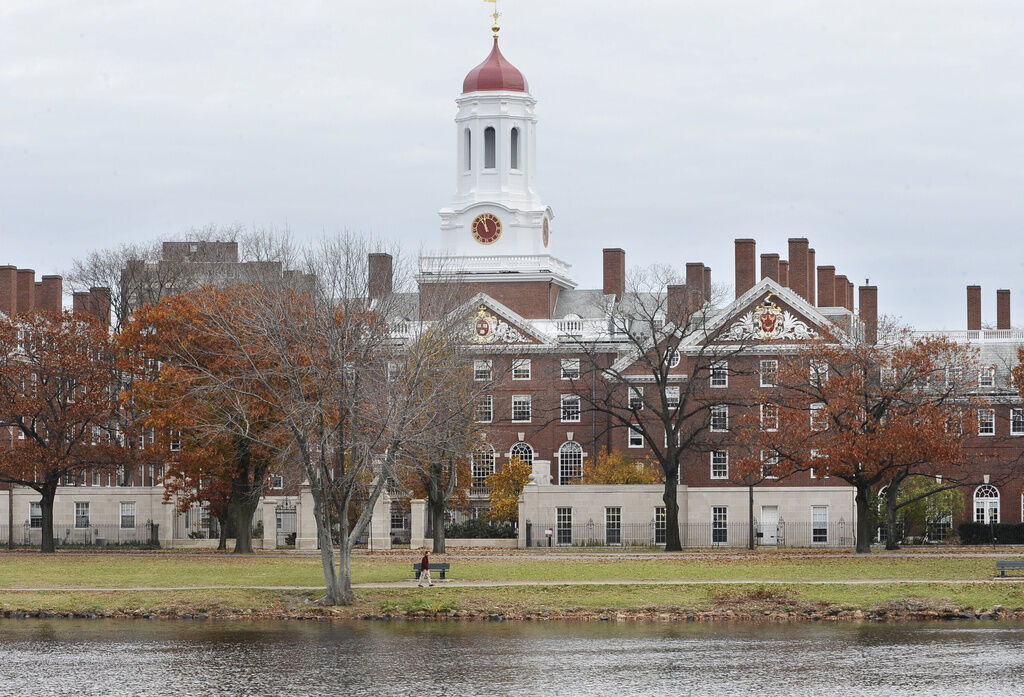
Let us, however, beware of being overcritical — there has always been an anti-intellectual, anti-elitist populism in America, which is healthy, up to a certain point. Yale will survive and partly because of its useful self-appraisal become even stronger. And the young Stefaniks of the world will be delighted, I am confident, to be among the 4% of students Harvard admits each year.
News columnist Tom Cronin writes regularly about national and state politics and public policy. He is a former college president and author of “Fireside Chats of a Retired College President.”
Reporter
Colorado News
Ernest Luning
ernest.luning@coloradopolitics.com
Updated 17 hours ago
Three Republican candidates in Colorado filed a lawsuit in Denver District Court this week seeking to prevent unaffiliated voters from participating in next month’s GOP primary, arguing that the state’s semi-open primary system violates their constitutional rights by forcing Republicans…
Colorado News
Marianne Goodland
marianne.goodland@coloradopolitics.com
Updated 3 days ago
The lighter side of the state Capitol, usually. At first, May the Fourth might have been a bit of a disappointment. Usually, there’s a lot of Star Wars foolishness on this particular day, but early on, it was low-key. The…
Colorado News
Marianne Goodland
marianne.goodland@coloradopolitics.com
Updated 2 days ago
Despite objections from legislative staff and Republican opposition, Senate Democrats on Friday moved forward with a proposal to reroute $306 million in taxpayer refunds. Already, critics are preparing to sue over the proposal that seeks to take $300 million in Taxpayer’s…
Colorado News
Marianne Goodland
marianne.goodland@coloradopolitics.com
Updated 2 days ago
Gov. Jared Polis on Friday officially signed a $46.87 billion spending plan for the Colorado state government in the next fiscal year. His signature is the culmination of months of work by legislators, who resorted to cuts, transfers and other…
Colorado News
Marianne Goodland
marianne.goodland@coloradopolitics.com
Updated 14 hours ago
Colorado’s long‑running bid to let Pinnacol Assurance break away from state control is suddenly in jeopardy, as a newly revised bill — stripped of the payouts and structural changes once central to the deal — has triggered fresh tensions among…
Colorado News
Deborah Grigsby
deborah.smith@denvergazette.com
Updated 2 days ago
It’s been nearly two decades since Denver shared the spotlight as host to the 2008 Democratic National Convention — and a lot has happened in the city since then. But not major party conventions. In fact, before 2008, Denver hadn’t…
Colorado News
Marianne Goodland
marianne.goodland@coloradopolitics.com
Updated 17 hours ago
Colorado’s long‑running fight over credit‑card swipe fees entered its final round Tuesday, when lawmakers sent a proposal to Gov. Jared Polis and rival industry coalitions immediately launched competing campaigns to sway his decision. The clash pits groups urging Polis to…
Colorado News
Marianne Goodland
marianne.goodland@coloradopolitics.com
Updated 2 days ago
The Colorado Senate on Thursday honored longtime Denver Post bureau chief Fred Brown with a ceremony as distinctive as the journalist himself, donning masks bearing his likeness and celebrating his five decades of shaping political reporting and ethical standards in…
Colorado News
Marissa Ventrelli
marissa.ventrelli@coloradopolitics.com
Updated 1 day ago
A panel of senators voted down a proposed measure requiring legislative caucuses to disclose certain financial records. Sponsored by Sen. Mike Weissman, D-Aurora, Senate Bill 168 would also require legislative caucuses to provide the Legislative Council with caucus members’ contact…
Colorado News
Ernest Luning
ernest.luning@coloradopolitics.com
Updated 2 days ago
Colorado gubernatorial candidates and the independent expenditure committees backing them hauled in more than $20 million between them by the end of April, as the primary election approaches, according to campaign finance reports filed this week. Republican Victor Marx and…
PREV
PREVIOUS
Another week, another column about Colorado’s ruling class treating democracy like a state trooper treats the speed limit. It’s for other people. I swear, I want to write about literally anything else — aliens, sports, lab-grown meat, Bigfoot opening a vape shop in Pueblo. But Colorado’s legislature has never been more abusive to the citizenry […]
Colorado Politics is proudly powered by WordPress
Welcome to the Denver Gazette
Subscribe to stay up to date with all things Colorado.
Streak: 9 days i
Stories you’ve missed since your last login:
Stories you’ve saved for later:
Recommended stories based on your interests:
About Us
Colorado Politics is published both in print and online. Our website features subscriber-only news stories daily, designed for public policy arena professionals. Member subscribers also receive the weekly print edition of our award-winning newspaper, containing outstanding features and news stories, in their mailboxes every Saturday.
Transparency In Coverage
Terms Of Service
Privacy Policy
Secure your subscription to Colorado’s premier political news journal, in continuous publication since 1898. You can be in the know right alongside Colorado’s political insiders. Want the real scoop? Subscribe to Colorado Politics today!
© 2025 Colorado Politics
About the Author