US prices in May rose at their fastest rate in three years, with inflation surging to 4.2%.
The rise, from 3.8% a month earlier, was largely driven by rising energy costs, the Bureau of Labor Statistics (BLS) said.
It marked the third month in a row the Consumer Price Index (CPI) has risen, with households increasingly feeling the strain of the US and Israel's war in Iran.
Higher inflation raises the likelihood of the US Federal Reserve raising interest rates in a bid to curtail spending.
The last time inflation was higher was in April 2023, when the US was still grappling with the fallout from the energy shock sparked by Russia's invasion of Ukraine.
Overall energy bills including gas and electricity were almost a quarter higher in May than a year earlier.
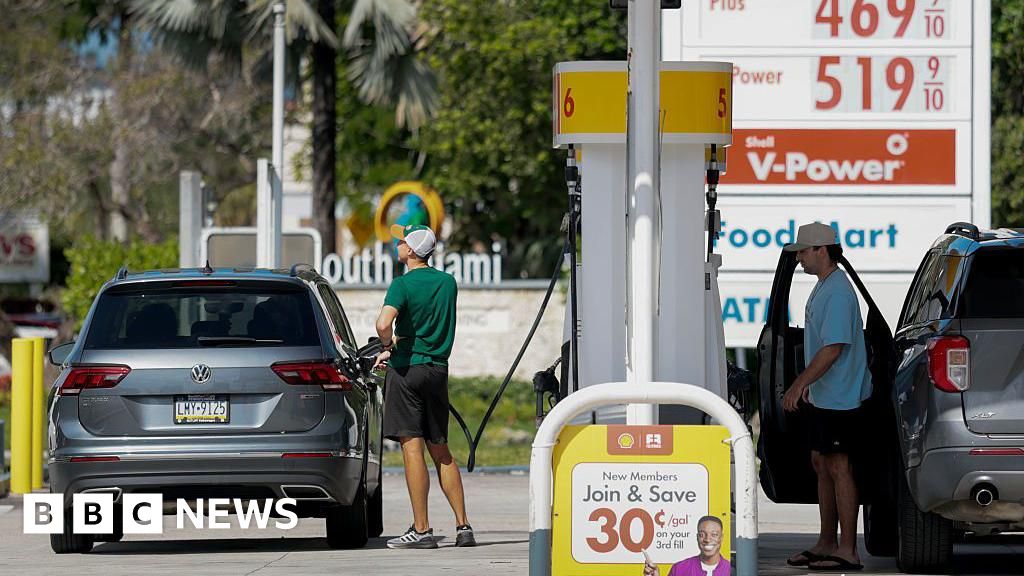
Fuel prices have also soared. The average price of a gallon of regular petrol in the US is currently $4.15, a sharp increase from $2.98 on February 28, when President Donald Trump launched strikes on Iran.
The CPI is a measure of how much prices have risen in a given month compared to the same month a year prior. The Fed's long-term inflation target is 2%.
UK pint prices are up 36% since the last World Cup. We look at why beer now costs so much more.
It is the third month in a row US jobs figures have beaten expectations.
Despite the Iran war, inflation and debt fears, US markets keep hitting record highs, fueled largely by AI. BBC's Samira Hussain looks into whether that bubble will burst.
With US waiting staff getting cross at receiving less than 20%, tips are also on the rise elsewhere.
Six supermarket brand eggs cost £1 in 2022. How much are they now, why have they gone up, and is anyone profiteering?
Copyright 2026 BBC. All rights reserved. The BBC is not responsible for the content of external sites. Read about our approach to external linking.
About the Author