US markets stumbled as inflation data sparked fears of rate hikes in the coming months.
Save
Share
Consumer inflation in the United States increased at the fastest pace in three years as surging oil prices amid tensions with Iran weigh on global energy markets before the US Federal Reserve’s policy meeting next week.
Inflation rose by 0.5 percent in May compared with the prior month, following a 0.6 percent jump in April, according to the US Labor Department’s Bureau of Labor Statistics (BLS), and was 4.2 percent higher than this time last year.
The increase is largely driven by a surge in energy prices, which rose by 3.9 percent in May following a 3.8 percent increase the prior month.
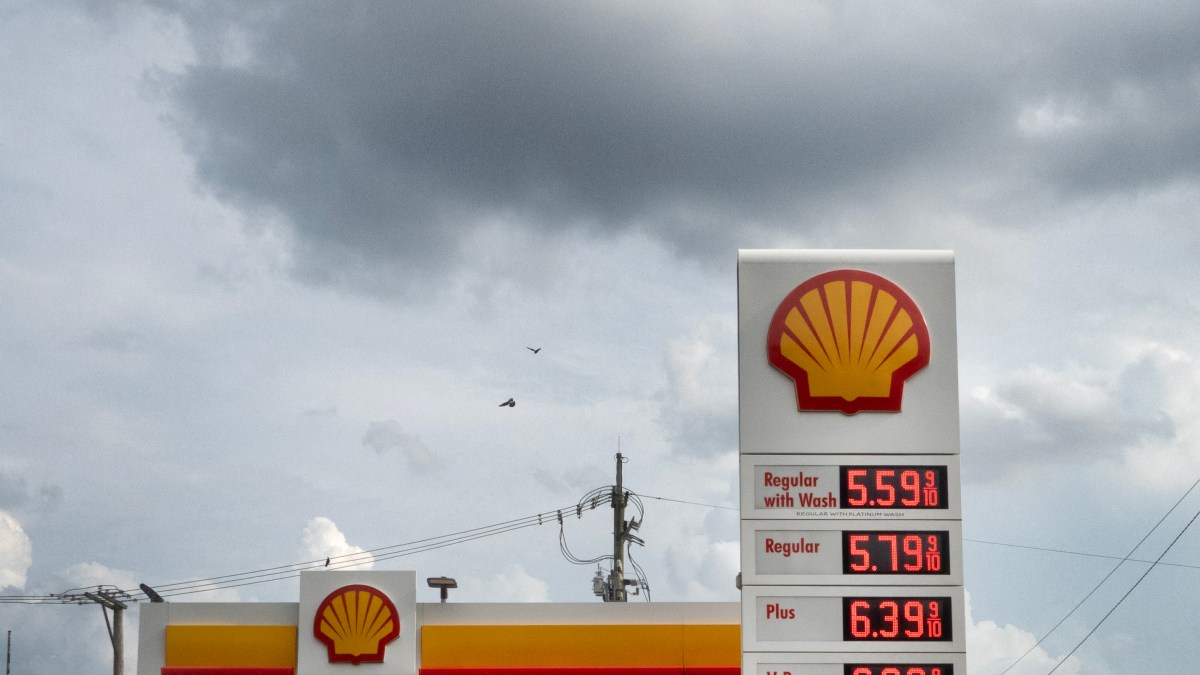
Americans feel the pressure at the petrol pump, in particular. Petrol prices jumped 7 percent compared with a month ago and are more than 40 percent higher than this time last year.
US President Donald Trump on Wednesday appeared to embrace data showing inflation was up more than 4 percent.
Asked about US government data showing consumer inflation increased at its fastest pace in three years in May, and whether it could hobble his fellow Republicans just months before November’s midterm election, Trump said: “I love the inflation.”
The president then explained how he greenlit a plan to secretly move oil tankers through the Strait of Hormuz over concerns of higher costs and increasing inflation. “It was worth it to me,” Trump said about his calculus and calling the operation a success.
“When it’s over, you will see oil drop to where it was before,” Trump said of the larger war. “It’s coming down. It’s going to come down like a rock.”
The price for a gallon of petrol is $4.15 ($1.10 per litre), according to the American Automobile Association (AAA), which tracks US petrol prices. By comparison, it was $2.98 ($0.79/litre) when the US and Israel first struck Iran on February 28.
Oil prices are continuing to rise. Brent crude futures climbed $1.45, or 1.6 percent, to $92.90 a barrel in morning trade on Wednesday. West Texas Intermediate (WTI) crude jumped $1.80, or 2 percent, to $90 a barrel after touching a session high of $90.42 earlier in the day.
“High prices are here to stay. This month’s CPI print offers no relief to working families, who are being forced to pinch pennies and tighten belts,” Alex Jaquez, a former member of the White House National Economic Council under former President Joe Biden, said in a statement provided to Al Jazeera.
Inflation also rose because of higher shelter costs, which jumped by 0.3 percent. Food prices increased by 0.3 percent, although that marks a slowing in growth. Prices rose by 0.6 percent in April and 0.5 percent in March.
While inflation grew, wages did not for the second straight month. Real wage growth declined by 0.1 percent in May.
“Americans are getting squeezed financially by inflation,” said Heather Long, chief economist at Navy Federal Credit Union. “It’s not just bad vibes about the economy now; there are real financial pressures, especially on middle-class and lower-income households.”
The increased inflation comes amid the surging likelihood of possible interest rate increases by the US Federal Reserve. The central bank will have its first policy meeting under Kevin Warsh, who took over as chairman of the Board of Governors last month after Jerome Powell’s term ended.
CME Fed Watch, which tracks the likelihood of interest rate hikes and cuts, forecast that rates will remain steady at next week’s meeting but forecasts that rate hikes, not cuts, could be coming in the months ahead.
The tracker says there is a 96 percent chance that rates will remain the same in June at 3.5 percent to 3.75 percent. But by October’s meeting, there is a nearly 38 percent chance rates will increase by a quarter of a percentage point to 3.75 percent to 4 percent and an 8 percent chance that rates will rise to 4 percent to 4.25 percent.
Goldman Sachs forecasts that rate cuts will not happen until mid-to-late 2027.
Even if Trump and Tehran reach a deal soon, it is expected to take months to get supplies moving, with the disruptions expected through 2026. And while US consumers may be more insulated from fuel shocks than other nations, continuing higher energy prices are beginning to dent spending.
Last month, Trump said Americans’ financial struggles were not a factor as he pushed for a deal even while threatening renewed attacks on Iran: “I don’t think about Americans’ financial situation. I don’t think about anybody. I think about one thing: We cannot let Iran have a nuclear weapon.”
Gold prices pared losses on Wednesday but remained near a more than two-month low as US tensions with Iran put pressure on consumer prices and increased expectations of rate hikes.
“We are talking about the possibility of rate increases, and that’s inflation control and that depresses the price of gold,” Aleksandar Tomic, associate dean for strategy, innovation and technology at Boston College, told Al Jazeera.
Spot gold was down 2.6 percent at $4,151.86 per ounce, marking its lowest level since March 23.
The S&P 500 was down 1 percent in midday trading. The Dow Jones Industrial Average tumbled 1.3 percent since the market open, and the Nasdaq dropped 1.4 percent.
Follow Al Jazeera English:
About the Author