This material may not be published, broadcast, rewritten, or redistributed. ©2026 FOX News Network, LLC. All rights reserved. Quotes displayed in real-time or delayed by at least 15 minutes. Market data provided by Factset. Powered and implemented by FactSet Digital Solutions. Legal Statement. Mutual Fund and ETF data provided by LSEG.
Former CENTCOM Deputy Cmdr. Ret. Vice Adm. Robert Harward discusses President Donald Trump’s push for a deal with Iran on ‘America Reports.’
After months of predicting a nuclear deal with Iran was just around the corner, President Donald Trump appears to be testing whether military pressure can accomplish what diplomacy alone has not.
The strategy was on full display over the past 24 hours. Trump followed through on his threat to strike Iran again overnight, launching a barrage of Tomahawk missiles and fighter jet attacks against Iranian targets while warning that additional bombing would follow unless Iran agreed to a deal. Hours later, however, he announced he had canceled planned strikes for Thursday evening, saying negotiations had been elevated to the highest levels of Iran’s leadership and that the parties had approved the final contours of an agreement.
The rapid sequence of threats, strikes and renewed diplomacy highlights an increasingly familiar pattern in Trump’s approach to Iran: using military pressure to push negotiations forward while keeping a diplomatic off-ramp open. The question is whether the strategy is increasing Washington’s leverage — or reinforcing Iran’s belief that the United States ultimately wants a deal more than continued confrontation.
“He has made so many threats that he has not carried through on and telegraphed on many occasions his strong desire to end this war as soon as possible, that I think Iran does not take these threats seriously,” Michael Eisenstadt, director of the Military and Security Studies Program at the Washington Institute for Near East Policy, told Fox News Digital.
TRUMP KEEPS FORECASTING AN IRAN DEAL — WHY THE WHITE HOUSE STILL THINKS IT CAN HAPPEN
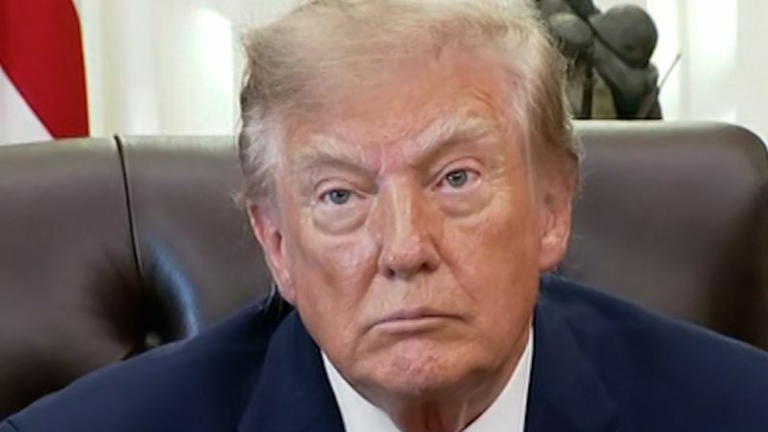
President Donald Trump speaks in the Oval Office of the White House, Wednesday, June 10, 2026, in Washington. (AP Photo/Julia Demaree Nikhinson) (Julia Demaree Nikhinson/The Associated Press )
Trump said Iranian officials contacted him during the strikes and asked for the bombing to stop.
“If they don’t sign the deal, we’ll bomb the sh*t out of them tomorrow night,” he said.
Trump suggested Thursday the campaign could eventually expand to Iran’s energy infrastructure, including Kharg Island, the country’s most important oil export hub.
“At some point in the not too distant future, we will be taking Kharg Island, and other oil infrastructure points, and assume total control of their Oil and Gas Markets, much like we have with Venezuela.”
But later, he sounded less certain. “My preference has always been to take Kharg Island. I don’t know that America has the stomach for it, to be honest,” Trump said on Fox and Friends.
Yet even as he promised additional military action, Trump maintained that negotiations had been on the verge of success.
“We’ll see what happens with the deal. We were really close to a deal,” he said earlier Wednesday.
The comments marked a sharp escalation from a president who only days earlier predicted an agreement could arrive within “two or three days” and has repeatedly suggested a breakthrough remains imminent despite months of unresolved disputes over uranium enrichment, sanctions relief and Iran’s nuclear stockpile.
“They keep tapping us along,” Trump told reporters Wednesday. “They keep playing us for suckers because you know what? They dealt with some very stupid presidents.”
Trump’s latest actions suggest the administration is still offering Tehran an off-ramp through a negotiated nuclear agreement. The question is whether military pressure strengthens Washington’s hand — or whether Iran has concluded it can withstand the costs and outlast the campaign.
Iran “has more resilience,” said James Robbins, dean of academics at the Institute of World Politics, noting that Iran has been forced to work around global isolation for decades. “They’re kind of used to sanctions. They’re used to economic dislocations, much more so than Americans.”
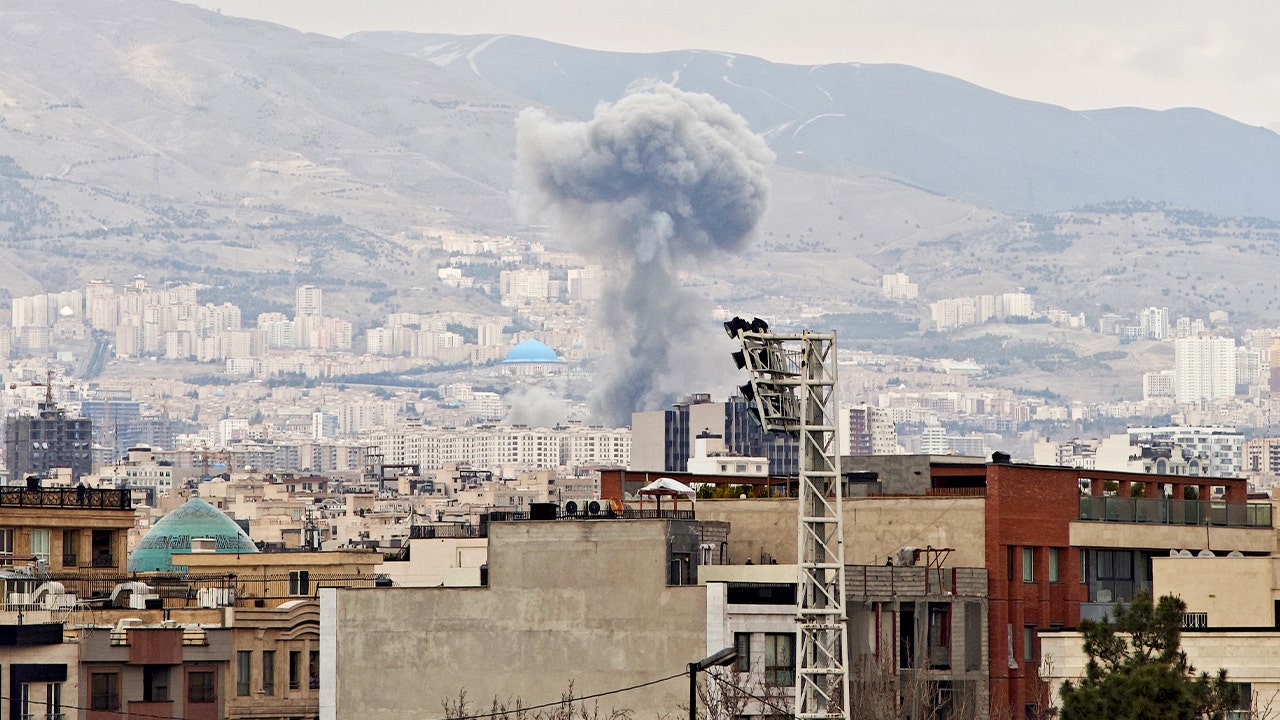
Plumes of smoke rise following reported explosions in Tehran, Iran, on March 2, 2026. (Sohrab/Middle East Images/AFP via Getty Images)
Behnam Taleblu, senior director of the Iran Program at the Foundation for Defense of Democracies, argued that mounting pressure does not necessarily make the regime more willing to compromise.
TRUMP SAYS IRAN IS ‘NEGOTIATING ON FUMES,’ BELIEVES REGIME THOUGHT THEY COULD OUTWAIT HIM
“The more desperate the regime becomes, the more aggressive the regime becomes,” Taleblu told Fox News Digital.
He also questioned whether strikes on bridges, power plants and other infrastructure would fundamentally alter Iran’s decision-making, arguing that the regime is primarily concerned with threats to its own hold on power.
“Until those making the key national security decisions, those enforcing the key national security decisions, and those enforcing the regime’s longest war, which is on its own people, so long as those three are not targeted, we’ll be back where we started,” he said.
Eisenstadt argued that Iran may ultimately believe it can absorb sanctions, withstand military pressure and simply wait for political pressures inside the U.S. to grow.
“I think they believe that time is on their side, given domestic criticism of the war and its economic impacts in the United States,” he said.
Trump’s lates strike threats came days after an Iranian drone brought down a U.S. Apache helicopter operating near the Strait of Hormuz, triggering retaliatory U.S. strikes on Iranian radar and air-defense sites and threatening to unravel an already fragile ceasefire.
The administration’s goal has long been that sustained military and economic pressure would eventually force Iran to make concessions that months of negotiations alone have failed to produce. Trump and his advisors have repeatedly argued that sanctions, military operations and the U.S.-led blockade of the Strait of Hormuz, which has cut off the pathway for roughly 80% of Iran’s oil exports, have left Iran increasingly isolated and economically vulnerable.
Iranian officials publicly rejected the notion that expanding the target set would force Iran to bend.
Iranian President Masoud Pezeshkian called Trump’s threat to strike power plants and transportation infrastructure a “sign of desperation.”
A drone view shows vessels anchored at the Strait of Hormuz, as seen from Musandam, Oman, May 25, 2026. (Stringer TPX IMAGES OF THE DAY via Reuters)
“Critical infrastructures are the lifeblood of the people,” Pezeshkian said in a post on X.
Trump has repeatedly rejected the notion that Iran can wait out his administration.
CLICK HERE TO DOWNLOAD THE FOX NEWS APP
“They thought they were going to out-wait me, you know. ‘We’ll out-wait him. He’s got the midterms.’ I don’t care about the midterms,” Trump said during a Cabinet meeting on May 27.
Despite Trump’s repeated assertions that a deal is near, negotiators remain divided over several core issues, including uranium enrichment, sanctions relief and the future of Iran’s stockpile of highly enriched uranium. Iranian officials have acknowledged progress on some elements of a potential agreement while warning that significant obstacles remain.
Whether the latest round of strikes changes Iran’s calculations may determine whether Trump’s strategy of military pressure succeeds in producing the agreement he insists remains within reach.
Get the latest updates on the Trump administration and Congress, exclusive interviews and more Fox News politics content.
By entering your email and clicking the Subscribe button, you agree to the Fox News Privacy Policy and Terms of Use , and agree to receive content and promotional communications from Fox News. You understand that you can opt-out at any time.
Subscribed
You’ve successfully subscribed to this newsletter!
This material may not be published, broadcast, rewritten, or redistributed. ©2026 FOX News Network, LLC. All rights reserved. Quotes displayed in real-time or delayed by at least 15 minutes. Market data provided by Factset. Powered and implemented by FactSet Digital Solutions. Legal Statement. Mutual Fund and ETF data provided by LSEG.
About the Author