The following is an adapted version of an article written by Anna Taraczközi, a research fellow at the Europe Strategy Institute of the University of Public Service, originally published in Hungarian on the Five Minutes Europe blog of Ludovika.hu.
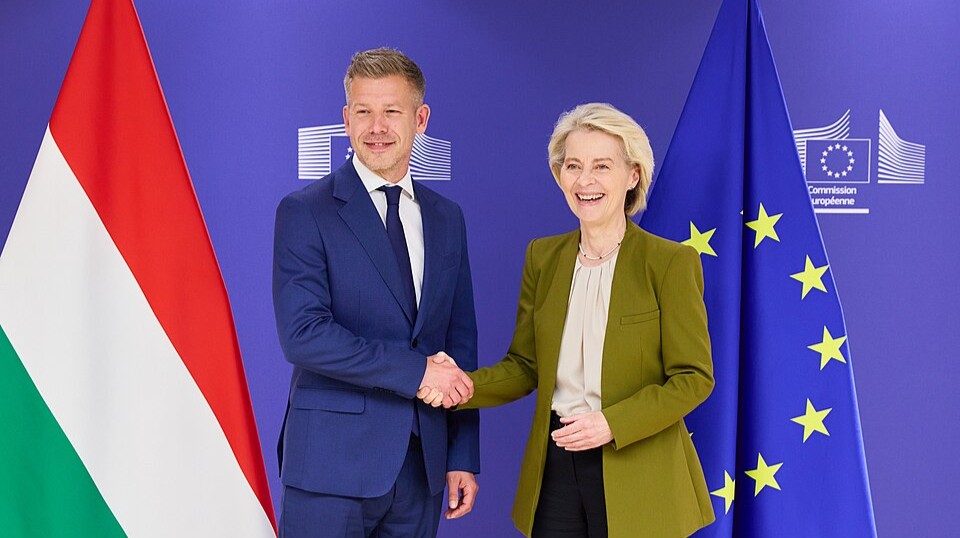
Two weeks after the Brussels agreement, the government took action on two fronts simultaneously: it submitted the legislative package necessary to meet the key milestones to the National Assembly and officially submitted the revised Recovery Plan to Brussels. Below, we examine what the documents contain and whether the time available will be sufficient.
In a previous article, Ludovika.hu explained that the 29 May agreement in Brussels was not about the disbursement of funds, but rather about the conditions for such disbursement.
Barely two weeks later, these conditions took shape in two key documents: Bill T/174, submitted to the National Assembly, and the amended Recovery Plan submitted to the Commission. Together, these two documents determine how much of the 16.4-billion-euro framework will actually reach Hungary.
The anti-corruption and transparency bill, submitted by Justice Minister Márta Görög on 9 June, amends approximately 30 existing laws across 110 pages and 162 sections. The preamble explicitly states that the Commission has not imposed any new conditions—the purpose of the bill is to implement the obligations outlined in the 2022 Council Implementing Decision, which were not fulfilled under the previous administration.
The most extensive element of the package is the overhaul of the asset-declaration system: public officials must itemize real estate, cryptocurrencies, bank deposits, and debts. The Integrity Authority may review the declarations of the 20 individuals on its list—ranging from the President of the Republic to party leaders—and in the event of a deliberate false statement, the individual’s legal status will be automatically terminated, accompanied by a three-year ban.
The public procurement reform introduces the concept of a ‘transparent economic operator’ and broad conflict-of-interest rules: no one—from the President of the Republic to the Governor of the National Bank of Hungary—or their family members may participate as a bidder.
The issue of public-interest property management foundations (kekva) is the most politically sensitive aspect of the proposal—and one of the most significant points from the EU’s perspective as well. The law repeals the legislation establishing 15 specifically named foundations, including the Mathias Corvinus Collegium and the Foundation for Fudan Hungary University. The terms of the board members will expire in August 2027; thereafter, appointments will be made through an open competition, subject to political conflict-of-interest rules.
It is noteworthy that the Commission had previously expected not the dissolution of these foundations but rather the assurance of their transparency—the government has thus gone beyond what was set out in the ‘super milestones’. This step is not only necessary for the Recovery and Resilience Facility: the resolution of the ‘kekvas’ is also a prerequisite for the release of cohesion funds and the €2.2 billion university budget.
The legislative package ensures the legal implementation of the ‘super milestones’; however, the Recovery Plan, which the government submitted to the Commission on 10 June, sets out the specific investments and payment requests. A Commission spokesperson confirmed that, thanks to intensive negotiations over the past few weeks, the Council could approve the amended plan as early as July.
The original Hungarian plan, submitted by the Orbán Government in 2021, was based on nine components: demography, labour force, underdeveloped municipalities, water management, green transportation, energy, circular economy, healthcare, and horizontal reforms.
Some of the projects from the original plan—the elimination of informal payments, the expansion of daycare capacity, solar panel grants for households, the Care Watch social programme, and certain railway line renovations—were actually implemented, but because the ‘super milestones’ were not met, it was not possible to submit a payment request—the investments were pre-financed by the Hungarian budget.
Under the revised plan, 2.6 billion euros of the original 10.4-billion-euro budget can be carried over, and 400 million euros of the loan portion has been waived—the latter being standard practice across the EU. The government is filling the remaining €7.4 billion gap with five new initiatives: development of the electricity grid (€1.5 billion), support for SMEs and a rental housing programme (€2 billion), purchases of suburban rail (HÉV) and railway rolling stock (€1.8 billion), and projects reallocated from other EU funds (€1.1 billion).
‘Some of the projects from the original plan…were actually implemented, but because the “super milestones” were not met, it was not possible to submit a payment request’
Most of these new components will be funded through a capital increase at the Hungarian Development Bank (MFB)—a financial instrument recognized by the RRF Regulation and used by other member states as well. The essence of the model is that the government will carry out the targeted capital increase by 31 August, thereby creating a verifiable investment, while the actual procurements will continue to be carried out within the financial institution’s framework.
Deadlines remain the tightest constraints on the process. Deputy Prime Minister Bálint Ruff called for an extraordinary parliamentary session on 16 June to debate the bill. The key milestones must be met by 31 August, payment requests must be submitted by the end of September, and payments must be made by the end of December. If these conditions are not met, the approximately 1 billion euros in advance payments already made may have to be repaid.
The EU-wide context highlights the extent of the lag: according to the Commission’s June communication, member states have yet to draw down a total of 335 billion euros in RRF funds; France has utilized 86 per cent of its allocation, while Hungary, at 9 per cent, ranks last. Finance Minister András Kármán indicated on Friday that the text of the plan will be made public in the coming days, and the Hungarian plan will be on the agenda at the next ECOFIN meeting.
The question is not whether the political will exists—the pace of the past two weeks leaves no doubt about that—but whether the legislative process, the Commission’s assessment, and implementation can keep pace with the deadlines. The agreement reached in May unlocked the door. The draft bill and the revised plan provided the key. Now the question is whether the door will open in time.
Related articles:
Click here to read the original article.
Hungarian Conservative is a quarterly magazine on contemporary political, philosophical and cultural issues from a conservative perspective.
To provide the best experiences, we and our partners use technologies like cookies to store and/or access device information. Consenting to these technologies will allow us and our partners to process personal data such as browsing behavior or unique IDs on this site and show (non-) personalized ads. Not consenting or withdrawing consent, may adversely affect certain features and functions.
Click below to consent to the above or make granular choices. Your choices will be applied to this site only. You can change your settings at any time, including withdrawing your consent, by using the toggles on the Cookie Policy, or by clicking on the manage consent button at the bottom of the screen.
About the Author