Please view the main text area of the page by skipping the main menu.
The page may not be displayed properly if the JavaScript is deactivated on your browser. Japan’s National Daily Since 1922
(Mainichi Japan)
Japanese version
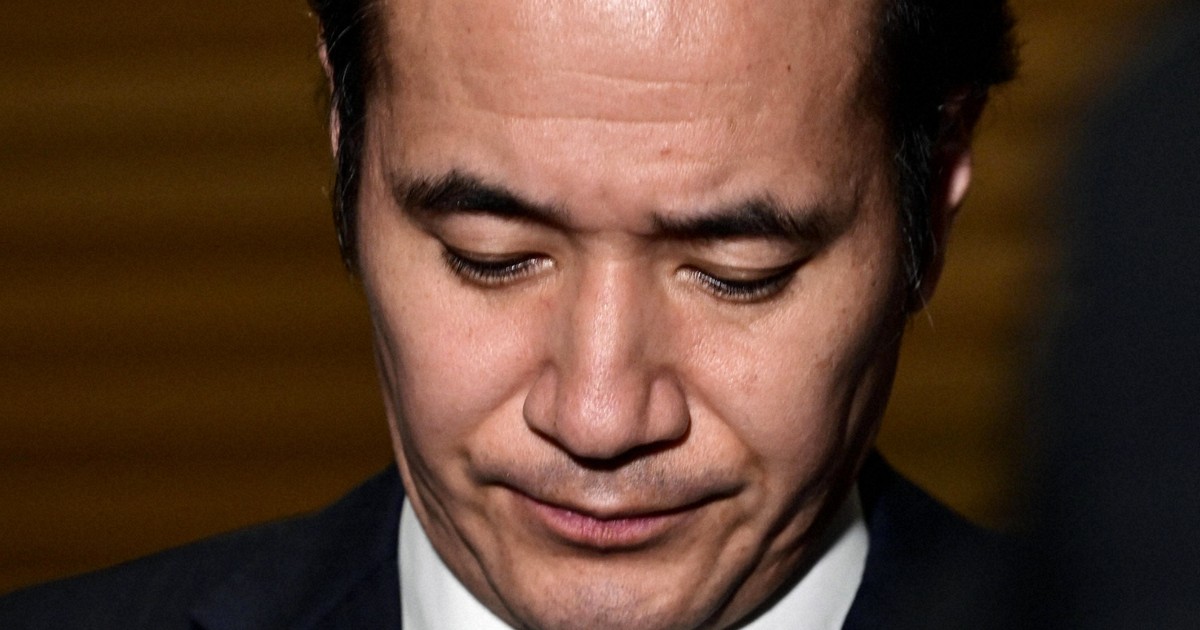
It has been about two weeks since agriculture minister Kazuo Yana’s remarks about cutting funding for municipalities whose leaders didn’t back him in the last general election came to light. The revelation sparked criticism not only from opposition parties but also from within his ruling Liberal Democratic Party (LDP). And yet, only now has he been removed.
It is clear Yana lacked the qualities required of a politician. But Prime Minister Sanae Takaichi’s decision to end his tenure in the Cabinet came far too late.
At the House of Representatives Budget Committee, the prime minister sought to end the entire matter with Yana’s retraction and apology, calling his remarks “careless.” But Yana admitted he had made comments at multiple gatherings linking his own vote totals with budgets funded by taxpayers’ money. It is obvious this was his personal conviction.
Saying budgets would be cut unless voters supported the LDP was tantamount to threatening the electorate. The prime minister called it “really lame,” but trying to gloss it over with such a light phrase was dishonest.
A new allegation has also surfaced. The weekly magazine Shukan Bunshun reported that Yana’s campaign transported supporters by shuttle bus free of charge in the February lower house election. The cost of the buses was recorded as part of “venue costs” in the income and expenditure report for election campaign expenses, raising suspicions of vote-buying prohibited under the Public Offices Election Act.
If he squeezed hostile local leaders through budgets while providing benefits to his own side, that is an outrageous privatization of politics.
On Oct. 13, Yana testified that his campaign staff had contacted the election administration commission and confirmed there was no legal problem. The next day, however, he corrected that statement, saying it was possible the inquiry had actually concerned how to record the expense in the report.
The prime minister’s response also veered off course. At first, she defended him, saying he should “work and repay (his error) through his duties,” but as criticism mounted, she stressed that “if there is illegality, I will not hesitate (to take action).” Yet even after receiving an explanation from Yana, she avoided stating clearly whether it was illegal, saying she “could not answer.”
Yana’s clinging to his post was already causing disruption. He canceled a visit to areas hit by heavy rain on the grounds that he had to prepare for Diet testimony. The Ministry of Agriculture, Forestry and Fisheries, too, was forced to spend time responding to this issue, which is not part of its regular duties.
In the House of Councillors, where the opposition holds a majority, a censure motion could have passed, making it difficult for him to remain in office.
Was the prime minister hesitant to remove him because she did not want to acknowledge the failure of her own decision to appoint him to the Cabinet? As a result of postponing judgment, trust in her administration has collapsed. The question is not limited to her responsibility for the appointment; her judgment in trying to keep him in office even after the problem came to light also raises real doubts.
More Articles 
Copyright THE MAINICHI NEWSPAPERS. All rights reserved.
About the Author