Three years after Israel’s genocide began, Palestinians remain trapped between continuing Israeli attacks and a reconstruction process that has barely advanced. Behind the diplomatic promises are bereaved children, inaccessible homes and families struggling to survive.
Almost a year after a ceasefire was supposed to bring Gaza’s war to an end, Palestinians are still being killed in their shelters, children are dying while fishing, and families are preparing for another winter without homes.
More than 1,400 Palestinian deaths have been reported since the agreement took effect on 10 October 2025. Gaza’s health ministry says more than 300 children have been killed during the ceasefire. Large-scale bombardment has diminished and aid deliveries have increased, but the promised transition from survival to recovery remains out of reach.
For the children of Fida al-Toutah, that failure has a date: 21 September.
The 31-year-old mother of five was combing her daughter’s hair inside the family’s tent in central Gaza when gunfire erupted. Her son Ezz remembers her shouting for the children to get down. He realised she had been hit when he saw blood on the hands of his younger brother, who had been holding on to her.
Fida died from a gunshot wound to the head.
“Our mother was so kind and generous. What did she do wrong?” Ezz asked.
Her husband, Ahed, described the ceasefire in terms far removed from diplomatic announcements.
“Every day there’s a shooting. Every day there is killing and death lurking around.”
The family says Israeli forces fired on their tent. Fida’s brother Ibrahim described gunfire from military vehicles and quadcopters. She was the fourth of his siblings killed since the war began. The family had already moved seven times.
“We left our neighbourhood Zeitoun to survive, but death is following us,” he said.
The Israeli military said it had no record of the incident.
On the same day, 14-year-old Ismail al-Bardawil was killed near al-Mawasi in southern Gaza. His family says Israeli forces shot him while he and his brothers were fishing in the Mediterranean, approximately 20 metres from the shore. The military said it had no information about that incident either.
Both families lived near the “yellow line”, which separates territory occupied by Israeli forces from areas where Hamas retains control. Around that boundary, approaching the wrong stretch of land can be fatal. Moving elsewhere offers no straightforward escape: much of Gaza’s population is crowded into less than 40 per cent of the territory.
Israel says its operations target Hamas and other armed groups and respond to violations of the ceasefire. Hamas retains a firm grip over the areas it controls, including through repression of dissent. For civilians, the territorial division has left homes, farmland and livelihoods beyond reach.
The reported Palestinian death toll since October 2023 now exceeds 74,000, according to the health ministry figures cited in the latest BBC reporting. Three years after the Hamas-led attacks that killed approximately 1,200 people in southern Israel, Gaza’s survivors face an increasingly prolonged existence amid the consequences of Israel’s offensive.
The political arrangements intended to change that situation remain largely unrealised. The Palestinian technocratic administration appointed in January has yet to enter Gaza, while the proposed international stabilisation force has not been assembled. Israel’s withdrawal and Hamas’s disarmament remain unresolved.
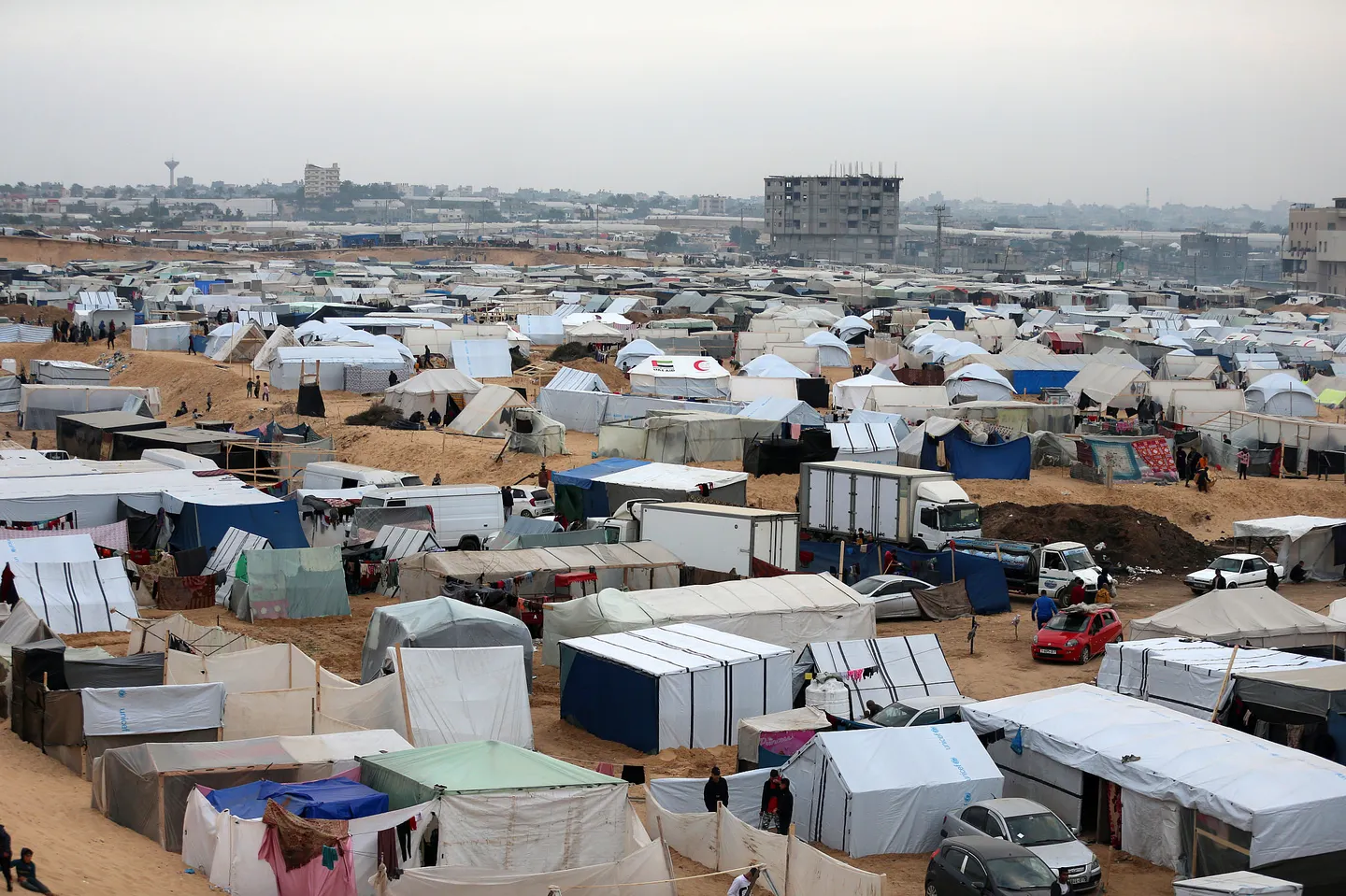
Benjamin Netanyahu insists there will be no military withdrawal until Hamas is disarmed. Hamas says relinquishing its heavy weapons depends on Israel ending its attacks and withdrawing. Between those positions, families continue to live in temporary shelters with no reliable timetable for leaving them.
Trump’s Board of Peace proposed a six-month, $2.45 billion programme in September, comprising 66 projects intended to begin recovery and establish governance. It remains a proposal facing major obstacles to implementation.
The scale of the wider task is vastly greater. An assessment conducted by the European Union, United Nations and World Bank put recovery and reconstruction needs at $71.4 billion over a decade. It recorded more than 371,000 housing units damaged or destroyed. Clearing debris, dealing with unexploded weapons and safeguarding property rights are among the prerequisites for rebuilding.
For those living through the delay, the loss of a home is measured in objects and routines as much as ruined buildings.
Ahmed Ishtaiwi, a 43-year-old driver and mechanic, lives with his two daughters in a tent near Deir al-Balah. Their home in Beit Lahiya is uninhabitable and inaccessible. Among his most treasured possessions are six battered plastic chairs.
“When I sit on those chairs, I remember sitting in the garden at home, having breakfast and drinking tea,” he said. “They remind me of my life there.”
Layan al-Jbour, 15, tries to recreate something of her former bedroom by straightening bedding and arranging the family’s shelter in al-Mawasi. When they fled their home in Khan Younis, the only possession she took was her schoolbag.
“It is the most precious thing I own now,” she said. “It reminds me so much of my school days. I loved going to school and meeting my friends there.”
For Saleh Kilani, 70, the season brings memories of an olive harvest. Before the war, he had a farm in Beit Lahiya and would press about 60 containers of oil around this time of year. Now he cannot safely reach either his land or his home.
“If I go to my home I may die, and if I go to my farm, I may die too,” he said. “This is not a life. We are exhausted and we have lost hope.”
Alongside the danger of renewed attacks, the destruction of basic services continues to threaten health.
The World Health Organization reported on 24 September that only 19 of Gaza’s 36 hospitals were functioning even partially. None was fully operational. Shortages of medicines, equipment and fuel were disrupting cancer treatment, dialysis, maternity care and rehabilitation.
Approximately 1.7 million people remained displaced. Overcrowding, contaminated water and inadequate sanitation were increasing the risk of disease outbreaks, with cases of acute watery diarrhoea rising sharply. Restrictions on diagnostic and laboratory equipment were also limiting the ability to identify and respond to those risks.
Although approximately 12,400 patients had been medically evacuated since October 2023, tens of thousands more still needed specialist treatment unavailable locally.
Greater availability of food has not ended deprivation. The latest published IPC assessment found that more than 1.2 million people faced crisis levels of food insecurity or worse between mid-April and the end of June. It projected that figure would rise above 1.4 million during July–December, including 212,000 people facing emergency conditions.
The assessment recognised improvements since the ceasefire, while identifying continuing problems with access, prices and households’ ability to buy essential goods. Those figures are a warning about continuing food insecurity, rather than evidence that increased deliveries have restored adequate diets.
Israeli authorities maintain that approximately 600 trucks carrying aid and commercial goods enter Gaza each day and that supplies are sufficient. Humanitarian agencies continue to report restrictions on essential materials and equipment, alongside worsening funding shortages.
The latest UN humanitarian report warns that underfunding will significantly reduce cooked meals and household food-parcel distributions from October.
Winter adds another immediate danger. Detailed assessments cited in the report identified approximately 235,000 people living in 217 displacement sites at medium to high risk of flooding. Nearly 44,000 more were sheltering in unsafe buildings requiring full or partial demolition.
Preparations include clearing drainage, raising shelters and installing pumps, but insecurity, restricted access to land, shortages of funding and limits on imported equipment continue to obstruct that work.
Amal Alabadla, an architect who once lived in a comfortable flat, now raises her two sons in a tent on the coast.
“Every time the rains come, it gets flooded,” she said. “I feel very scared when the wind is strong because our tent gets destroyed or damaged.”
Her husband was outside Gaza when the war began, and they have not been reunited in three years. Her three brothers, who helped care for the children, were killed in separate attacks before the ceasefire.
She says one of her sons suffers epileptic seizures during the winter cold. Keeping him dry and warm has become a recurring struggle.
“Before the war, I had a job, a house, an ordinary life, but then everything turned upside down,” she said. “It’s only about survival day by day, to keep my kids alive, clean, healthy and fed.”
For Esraa Abu Taiba, 26, occasional beauty work provides a brief connection to the person she was before displacement. She cuts girls’ hair and prepares brides for weddings in nearby tents.
Her family came from Bani Suheila, east of Khan Younis, now within the Israeli-controlled zone. Two of her brothers were killed, two were wounded and another is detained in Israel.
Her days revolve around fetching water and obtaining meals from a community kitchen. Her mother has kept the key to their former home.
“The only thing I still do from my old life is some beauty work,” Abu Taiba said.
“It takes me back to a beautiful and happy period of our lives, when we used to celebrate weddings and other happy occasions before the war.”
For Kilani, the former olive farmer, the greatest fear is that this suspended existence will become permanent.
“My biggest fear is that this situation will continue,” he said. “We are living through a period that can be described as neither war nor peace.”
Reporting and sources
Family interviews and quotations are drawn from Seham Tantesh and Jason Burke’s Guardian report, published 7 October 2026, and Yogita Limaye’s BBC report, published 8 October 2026, with additional BBC reporting by Imogen Anderson and Malak Hassouneh. Further information comes from the WHO, OCHA, IPC, Reuters, Associated Press and the joint EU–UN–World Bank damage assessment linked above.
Figures note: casualty totals are attributed to Gaza’s health ministry. OCHA’s count of fatalities reported during the ceasefire period includes deaths from wounds and bodies recovered from rubble; a death registered during that period does not necessarily mean the person was killed after the ceasefire began.
About the Author