The European External Action Service (EEAS) is the European Union’s diplomatic service. Since 2011, the EEAS carries out the EU’s Common Foreign and Security Policy to promote peace, prosperity, security, and the interests of Europeans across the globe.
The EU High Representative for Foreign Affairs shapes the standing of the European Union on the global stage.
All over the world, the European External Action Service, in coordination with the European Union institutions, addresses EU foreign policy priorities, including civilian and military planning and crisis response.
The European Union has Special Representatives in different countries and regions of the world.
Contact the European External Action Service, ask general questions on the European Union or get information on visiting the EEAS.
The EU maintains diplomatic relations with nearly all countries in the world and undertakes a range of actions with strategic partners, key international players, and emerging and developing powers.
The Diplomatic Representations play a vital role in representing the EU and its citizens around the globe and building networks and partnerships.
Since the first CSDP missions and operations were launched back in 2003, the EU has undertaken over 37 overseas operations, using civilian and military missions and operations in several countries in Europe, Africa and Asia. As of today, there are 20 ongoing EU CSDP missions and operations, including 11 civilian, eight military and one civilian and military initiative.
Election observation missions (EOMs) provide a comprehensive, independent and impartial assessment of an electoral process according to international standards for democratic elections. The EU is a worldwide recognised credible actor in international election observation. Since 2000, the EU has deployed over 160 EOMs in more than 60 countries.
Since 2006, the EU High Representative has led diplomatic efforts between the E3/EU+3 (China, France, Germany, Russia, the United Kingdom and the United States) and Iran, which led to the conclusion of the Joint Comprehensive Plan of Action on Iran’s nuclear program (JCPOA) in Vienna on 14 July 2015. The JCPOA is designed to ensure that Iran’s nuclear programme will be exclusively peaceful and provides for the comprehensive lifting of UN, EU and US nuclear-related sanctions.
All over the world, the EU works to prevent and resolve conflicts, to support resilient democracies, to promote human rights and sustainable development, to fight climate change, and to contribute to a rules-based global order.
In an increasingly interconnected world, Europe’s security starts abroad. European citizens expect and deserve to live in a safe and stable environment. In the face of increased global instability, the EU needs to take more responsibility for its own security and increase its capacity to act autonomously.
Crises can affect EU citizens, staff and interests outside of the EU. To protect them, the EU is strengthening its response to security and consular crises. The EEAS Crisis Response Centre contributes to this work.
In a shifting geopolitical landscape, the EU has remained a strong defender of human rights. New geopolitical rivalries only serve to underline its role as a reliable and stable partner, and a champion of the rules-based international order.
Equality and non-discrimination are guiding principles of the European Union’s action on the international scene, as enshrined in the EU Treaties. Promoting gender equality, diversity and inclusion is a matter of human rights, but also of peace and security, social justice, and economic progress.
The EEAS works in close collaboration with the European Commission and the EU Member States, and with the support of the EU Delegations, pursues climate, energy and environmental policy priorities through outreach and dialogue with partner countries, multilateralism and global action. This is known as EU Green Diplomacy.
In today’s world marked by major geopolitical and economic power shifts, multilateralism is still the most effective means to govern global relations in a way that benefits all. The EU stands committed to a renewed multilateralism fit for the 21st century.
Migration is a global phenomenon presenting a unique set of challenges while offering substantial benefits to countries of origin and destination as well as migrants. The EU works to ensure that migration takes place in a safe, regular and sustainable manner.
The EU prioritises development and stability in the wider region and neighbourhood, working in close partnership with its neighbours to the East and South and supporting the reforms required by countries that want to become EU members.
The European Union together with its Member States is the world’s leading humanitarian donor. New challenges, same principles, humanitarian aid is a key pillar of the EU’s external action and an important part of its ability to project its values globally.
The European Union, more than ever, needs to work closely with partners to face the global challenges and build together a safer, greener, more prosperous and equal world.
Building bridges between the European Union and the rest of the world
Cultural diversity is one of the emblems of the EU and its Member States and a tool to strengthen cultural relations beyond our borders, to connect people worldwide, to share values, to improve international relations and to learn from each other’s practice.
The Global Gateway is a new European strategy to boost smart, clean and secure links in digital, energy and transport sectors and to strengthen health, education and research systems across the world.
Digital technologies have brought new opportunities into the lives of people around the world. They have also become key competitive parameters that can shift the balance of power. The goal of EU Digital Diplomacy is to secure the EU global role in the digital world, to protect its strategic interests and to promote its dynamic, human-centric regulatory framework for an inclusive digital transformation.
In its trade relations, the EU promotes a sustainable growth model as defined by the European Green Deal and the European Digital Strategy, which can help the recovery from the COVID-19 economic crisis.
Restrictive measures, or sanctions, are one of the EU’s tools to promote the objectives of the Common Foreign and Security Policy (CFSP).
Since 2015, the EU has significantly improved its capacity to tackle Foreign Information Manipulation and Interference (FIMI), protecting the EU’s democratic processes, security and citizens.
International days are key moments on the global calendar dedicated to celebrating, raising awareness and taking action on pressing issues that affect us all. From honouring human rights to championing environmental sustainability, these days unite organisations, communities, and individuals worldwide for change – one celebration, one cause, one action at a time.
For media inquiries, please contact the EEAS press team
Subscribe to our Press Alerts & Newsletters
Read recent EEAS stories from around the world.
Campaign pages are created around specific topic and actions.
Job opportunities, grants and tenders at the EEAS, EU Delegations and Missions and Operations.
Looking for an exciting job in the field of external relations, foreign affairs and security? Find our vacancies
Interested in one of the tenders? See how to apply for an EEAS call for tenders.
Grants can be awarded as donations to third parties that are engaged in external aid activities. Grants are managed by EuropeAid (DEVCO) or DG Near, the EEAS does not manage any grant.
The EU supports projects worldwide covering a range of sectors.
Every day, events are organised worldwide by the European Union Delegations and its partners.
Check against delivery!
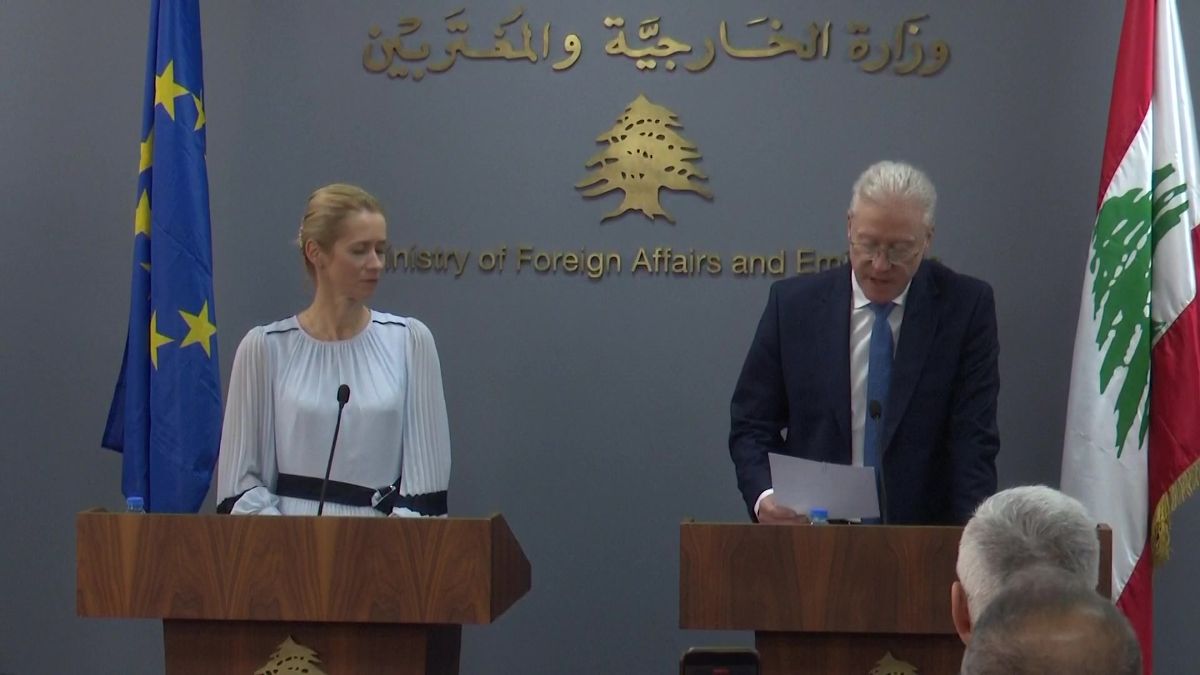
Thank you, dear Minister and dear Youssef.
Thank you for the warm welcome here in Beirut. I am really happy that this visit is taking place.
The European Union and Lebanon are natural partners, bound by historic ties across the Mediterranean.
The EU has clear interest in stable, prosperous, and sovereign Lebanon. We are backing this with substantial political, economic, and security support. In September, we announced €505 million in financial assistance until 2027, completing the €1 billion package announced in 2024. This will go towards economic recovery, enhancing security, border management, and essential services.
This of course requires reform. Lebanon took important decisions over the summer. Now, the focus must be on implementation, particularly in the economic and banking sectors. These reforms are essential to mobilise additional international support, attract investments to Lebanon, and improve the lives of Lebanese people.
Security is just as important. Earlier this year, the Iran war spilled into Lebanon with devastating consequences. Lebanon’s security environment remains difficult. The security of Lebanon must remain the prerogative of the Lebanese government and people.
Europe supports the U.S. brokered agreement for the South and efforts that can bring lasting security and stability between Lebanon and Israel. For that reason, the European Union is stepping up its security assistance to the Lebanese Armed Forces, including through the European Peace Facility.
Total support through the facility now stands at €182 million since 2022. With this, Lebanon is already the third largest beneficiary of the European Peace Facility assistance, and more support is planned for 2027.
But there is another major upgrade in our security partnership that I want to mention. Planning for our new European Union Support Mission to train and advise Lebanese Armed Forces is now completed.
Minister, I thank you and your Ministry for the close cooperation and preparation of that mission. I am glad that we now have the formal invitation from the Lebanese authorities, which allows us to proceed.
On Monday, the 12th of October, I expect the EU Foreign Ministers to formally establish the mission, which will make a crucial contribution to Lebanese security. It will advise and assist the Lebanese Armed Forces and Internal Security Forces to strengthen territorial control, border security, and also internal security. All this will be done in line with the UN Security Council resolution 1701.
Let me also be clear what this mission is not about. It is not UNIFIL replacement, and it will not only focus on Southern Lebanon. UNIFIL has played an important role for almost 50 years. A continued UN presence in Southern Lebanon is under discussion, and we remain ready to work with Lebanon, the UN, and the Security Council members on what comes next. There cannot be a security vacuum when UNIFIL leaves. Lebanon must have a full control of its whole territory. That also means moving towards with disarmament of Hezbollah.
Finally, we discussed the security in the wider region. Lebanon’s future and stability is closely connected to Syria’s transition. The EU welcomes the stronger cooperation between Beirut and Damascus. We recognise the enormous burden that hosting Syrian refugees has placed on Lebanon.
As I saw myself in Syria last week, reconstruction must keep pace for people to return; they need schools, hospitals, roads, infrastructure, and of course also security. The European Union will continue supporting Syria in their reconstruction, refugees, and also their host communities.
Dear Minister,
Europe is invested in Lebanon’s future. We will continue to support your institutions, restoring full sovereignty, and building lasting stability.
Thank you very much.
Q. Are you seeking to accomplish a certain political involvement in the Middle East war, specifically with Iran? Are you planning to play this role? And who do you think would be replacing UNIFIL? Security companies? Have you discussed this?
Thank you for this question. Clearly, when it comes to the war in Iran, we have been in close contact with all the regional partners because the discussions of what comes after this war is over, what is the security architecture of the region, and there Europe has a clear role. The stability and security of the region is really in our interest.
When it comes to UNIFIL, then we are of the position that there has to be international presence to keep the stability and security. Clearly, the discussions are going on in what kind of format it is. Our European Member States that are also contributing to UNIFIL currently, are able to contribute to international force. But what I must stress is that this kind of international force must have a UN mandate because all our Member States are also democracies and they need decisions from their parliaments to send their troops in those missions. It has to be also very clear what the mandate is, what this international force is going to do. But first it would be best if UNIFIL’s mandate will be extended because, like I said, security vacuum is not something that we want to see.
Watch the press conference and Q&A
About the Author