Business Guide
Photos
Classifieds Ads
Business Guide
Follow us
Spain
International politics
María Eugenia Alonso
Enviada especial a Ceuta
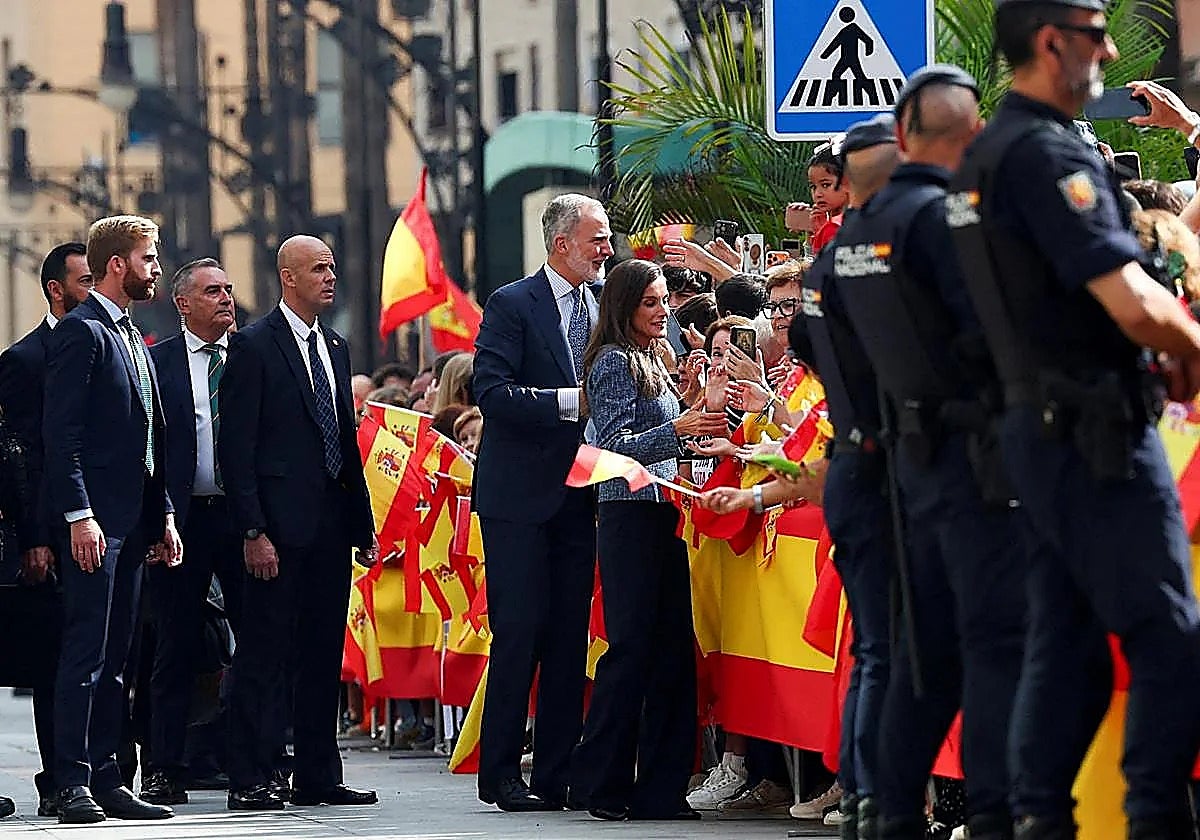
The Levante wind, which usually lashes the North African coast, gave a respite on Tuesday, allowing a declaration of principles to be heard with absolute … clarity: one that will mark a turning point in the contemporary history of Ceuta and, by extension, of Spain as a whole. The king and queen set foot on Ceuta soil for the first time.
It was not just another ceremonial visit, but rather one that responded to a deep-seated need for a visible presence and a sense of closeness. It was the institutional response to the mass influx of migrants this past summer.
The atmosphere in the streets reflected a sense of pent-up tension, the psychological legacy of those fateful 30 and 31 July, when some 80,000 people crossed the border. That crisis, which King Felipe VI described as a “shock” of unprecedented socio-political proportions, continued to reverberate in the daily uncertainty felt by Ceuta’s shops, schools and homes.
Related story
Ceuta welcomes King and Queen of Spain for historic visit following border crisis
María Eugenia Alonso
The local response, however, was not one of resentment or revenge, but of civic-mindedness. The flags of Ceuta and Spain, which for weeks had hung from balconies across the country as a sign of solidarity, were flying in greater numbers this Tuesday to welcome the king and queen.
A visit which, as Felipe VI acknowledged, had been a long time coming since his accession in June 2014. A “long-standing debt” that should have been settled under normal circumstances, before the summer disrupted any semblance of normality. However, the capricious course of history and the winds from North Africa decreed that the meeting should take place under the weight of epic significance and recent trauma.
Accompanied by Queen Letizia, whose displays of empathy towards the local authorities and residents were constant, the king stood as the voice of an entire nation, joining the people of Ceuta and Melilla in a collective embrace. “We have come to see you and listen to you, but, above all, to give you a warm embrace,” he said comfortingly at the Parador Nacional during the reception, which some 300 representatives of Ceuta’s community attended.
In his speech, the king addressed the events of two and a half months ago with absolute clarity, avoiding euphemisms to describe the incident as a “violation of our border”. Felipe VI articulated what the public needed to hear “loud and clear”: Spain’s sovereignty and territorial integrity “are non-negotiable”.
Ceuta and Melilla are an “inalienable” part of the national political landscape. In the face of any external challenge, the state has an inescapable obligation to preserve them. “It is time for the public authorities, local and state institutions, including the Crown as a symbol of the nation’s unity and permanence, and the political parties to stand united, without equivocation or half-measures, and rise to the occasion,” the king said.
The speech did not seek confrontation, but rather diplomatic balance. The monarch recalled that Spain and the EU remain firmly committed to fostering a relationship of good neighbourliness with the Kingdom of Morocco: a bond that should bring mutual progress but which necessarily requires good faith, trust and mutual respect to ensure the stability of the region.
Felipe VI elevated the local conflict to a European level. “Ceuta is Spain… and Ceuta is Europe,” he declared firmly, emphasising that the border fence also marks the external boundary of the EU. After revealing recent contacts with the presidents of France and Finland, the king stated that any threat to Ceuta is a challenge to Europe, calling for genuine and effective EU solidarity that goes beyond mere words.
On the humanitarian front, King Felipe VI was unequivocal regarding migration management, stating that those who entered the country irregularly must return to their countries of origin, always through the established legal channels. Meanwhile, they are guaranteed dignified and humane treatment, but they are equally firmly required to show scrupulous respect for the laws and freedoms of the people of Ceuta.
“May we, when we look back on these difficult days, be able to do so with the peace of mind and satisfaction of having done the right thing,” the king said.
The royal visit concluded with heartfelt thanks to the security forces, as well as to the healthcare workers and volunteers who keep the city running day to day. The king took his leave by instilling a sense of calm and optimism in a society battered by uncertainty, assuring everyone that the Crown, the state and the Spanish people would never allow the historic example of intercultural coexistence that defines Ceuta to be lost.
The royal couple’s visit has left a lasting mark on the Spanish territory in Northern Africa, reminding Morocco that Ceuta remains, by right, history and the Constitution, the heart of Europe on the shores of the Strait of Gibraltar.
Access the broad Spain national news archive
Extra Iberian Tax
Non-Resident Property Tax in Spain: what's changing in 2027
SUR in English
Esta funcionalidad es exclusiva para usuarios registrados.
Reporta un error
'Sovereignty is non-negotiable': King Felipe VI visits Ceuta following summer border crisis
WhastApp
Facebook
X
LinkedIn
Telegram
Threads
'Sovereignty is non-negotiable': King Felipe VI visits Ceuta following summer border crisis
WhastApp
Facebook
X
LinkedIn
Telegram
Threads
Copyright © Prensa Malagueña, S.A.Registered office Málaga, Plaza FélixSáenz, 4, planta 2ª, 29005, Málaga (conentrada por la c/Sebastián Souvirón nº1-3).
About the Author