Güneşli
Wednesday, October 28, 2026
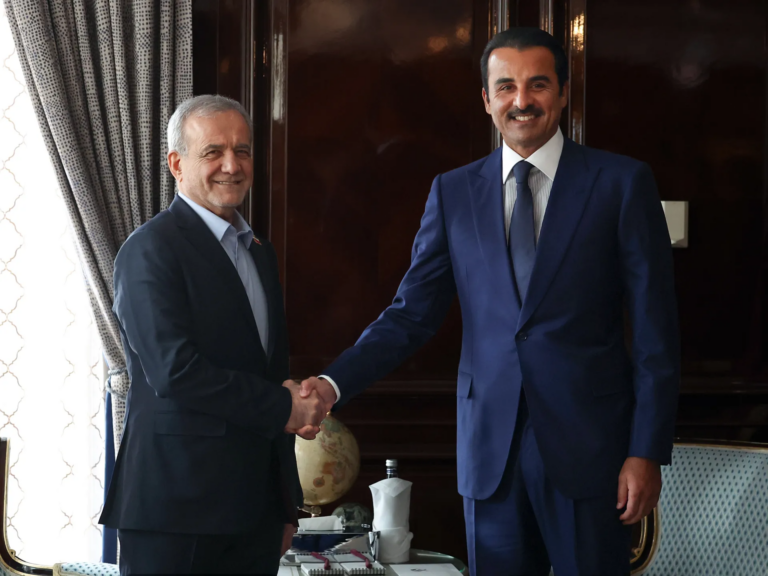
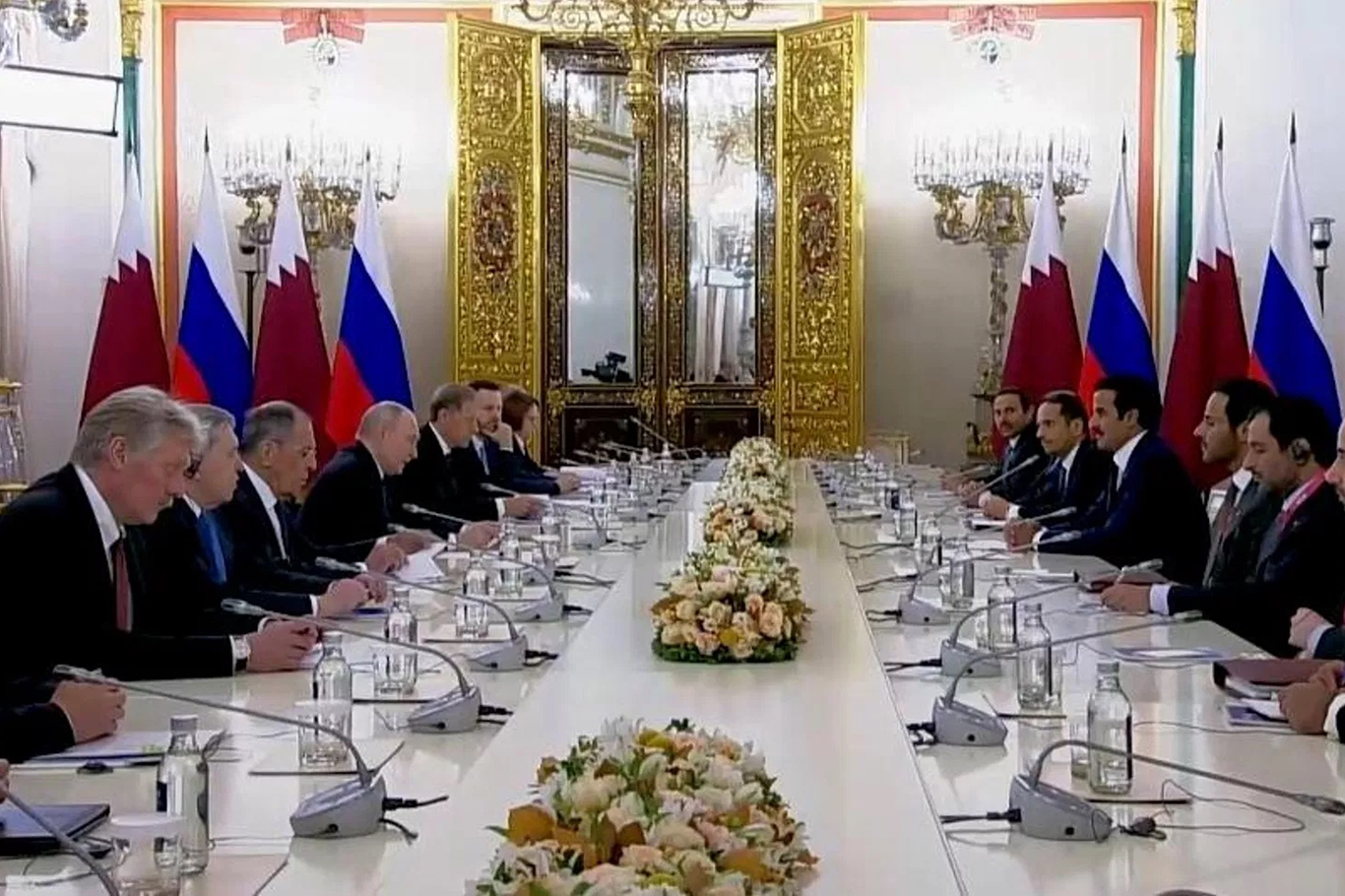
Russian President Vladimir Putin and Qatari Emir Sheikh Tamim bin Hamad Al Thani discussed bilateral relations, global energy security and developments in the Middle East during a meeting in Moscow on Tuesday, as both countries sought to strengthen cooperation amid growing uncertainty in international energy markets.
The meeting took place on the sidelines of the eighth summit of the Gas Exporting Countries Forum (GECF), which brought together leaders and representatives of major natural gas-producing countries.
According to Qatar’s state news agency, the two leaders reviewed bilateral relations and explored ways to expand cooperation across several sectors. They also discussed regional and international developments, particularly the situation in the Middle East, energy supply chains and tensions affecting the strategic Strait of Hormuz.
Putin welcomed the Qatari emir and highlighted the importance of coordination between Moscow and Doha, describing both countries as major global producers and exporters of natural gas.
"A great deal depends on our effective joint work and coordination — the stability of the global energy market depends on this," Putin said.
He praised Tamim's contribution to strengthening bilateral relations, noting that political dialogue between the two countries had developed steadily and that a joint intergovernmental commission was working to expand economic and technical cooperation.
Putin said bilateral trade turnover had increased by 10%, although its overall value remained relatively modest. He also highlighted investment ties, including Qatar's investments in Russian companies such as Rosneft and VTB, and cooperation with the Russian Direct Investment Fund.
The Russian president further pointed to expanding cultural and tourism exchanges, citing cultural events held in Doha and the participation of Qatari representatives in a cultural forum in St. Petersburg.
Energy security takes centre stage
The meeting came as energy security and the vulnerability of international supply routes emerged as key issues at the Moscow summit.
The GECF, which represents major natural gas-producing countries, provides a platform for discussions on cooperation, market stability and the long-term role of natural gas in the global energy system.
At the forum, Russia highlighted disruptions to gas supplies and the need to improve transport routes and coordination among participating countries. The summit was also expected to address supply diversification, investment, price predictability and measures to reduce volatility in global gas markets.
Qatar, one of the world's leading liquefied natural gas (LNG) exporters, has a major interest in safeguarding maritime shipping routes and maintaining reliable access to international markets.
During a GECF ministerial meeting in Moscow on October 26, Qatar's Minister of State for Energy Affairs and QatarEnergy President and CEO Saad Sherida Al Kaabi stressed the importance of protecting energy infrastructure and maritime routes amid regional conflicts.
He warned that disruptions to shipping through the Strait of Hormuz could have far-reaching consequences for global trade and energy security.
The strategic waterway is particularly important to international energy markets because of its role in transporting oil and LNG from the Gulf.
Russia-Qatar economic ties
Beyond energy, Moscow and Doha have sought to deepen their economic relationship through investment, trade, tourism and cultural cooperation.
Qatari investments in Russian businesses have provided an important channel for economic engagement, while the two governments have continued efforts to diversify bilateral trade.
Putin's reference to the 10% increase in trade turnover suggested continued growth in economic ties, although he acknowledged that the overall volume remained limited.
The two countries also maintain diplomatic contacts on regional issues, with Qatar playing a mediation role in several international disputes and Russia seeking to preserve its influence across the Middle East.
Their meeting in Moscow provided an opportunity to discuss these overlapping interests at a time when regional instability is increasingly affecting energy infrastructure, shipping and international markets.
The talks formed part of a broader series of bilateral meetings held alongside the GECF summit, underscoring the importance of energy diplomacy in relations among major gas-producing nations. (ILKHA)
LEGAL WARNING: All rights of the published news, photos and videos are reserved by İlke Haber Ajansı Basın Yayın San. Trade A.Ş. Under no circumstances can all or part of the news, photos and videos be used without a written contract or subscription.
Download
Download
Whatsapp
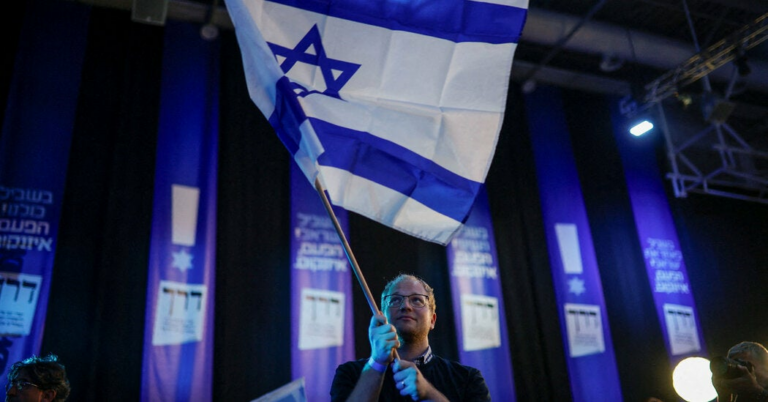
Israeli Prime Minister Benjamin Netanyahu is facing one of the most serious political challenges of his career after exit polls from the country’s October 27 election indicated that his bloc had fallen short of a parliamentary majority, amid mounting international condemnation of Israel’s genocidal war on Gaza.
Arab voter participation has surged in Israel’s elections, drawing increased scrutiny from Prime Minister Benjamin Netanyahu’s Likud party, which has sought to extend voting hours and is reportedly preparing to challenge the integrity of the vote if it suffers significant losses.
Iran’s Leader Ayatollah Seyyed Mojtaba Hosseini Khamenei has underscored the effectiveness of Iran’s national resistance, saying the desperation of its adversaries reflects the strength and resilience of the Iranian nation.
İlke Haber Ajansı Basın Yayın Sanayi Ticaret A.Ş.
Download
Download
Whatsapp
© 2021 İlke Haber Ajansı [İLKHA]
About the Author