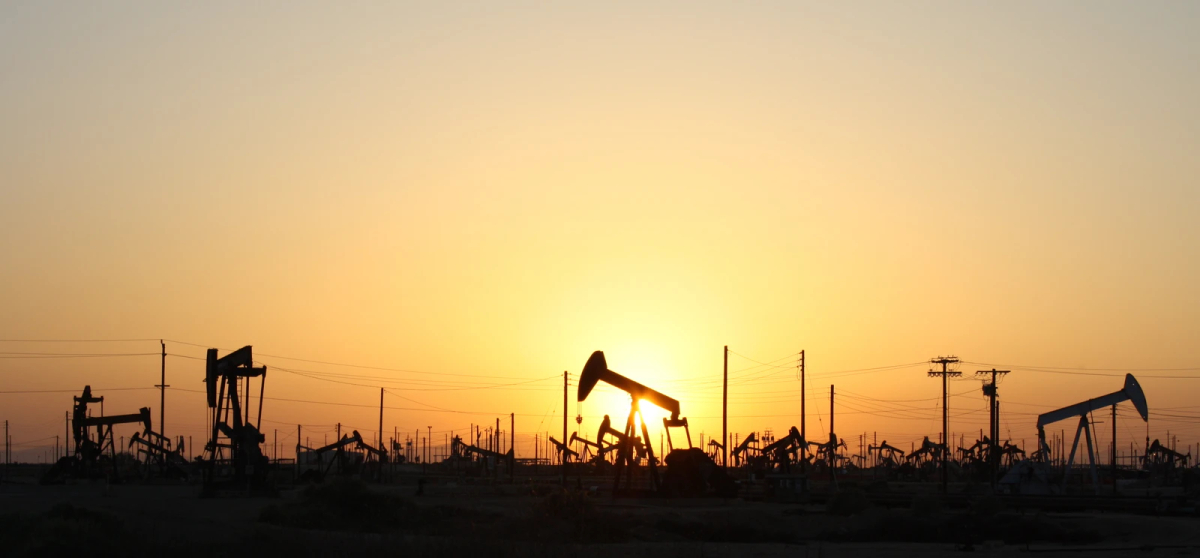
The international crude oil market underwent a sharp correction last week. As signals emerged that the United States and Iran are restarting negotiations, the market quickly unwound the geopolitical risk premium accumulated earlier because of the Middle East conflict, with Brent Crude and US West Texas Intermediate (WTI) both posting their worst weekly declines since the COVID-19 pandemic erupted.
According to statistics from the London Stock Exchange Group (LSEG) dating back to 1988, Brent Crude plunged 17% last week, its biggest weekly drop since the pandemic hit global demand in 2020; WTI fell 13% over the same period. The two benchmark prices broke below the $95 and $90 thresholds respectively, with Brent’s January futures crashing 9.73% in a single day on Wednesday (the 4th) to close at $93.52 a barrel, while WTI also plunged 8.88% that day to $87.56. Although prices rebounded slightly at the close on Friday (the 6th), with Brent’s January futures settling at $98.32 a barrel (approx. NT$3,200) and WTI at $90.83 (approx. NT$3,000), the week’s slump was already locked in.
The core drivers of this decline came from diplomacy and US politics. Democrats won both the Senate and the House of Representatives in the US midterm elections, which the market read as rising pressure on Washington to end the war with Iran, serving as the direct trigger for the oil price plunge. Third parties such as Qatar actively mediated, Iran’s president revealed that the supreme leader had authorized pushing for peace talks, and both the United States and Iran signaled a return to the negotiating table. At the same time, Iran reportedly delivered a nuclear-related proposal to Washington through Qatar, giving the market hope for a de-escalation.
However, supply-side disruptions have not truly disappeared. Iran’s Revolutionary Guard reported that three more tanker attacks occurred in the Strait of Hormuz last Thursday; security risks remain in this chokepoint carrying critical global crude shipments, and crude flows remain below 60% of normal capacity. After the US midterm elections concluded, Donald Trump publicly stated that he would soon decide whether to push for a peace agreement or directly destroy Iran’s remaining forces; his tough remarks briefly lifted crude futures to a slightly higher close. However, the new Congress will not take office until January 3 next year, so its practical constraints on the war remain limited in the near term.
Janiv Shah, an oil market analyst at Rystad Energy, noted that from the perspective of the global supply-demand balance, the crude market is gradually shifting toward oversupply, but the problem of crude quality differences persists, and refineries must find ways to secure the grades their equipment can process rather than all the crude actually supplied in the market. He also cautioned that the market is still waiting for substantive evidence that Iran will sign an agreement, and that once countermeasures break out among the parties, tightness in the oil market’s supply and demand could re-emerge. JPMorgan estimates that global crude supply exceeded demand by 1.4 million barrels per day in October, up from 1.1 million barrels per day in September; Middle East exports have recovered from a March low of 9.8 million barrels per day to about 20.7 million barrels per day, and this supply-side buffer is one reason the market dared to sell off so quickly.
On supply policy, OPEC+ decided last month to keep its production target for December 2026 unchanged. Before that, the alliance had phased in the return of 1.65 million barrels per day of cut volumes, completing the process in September. OPEC+’s next ministerial meeting is scheduled for November 29.
Note: The weekly decline is the largest since the COVID-19 pandemic outbreak based on London Stock Exchange Group statistics dating back to 1988.
US retail gasoline prices also reflected the pullback. According to AAA data, the national average price for regular unleaded gasoline on Friday was $4.0688 per gallon (approx. NT$130), about 19% below the record high of $5.0165 (approx. NT$160) set on June 14, 2022; the average diesel price was $6.2305 per gallon (approx. NT$200), about 4.5% below the record high of $6.5276 (approx. NT$210) on September 22.
In Taiwan, CPC Corporation Taiwan announced that from midnight on the 9th to 24:00 on the 15th, gasoline and diesel prices would remain fully unchanged: 92 unleaded gasoline at NT$31.2 per liter, 95 unleaded at NT$32.7, 98 unleaded at NT$34.7, and premium diesel at NT$29.9. This marks the eighth consecutive week that CPC has frozen prices. Under CPC’s domestic pricing formula, the 7D3B benchmark oil price was $117.01 a barrel the previous week and fell to $99.79 this week, while the New Taiwan dollar weakened against the US dollar from 32.460 to 32.763; after accounting for the exchange rate, the benchmark oil price change was a decline of 11.14%. CPC said the government expanded commodity tax cuts, absorbing NT$3.7 and NT$2.1 for gasoline and diesel respectively, and to maintain the lowest price among neighboring countries and continue implementing the US-Iran war special stabilization mechanism, it added further absorption of NT$4.3 for gasoline and NT$5.9 for diesel from November 9 to 15, for a combined absorption of NT$8.0 per liter for gasoline and diesel, which allowed domestic prices to remain unchanged.
CPC added that since the special stabilization measures began on February 28 through November 8, cumulative expanded absorption for gasoline and diesel has reached approximately NT$34.07 billion (approx. $1.0 billion), and it will continue to monitor international political and economic conditions and oil product supply-demand changes, rolling reviews in line with price-stabilization policy.
In Japan, a survey by the Agency for Natural Resources and Energy under the Ministry of Economy, Trade and Industry on November 2 showed that the national average retail price of regular gasoline was ¥170.0 per liter, edging down ¥0.1 from the previous week for a second consecutive weekly decline; diesel was ¥159.5. The national average had hit a record high of ¥190.8 on March 16. Under the Japanese government’s “emergency measures to cushion sharp price changes” to suppress oil prices, the subsidy from November 5 was ¥51.9 per liter, only ¥0.5 less than the previous week’s ¥52.4, meaning the 17% drop in international crude will not be fully reflected at Japanese gas stations in the near term. The government has decided to raise the subsidized benchmark price from ¥170 to about ¥172 from December 3, then to about ¥174 on December 10 and about ¥175 from the 17th, a total increase of ¥5 over three weeks, so Japanese domestic oil prices will instead face upward pressure. Related subsidy spending had exceeded ¥1.2 trillion (approximately $7.6 billion) by August.
In terms of supply structure, Japan relied on the Middle East for 94.0% of its crude oil imports in 2025. After the United States and Israel took military action against Iran in late February this year and passage through the Strait of Hormuz was obstructed, Japan accelerated procurement diversification: preliminary August data showed the Middle East share had fallen to 62.6%, with the United States at 31.6%, and in July the United States surpassed the United Arab Emirates and Saudi Arabia to become Japan’s largest source of crude oil.
Note: Japan figures are from the November 2 survey, with subsidies applicable from November 5; Taiwan figures are posted prices for November 9 to 15.
Looking ahead, analysts generally believe short-term oil prices will trade back and forth around the progress of US-Iran negotiations. If the two sides make substantive progress toward peace talks, oil prices will remain under pressure; if negotiations reach a deadlock and conflict flares again, oil prices could rebound. Bob McNally, founder and president of Rapidan Energy Group, holds a more pessimistic view, believing there is an 80% probability the war will restart and warning that both benchmark oil prices could climb back above $100 a barrel (approx. NT$3,300).
For investors, this sharp decline means long crude positions face repricing, and energy stocks and related ETFs will see increased short-term volatility; for Taiwanese consumers, under the protection of CPC’s special stabilization mechanism and commodity tax cuts, domestic oil prices are temporarily shielded from direct impact from violent international swings, but if international oil prices continue to fall, domestic prices may still have room to reflect lower costs in the future. For Japanese consumers, the price-reducing effect of falling international crude may in the near term be offset by smaller subsidies and higher benchmark prices from December, and whether actual gasoline prices can fall will still depend on whether the international oil price decline continues.
The news and data on this website are for reference only and do not constitute investment advice or an offer to buy or sell. Information is sourced from exchanges and public sources, and may be delayed, interrupted, or updated. While we strive for accuracy, we do not guarantee timeliness, correctness, or completeness. Content may include external links for which we are not responsible. By using this site, you agree that we and our partners are not liable for any losses. Investment carries full responsibility; please carefully assess risks and consult professionals. If there are errors in the content, please contact us for correction.
About the Author