Ambassador Francisco José da Cruz on Five Decades at the United Nations…
One year after his remarkable return to power, President Peter Mutharika can…
By Boris Esono Nwenfor* Ten years after protests by lawyers and teachers…
Five years into Cameroon’s decentralisation experiment, the South West Regional Assembly President…
A year into Peter Mutharika’s second presidency, Malawi’s harvest is bigger, inflation…
Africa’s entrepreneurial ambition is outpacing access to finance. Tony Elumelu, CFR, argues…
A year into Peter Mutharika’s second presidency, Malawi’s harvest is bigger, inflation…
By Ngunyi Sonita Nwohtazie* For nearly eight decades, the Cameroon Development Corporation…
By Ngosong Fonkem * As Africa Energy Week (“AEW”) 2026 concluded in…
From international partnerships to business training and investment opportunities, the African Development…
By Ngunyi Sonita Nwohtazie BUEA, PAV – Cameroon has secured a strong…
From Benin to Europe, with Argentina potentially on the horizon, the 24-year-old…
KITWE, Zambia – Zambian football giants Nkana FC have been slapped with…
By Ajong Mbapndah L Africa has no shortage of sporting talent, passionate…
By Boris Esono Nwenfor BUEA, PAV – The Confederation of African Football…
Rome, Italy, 06 November 2026 -/African Media Agency (AMA)/ – The United…
The Making Trade Work for Women (MTWW) project was officially launched in…
The partnership, signed on the sidelines of the 15th Africa Internet Governance…
Forum highlights rising regional fuel demand, infrastructure investment and cross-border collaboration as…
Part of the pan-African Codex Champions Series, the Lagos showcase demonstrates how…
HONG KONG SAR – Media OutReach Newswire – 7 November 2026 –…
21 NOV 2026 (SAT, 8:00pm) Tsuen Wan Town Hall AuditoriumHONG KONG SAR…
NINGBO, CHINA – Media OutReach Newswire – 6 November 2026 – The…
ZTE presented its infrastructure strategy for agentic finance at Hong Kong FinTech…
TONGXIANG, CHINA – Media OutReach Newswire – 6 November 2026 – A…
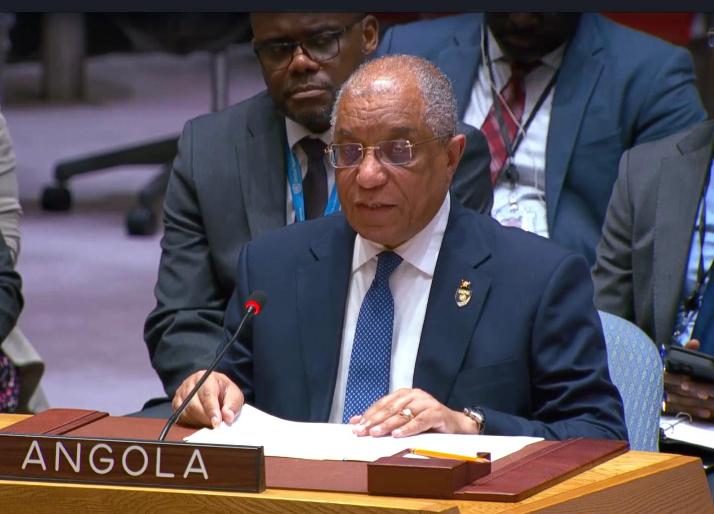
Ambassador Francisco José da Cruz on Five Decades at the United Nations and Africa’s Quest for a Stronger Global Voice
By Ajong Mbapndah L*
Fifty years ago, Angola entered the United Nations as a newly independent nation determined to defend its sovereignty, consolidate its place in the international community and contribute to the unfinished struggle for African liberation. Today, as the country prepares to commemorate the golden jubilee of its admission to the world body on December 1, 1976, its diplomatic journey tells a compelling story of resilience, transformation and growing international influence.
From the turbulent years following independence to the achievement of peace in 2002, Angola has experienced some of the defining challenges of modern African history. Yet, from those difficult chapters has emerged a country increasingly willing to place its hard-earned experience at the service of regional stability, international cooperation and global development. Once a nation seeking international solidarity amid conflict and uncertainty, Angola now positions itself as an advocate for dialogue, reconciliation and African-led solutions to the continent’s security challenges.
At the heart of this transformation is a foreign policy that has consistently emphasized sovereignty, territorial integrity, multilateralism and the peaceful settlement of disputes. Angola’s contributions to the liberation of Southern Africa, its two terms on the United Nations Security Council, its role in peacebuilding and its diplomatic engagement in the Great Lakes region illustrate a country whose international ambitions have expanded considerably over the past five decades.
But for Angola, the golden jubilee is about much more than celebrating diplomatic achievements. It comes at a defining moment for Africa’s place in the international system, with growing demands for meaningful United Nations Security Council reform, fairer development financing, stronger African representation and a more equitable global order. Angola is adding its voice to these debates, insisting that a continent so central to international peace and security can no longer remain without permanent representation on the Security Council.
In this exclusive interview with Pan African Visions, His Excellency Francisco José da Cruz, Permanent Representative of the Republic of Angola to the United Nations, offers an authoritative and wide-ranging assessment of Angola’s fifty-year relationship with the world body. He reflects on the significance of UN membership in consolidating Angola’s independence, the international community’s role in the country’s peace process, and the lessons Angola’s experience offers nations confronting conflict and instability.
Ambassador da Cruz also examines President João Lourenço’s peace and reconciliation diplomacy, including Angola’s engagement in the Great Lakes region, while making a forceful case for a more representative international system in which Africa is no longer relegated to the margins of decisions affecting its future.
Beyond peace and security, the conversation explores Angola’s development ambitions, the strategic importance of the Lobito Corridor, economic diversification, climate resilience, sustainable financing and the opportunities for deeper cooperation between Angola and the United Nations. The Ambassador also outlines plans for the December 1 anniversary commemorations in New York and the diplomatic priorities that will shape Angola’s engagement with the international community in the decades ahead.
Running through his reflections is a conviction that Angola’s greatest diplomatic strength lies in the lessons of its own history: the struggle for independence, the painful experience of conflict, the achievement of national reconciliation and the determination to turn peace into lasting development.
Looking toward the next fifty years, Ambassador da Cruz captures Angola’s ambition in a particularly compelling declaration: “Our ambition must be to move from presence to influence, from participation to strategic leadership, and from diplomatic commitments to concrete results.”
It is a vision that speaks not only to Angola’s aspirations but also to Africa’s broader quest for greater ownership of its destiny. As Angola marks fifty years at the United Nations, its message is unmistakable: the next chapter of African diplomacy must be defined not simply by a seat at the table, but by the power to shape the decisions made around it.
In this special conversation, Ambassador Francisco José da Cruz reflects on the past, assesses the present and sets out a vision for Angola’s future as an increasingly influential voice for peace, development and a more just international order.
Angola marks 50 years of United Nations membership in 2026. What does this milestone mean for the country, and how would you assess its diplomatic journey over the past five decades?
The 50th anniversary of Angola’s admission to the United Nations is a defining milestone in our country’s diplomatic history. It represents five decades of commitment to sovereign equality, international law, multilateral cooperation, peace and sustainable development.
Since joining the Organization on 1 December 1976, Angola has evolved from a newly independent State defending its sovereignty and supporting African liberation movements into an active contributor to regional peace, international security and global governance.
Our diplomatic journey demonstrates that principled foreign policy, anchored in the United Nations Charter, can advance national interests while contributing to collective solutions.
For Angola, multilateralism is not merely a diplomatic choice; it is a strategic instrument for safeguarding sovereignty, building partnerships and promoting a more just international order.
Angola joined the United Nations in December 1976, shortly after independence. How important was UN membership in strengthening the country’s sovereignty and international standing?
Angola’s admission to the United Nations on 1 December 1976 consolidated the international recognition of our sovereignty and affirmed our rightful place among independent nations.
At a time of significant geopolitical tensions and struggles for self-determination, membership provided an essential platform to defend our territorial integrity, mobilize international solidarity and contribute to the decolonization of Southern Africa.
It also enabled Angola to participate directly in shaping international decisions affecting its security and development.
Above all, membership reinforced a fundamental conviction that continues to guide our foreign policy: the sovereignty, independence and territorial integrity of every State must be respected, irrespective of its size, economic power or political influence.
Looking back over five decades, what would you consider the most significant achievements and defining moments in Angola’s relationship with the United Nations?
Three achievements stand out.
First, Angola’s contribution to the liberation and political transformation of Southern Africa, particularly the processes leading to Zimbabwe’s liberation, Namibia’s independence, and the end of apartheid in South Africa.
Second, our transition from a country affected by internal conflict to an advocate of peacebuilding and national reconciliation. This experience gained international recognition when Ambassador Ismael Gaspar Martins became the first Chair of the United Nations Peacebuilding Commission in 2006.
Third, Angola’s increasing engagement in multilateral decision-making, including two terms on the Security Council, membership of ECOSOC and successive mandates on the Human Rights Council, to which Angola returned for the 2026–2028 term.
These achievements illustrate Angola’s transformation from a beneficiary of international solidarity into an active contributor to collective peace, security and development.
The United Nations played an important role in Angola’s peace process and post-war recovery. How would you assess its contribution, and what lessons can other countries draw from Angola’s experience?
Angola recognizes the valuable contribution of the United Nations to its peace process, humanitarian assistance and post-conflict recovery.
Between 1989 and 1999, four successive United Nations peacekeeping operations supported the verification of agreements, ceasefires, electoral processes and reconciliation efforts.
Our experience, culminating in the achievement of peace in 2002, offers three essential lessons.
First, sustainable peace requires national ownership and genuine political commitment. Second, peace agreements must be supported by reconciliation, disarmament, reintegration and strong national institutions. Third, peacebuilding must address the socioeconomic conditions that can fuel renewed instability.
These lessons remain highly relevant to contemporary conflicts.
They also explain Angola’s advocacy for more effective UN–African Union cooperation, particularly the operationalization of Security Council resolution 2719 (2023), which establishes a framework for financing African Union-led peace support operations.
Angola has played an active diplomatic role in regional peace efforts, particularly in the Democratic Republic of Congo. How is Angola working with the United Nations to promote peace and security across Africa?
Angola’s approach to conflict resolution is rooted in its own experience: there can be no sustainable peace without dialogue, reconciliation, national ownership and political solutions.
Under the leadership of President João Manuel Gonçalves Lourenço, African Union Champion for Peace and Reconciliation, Angola has contributed to mediation and diplomatic initiatives in the Great Lakes region, notably through the Luanda Process.
We continue supporting African Union-led efforts and greater coordination with the United Nations and other partners, including the ongoing diplomatic processes concerning eastern Democratic Republic of the Congo.
Our priorities are clear: cessation of hostilities, protection of civilians, respect for sovereignty and territorial integrity, implementation of commitments and inclusive political dialogue.
Angola believes that African-led solutions, supported by effective international partnerships, offer the strongest foundation for lasting peace.
Angola has twice served as a non-permanent member of the UN Security Council. What were its major contributions, and what is Angola’s position on Security Council reform and permanent African representation?
During its mandates in 2003–2004 and 2015–2016, Angola consistently advocated conflict prevention, peaceful dispute settlement, post-conflict reconstruction and stronger cooperation between the United Nations and regional organizations.
Our engagement was informed by national experience and the conviction that the Security Council must act preventively, address the underlying causes of conflict and support sustainable political solutions.
On reform, Angola firmly supports the Common African Position, expressed in the Ezulwini Consensus and Sirte Declaration, calling for at least two permanent seats, with full privileges including the veto while it exists, and five non-permanent seats for Africa.
It is neither equitable nor sustainable that Africa remains excluded from permanent representation in the body responsible for international peace and security, particularly when African situations feature so prominently on its agenda.
Security Council reform is therefore a question of justice, legitimacy and institutional effectiveness.
The United Nations has supported Angola in health, education, humanitarian assistance and development. Which partnerships have delivered the greatest results, and where is stronger cooperation needed?
Angola highly values its longstanding partnerships with the United Nations system.
Cooperation with United Nations Children’s Fund (UNICEF), World Health Organization (WHO), United Nations Development Programme (UNDP) and other agencies has supported important national efforts in health, education, child protection, governance, humanitarian response and poverty reduction.
These partnerships have contributed to strengthening national capacities and improving access to essential services, particularly for vulnerable communities.
The United Nations Sustainable Development Cooperation Framework for 2024–2028 provides an opportunity to deepen this engagement.
Our priorities are to accelerate improvements in human development, reinforce social protection, expand employment opportunities for women and young people, and build resilience to climate-related shocks.
The next phase should focus on measurable outcomes, stronger national institutions, more effective resource mobilization and sustainable results beyond individual projects.
How is Angola working with the United Nations to advance economic diversification, job creation, sustainable development and the Sustainable Development Goals?
Angola’s development strategy is aligned with the United Nations 2030 Agenda and the African Union’s Agenda 2063, particularly through the National Development Plan 2023–2027 and the Angola 2050 Long-Term Strategy.
Our priorities include investment in human capital, agricultural transformation, industrialization, infrastructure, energy and economic diversification.
Initiatives such as the Lobito Corridor project involving Angola, the Democratic Republic of Congo (DRC) and Zambia, demonstrate the potential of regional connectivity to facilitate trade, attract investment, strengthen value chains and generate employment.
We seek stronger United Nations support in mobilizing investment, transferring technology, developing skills and expanding partnerships with the private sector.
However, achieving the Sustainable Development Goals also requires reform of the international financial architecture.
Developing countries need affordable financing, sustainable debt arrangements and adequate fiscal space to invest in their people and productive capacities.
Climate change, energy security and food insecurity remain major challenges for Africa. What priorities is Angola advancing at the United Nations on these issues?
Angola regards climate resilience, energy security and food security as interconnected development and human security priorities.
Recurring droughts in southern Angola demonstrate the urgency of investing in climate adaptation, water management, sustainable agriculture and resilient infrastructure.
We advocate stronger international support for adaptation financing, technology transfer and early-warning systems, particularly for vulnerable African countries.
At the national level, investments in irrigation, water infrastructure, renewable energy and agricultural productivity are essential to strengthening food systems and reducing vulnerability.
Angola also supports a just and orderly energy transition that takes account of national development circumstances.
Climate action must be guided by equity, common but differentiated responsibilities and the principle that environmental sustainability and economic development should advance together.
With growing geopolitical tensions and challenges facing multilateral institutions, how does Angola balance its national interests with international cooperation while strengthening Africa’s voice in global decision-making?
Angola does not consider national interests and international cooperation to be competing objectives. On the contrary, the protection of national sovereignty is strengthened by a rules-based international order grounded in the United Nations Charter.
Our foreign policy consistently upholds sovereign equality, territorial integrity, non-interference, peaceful settlement of disputes and respect for international law.
We advocate dialogue rather than confrontation and cooperation rather than geopolitical fragmentation.
For Africa, strategic autonomy is essential. The continent must engage constructively with all partners while maintaining ownership of its priorities and development choices.
This requires stronger coordination between the African Union, African diplomatic groups and regional organizations.
Africa must move beyond being primarily the subject of international decisions to becoming a decisive participant in shaping global rules, priorities and solutions.
What activities and diplomatic initiatives are planned to commemorate Angola’s 50 years of UN membership, and what message does the country hope to convey through these celebrations?
The commemorations will take place under the theme “Angola at the United Nations: 50 Years of Multilateralism, Peace and Development.”
The central event will be a High-Level Commemorative Session on 1 December 2026, at United Nations Headquarters, chaired by H.E. Téte António, Minister of External Relations, with the participation of senior United Nations officials, Member States and other partners.
Complementary initiatives include a high-level dialogue on the Lobito Corridor, highlighting regional integration, infrastructure development and investment opportunities.
The programme will provide an opportunity to recognize Angola’s contributions to decolonization, peacebuilding and multilateral cooperation, while outlining priorities for future engagement.
Our central message is that the anniversary is not simply a celebration of the past. It is an opportunity to renew Angola’s commitment to the United Nations Charter and transform five decades of diplomatic experience into a forward-looking agenda for peace, development and effective multilateralism.
What are Angola’s principal diplomatic priorities at the United Nations in the coming years, and which areas offer the greatest opportunities for stronger cooperation?
Angola’s future engagement will be guided by five mutually reinforcing priorities.
First, peace and security: strengthening preventive diplomacy, conflict resolution, peacebuilding and operational cooperation between the United Nations and African Union.
Second, global governance reform: advancing equitable representation, particularly through Security Council reform and greater African participation in international decision-making.
Third, sustainable development: promoting economic diversification, financing for development, debt sustainability and implementation of the Sevilla Commitment, the global framework for financing the 2030 Agenda.
Fourth, human rights and climate resilience: supporting gender equality, youth participation, social inclusion, climate adaptation and environmental sustainability.
Fifth, institutional influence: strengthening Angola’s representation in international organizations through strategic candidatures and the placement of qualified national professionals.
Our objective is to build a more proactive, coordinated and specialized multilateral diplomacy, capable of translating political commitments into measurable results for Angola, Africa and the wider international community.
Finally, Ambassador, as Angola celebrates this historic milestone, what do you consider the country’s greatest contribution to the United Nations, and what would you like to see accomplished over the next 50 years?
I believe Angola’s greatest contribution has been demonstrating, through its own historical experience, that the pursuit of independence, peace, national reconciliation and development can become the foundation of a principled and constructive foreign policy.
Having experienced both the consequences of conflict and the benefits of peace, Angola brings an important perspective to international efforts aimed at preventing violence, building trust and consolidating stability.
Looking ahead, our ambition must be to move from presence to influence, from participation to strategic leadership, and from diplomatic commitments to concrete results.
We envisage a United Nations that is more representative, effective and responsive to contemporary challenges, with Africa playing its rightful role in global governance.
Above all, Angola remains committed to a multilateral system in which the strength of international law prevails over the law of force, and peace, dignity and sustainable development become realities for all peoples.
That is the legacy we seek to consolidate over the next fifty years.
*Culled from November Edition of PAV Magazine
Your email address will not be published.
Pan African Visions: Your instant connection to breaking stories and live updates. Stay informed with our real-time coverage across politics, tech, entertainment, and more. Your reliable source for 24/7 news.
© 2026 Pan African Visions.
All Rights Reserved.
About the Author