EUobserver
Economy
Artificial intelligence is one of the economic sectors where the EU and China could be allies rather than foes; both are racing to close the gap with the United States. But until now, the EU has viewed China as a competitor and threat on AI and digital technology.
The two economies “have huge cooperation potential in new energy, AI, services trade, the digital economy and green low-carbon fields”, China’s ministry of commerce said in a statement following the second round of China-EU trade talks in Beijing earlier this month.
Those two days of talks between EU trade commissioner Maroš Šefčovič and Chinese commerce secretary Wang Wentao were widely viewed as a successful first step forward by EU leaders at last week’s summit in Brussels.
In particular, China has agreed to reduce exports of electric vehicles and guarantees continued access to rare earths without new export controls. It also commits EU and Chinese officials to at least six more months of negotiations on a raft of trade disputes.
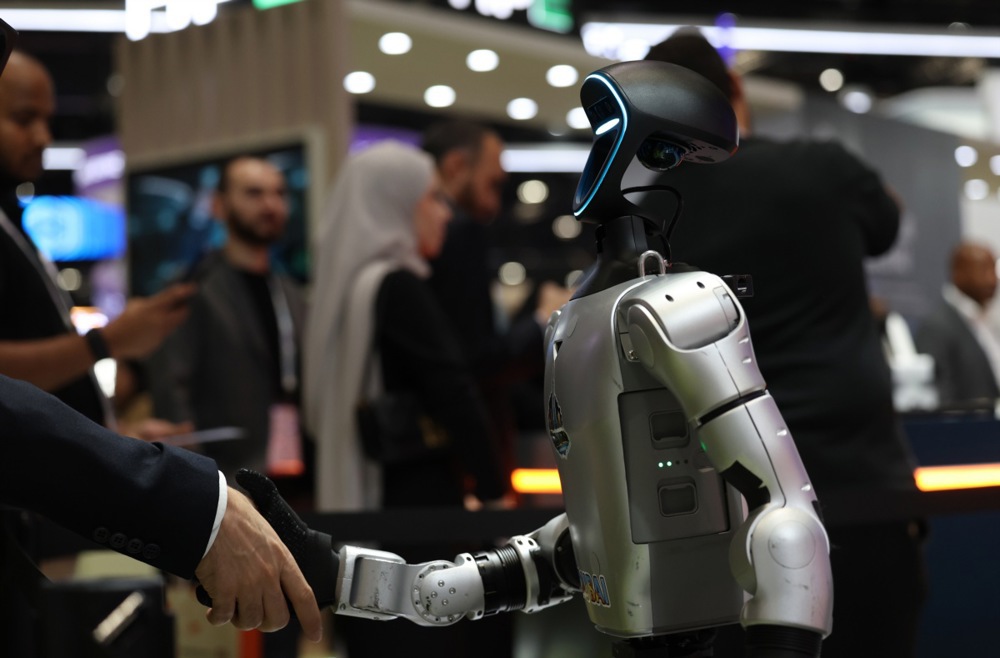
A visit to a robotics factory was part of the itinerary for a delegation from the European Parliament’s international trade committee who will make a three day visit to China from 27 October.
Committee chairman Bernd Lange told reporters that Unitree Robotics, a Chinese robotics company that uses its own humanoid robots—powered by embodied AI —to help manufacture and assemble more robots would be “at the heart of Chinese industry in the future.”
China is the world leader in the robotics market, with Lange’s Germany its main European rival.
Enjoy access to all articles and 25 years of archives, comment and gift articles. Become a subscriber for as low as €1,75 per week. Benjamin Fox is our trade and geopolitics editor. His reporting has also been published in the Guardian, the East African, Euractiv, Private Eye and Africa Confidential, among others. He is based in Nairobi, Kenya, although he often reports from London.
EUobserver
About the Author