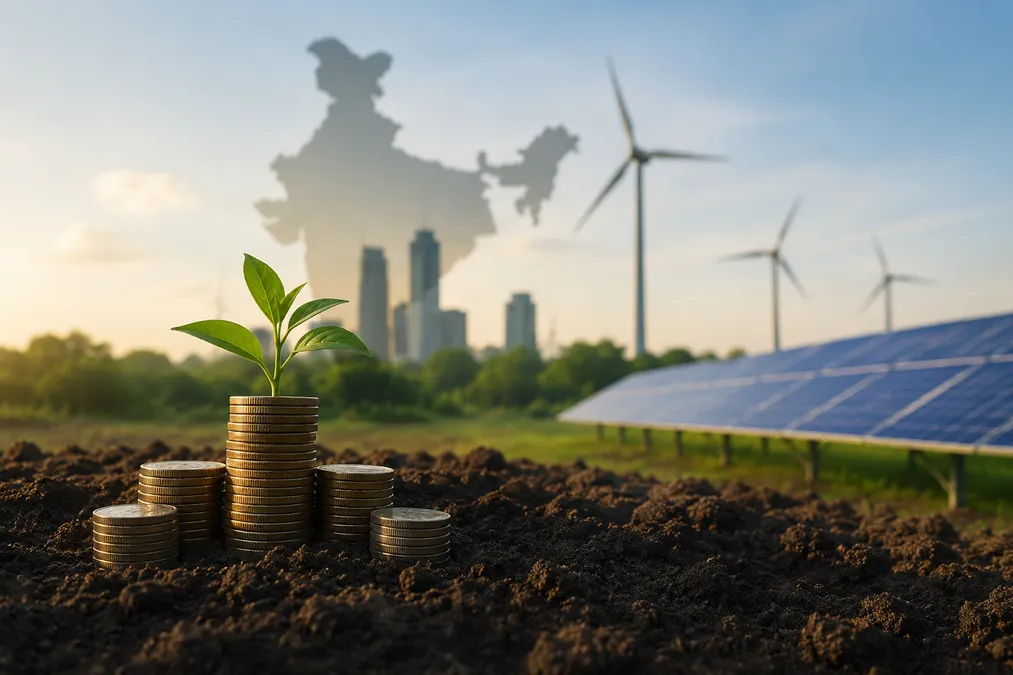
British International Investment (BII), the UK’s development finance institution, plans to commit $1.6 billion to climate finance across Southeast Asia over five years. Approximately half is expected to come from BII, with a similar amount mobilised from private investors. The funding will support renewable energy, electricity transmission, electric vehicle infrastructure, waste management and water infrastructure across developing economies in the region.
British International Investment has announced plans to commit $1.6 billion to climate finance in Southeast Asia over the next five years, reinforcing its efforts to support developing economies through the transition to cleaner energy and more climate-resilient infrastructure.
The commitment marks the fifth anniversary of the opening of BII’s Asian headquarters in Singapore and forms part of its broader regional investment strategy. The funding will target economies including Vietnam, Indonesia, the Philippines, Malaysia and Thailand, where fossil-fuel-based electricity generation remains an important part of the energy mix.
Under the plan, approximately half of the $1.6 billion climate finance commitment will come from BII, while a similar amount is expected to be mobilised from private investors. This approach is intended to increase the pool of available funding for projects that reduce emissions and support sustainable economic growth.
The announcement also signals a greater emphasis on using development finance to attract commercial investment into markets where clean-energy infrastructure requires substantial capital.
Mobilising private capital is central to BII’s approach. By combining its own investment with funding from commercial investors, the institution aims to support projects that may need additional financing to reach development and construction stages.
The British Climate Partners initiative, launched earlier in 2026, will serve as a channel for a significant proportion of the planned funding. The initiative focuses on high-growth, carbon-intensive economies across Asia, where investment can support economic development while reducing emissions.
The British Climate Partners (BCP) initiative is intended to help direct capital towards climate-related opportunities and attract additional investors. This structure could help broaden financing for renewable energy and other infrastructure projects while supporting the development of cleaner and more resilient economies.
The strategy also reflects the challenge of financing the energy transition in rapidly developing markets, where electricity demand and infrastructure needs continue to grow.
BII plans to invest across sectors that can reduce emissions and improve climate resilience. These include renewable energy generation, electricity transmission, electric vehicle infrastructure, waste management and water infrastructure.
Renewable energy projects can expand low-carbon electricity supply, while transmission infrastructure helps connect generation assets to consumers. Investment in EV infrastructure can support the adoption of electric transport, and waste and water projects can contribute to more sustainable urban development and stronger resilience.
The institution expects its investments to add approximately 1.8 GW of clean-energy capacity and avoid nearly 1.7 million tonnes of carbon emissions.
These are expected outcomes rather than completed results. Their eventual scale will depend on the projects financed, their implementation timelines and their operational performance.
Context is everything. Stay ahead of shifting trends with today’s market updates, and uncover emerging opportunities using the Serrari Group Market Index and Marketplace. Then, take control of your own financial future by exploring our Money & Life Reset Transformation Blueprint ™ to build stronger habits, create better systems, and design a path toward lasting wealth.
The new commitment builds on BII’s existing activity in Southeast Asia. Between 2023 and 2025, the institution committed nearly $400 million in climate finance to the region.
Investments during that period included renewable energy developer ib vogt, Skye Renewables, the Asian Development Bank, Vietnam-based VPBank and HDBank, and Indonesia-based Xurya. BII also invested in funds supporting green infrastructure and the energy transition, including Pentagreen Capital’s Green Investment Partnership, Gresham House’s SUSI Asia Energy Transition Fund and 100×100 Impact Fund I.
These investments span direct company financing, financial institutions and specialist funds. The mix provides different routes for directing capital towards climate-related projects across regional markets.
BII’s existing infrastructure and climate portfolio has supported approximately 358 MW of operational clean-energy capacity, generated more than 556,000 MWh of renewable electricity and helped avoid approximately 368,000 tonnes of carbon emissions. It has also supported more than 2,000 direct, operational and temporary construction jobs.
These figures provide a baseline for understanding the institution’s existing regional activity as it prepares to expand its climate finance commitments.
Southeast Asian economies face the challenge of meeting growing energy needs while reducing reliance on high-emission power generation. Expanding renewable energy requires investment not only in generation facilities but also in transmission networks, storage, transport infrastructure and supporting services.
BII’s plan aims to address several of these needs through a combination of development finance and private investment. Its regional focus recognises that climate finance must support both emissions reduction and the infrastructure required for continued economic growth.
The $1.6 billion investment plan therefore represents more than a funding target. It is an attempt to expand the pipeline of bankable climate projects and encourage greater participation from private investors.
BII’s $1.6 billion climate finance target could provide a substantial source of capital for Southeast Asia’s transition towards cleaner energy and more resilient infrastructure. By combining its own funding with private investment, the institution aims to expand the reach of climate finance across several developing economies.
The effectiveness of the strategy will depend on how quickly capital is committed, whether private investors contribute the expected funding and how successfully projects move from development into operation. Renewable energy generation, transmission, EV infrastructure, waste management and water systems will each require different financing structures and implementation approaches.
BII’s previous investments provide a foundation for the next phase, but the expected addition of 1.8 GW of clean-energy capacity and avoidance of nearly 1.7 million tonnes of emissions will need to be demonstrated through project delivery and measured outcomes.
Ultimately, the initiative’s significance will depend on its ability to mobilise additional capital, deliver reliable infrastructure and generate measurable climate benefits alongside economic development. If implemented effectively, the programme could strengthen Southeast Asia’s climate investment pipeline and support a more gradual shift away from high-emission energy systems.
1. How much climate finance is BII targeting in Southeast Asia?
BII plans to commit $1.6 billion over five years, with approximately half expected to come from BII and a similar amount mobilised from private investors.
2. Which countries are expected to benefit?
The priority markets identified include Vietnam, Indonesia, the Philippines, Malaysia and Thailand.
3. Which sectors will receive investment?
The investment programme covers renewable energy generation, electricity transmission, EV infrastructure, waste management and water infrastructure.
4. What climate impact is BII expecting?
The investments are expected to add approximately 1.8 GW of clean-energy capacity and avoid nearly 1.7 million tonnes of carbon emissions.
Sources: British International Investment | Saur Energy | TechNode Global
Your financial future isn’t something you wait for—it’s something you build.
The real question is: when do you begin?
Move beyond simply staying informed.
Navigate the markets with clarity—track trends through the Serrari Group Market Index, uncover opportunities in the Serrari Marketplace, and build practical knowledge with our Curated Wealth Builder Platform.
Stay connected to what truly matters.
Get daily insights on macro trends and financial movements across Kenya, Africa, and global markets—delivered through the Serrari Newsletter.
Growth opens doors.
Advance your career through professional programs including ACCA, HESI A2, ATI TEAS 7 , HESI EXIT , NCLEX – RN and NCLEX – PN, Financial Literacy!🌟—designed to move you forward with confidence.
See where money is flowing—clearly and in real time.
Track Money Market Funds, Treasury Bills, Treasury Bonds, Green Bonds, and Fixed Deposits, alongside global and African indexes, key economic indicators, and the evolving Crypto and stablecoin landscape—all within Serrari’s Market Index.
Stop guessing with your money. Get market intelligence, investment insights, and wealth-building strategies — delivered weekly. Kenya, Africa, and global markets.
Submission failed. Please try again.
Check your inbox for your first Serrari dispatch.
Your review helps us improve and helps others discover Serrari
Click below to share your experience with Serrari. It takes less than a minute, and your feedback means the world to us.
Turn Your Income Into Wealth. Stop guessing with your money.
Know it. Compare it. Grow it. Preserve it.
© 2026 Serrari Group
Thanks for your interest in advertising with Serrari Group! Fill out the form below to get our Rate Card and explore partnership opportunities.
A 5-minute money briefing every morning — what moved overnight and where smart Kenyans are putting their money.
Free daily brief. Market Intelligence reports are a separate paid product.
Your first Daily Brief is on its way. Check your inbox to confirm — and we’ll see you tomorrow morning.
About the Author