Read The Diplomat, Know The Asia-Pacific
Competition can generate incentives for restraint, and restraint can create opportunities for further competition.
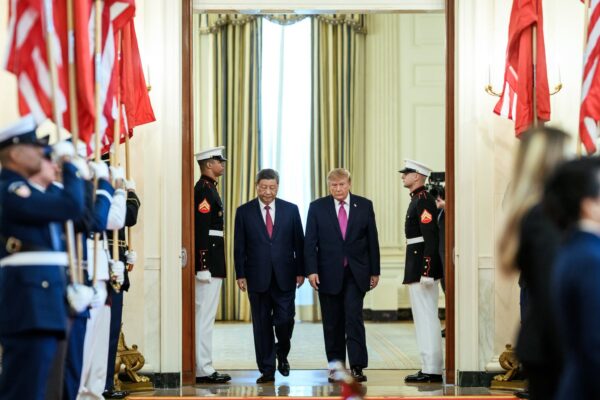
U.S. President Donald Trump and President Xi Jinping of China arrive via the Cross Hall to a State Arrival ceremony on the State Floor of the White House, Sep. 24, 2026.
The recent thaw in China-U.S. relations – highlighted by reciprocal visits by President Donald Trump and Xi Jinping – raised the prospect of a more stable relationship between the world’s two largest powers. After years of escalating tariffs, technology restrictions, and strategic mistrust, both governments appear willing to step back from the brink. The emerging language of “constructive strategic stability” suggests that Washington and Beijing may be converging on the need to manage their rivalry rather than allow it to define every aspect of their relationship.
But agreement on the need to manage competition is not the same as agreement on its terms. The two sides may have reached a shared conclusion that escalation is too costly without resolving the underlying disputes that drove them toward confrontation in the first place. If so, the current detente could prove less a turning point than a temporary adjustment in a much longer strategic contest.
The history of Soviet-U.S. detente offers a useful way to understand this possibility – not because the China-U.S. relationship is destined to follow the same trajectory, but because it highlights a central problem of great power relations: the conditions that encourage rivals to seek restraint may also make that restraint difficult to sustain.
Why Now?
The current thaw cannot be understood in isolation. It is the latest stage in more than a decade of intensifying strategic competition between China and the United States.
The Obama administration’s “Pivot to Asia” signaled a stronger U.S. commitment to the region as China’s power grew. Washington presented its policy as an effort to sustain regional order, while Beijing increasingly viewed U.S. initiatives through the lens of strategic containment. Yet competition remained partly bounded by the hope that economic interdependence and diplomatic engagement could prevent rivalry from overwhelming the relationship.
The first Trump administration marked a more decisive turn. The 2018 trade war transformed economic grievances into a central instrument of strategic competition. The Biden administration subsequently retained much of the competitive framework while expanding restrictions in areas such as advanced technology. Across successive administrations, Washington’s approach increasingly treated China not simply as a difficult partner but as a long-term strategic competitor.
The escalation of 2025-26 exposed the limits of this approach. Tariffs and countermeasures, particularly China’s leverage over rare earths and other critical supply chains, demonstrated that both countries possess vulnerabilities the other can exploit. But the ability to impose costs does not necessarily translate into a sustainable strategic advantage. Escalation can inflict damage on the opponent while simultaneously disrupting domestic industries, unsettling markets, and narrowing the room for diplomatic maneuver.
This gave both governments incentives to pursue a pause. Washington wants to stabilize trade, reduce supply chain exposure, and avoid a prolonged confrontation that complicates its broader economic and strategic priorities. Beijing has reasons to ease external pressure, preserve access to important markets and technologies, and secure a more predictable environment for economic development.
Their objectives for the detente, however, might not be identical. Washington may see a truce as an opportunity to rebuild leverage and reduce dependence on Chinese inputs. Beijing may see it as an opportunity to protect its economic position, limit U.S. pressure, and consolidate gains made during the confrontation. Each side can welcome stability while preparing for the possibility that competition will intensify again.
The significance of “constructive strategic stability” therefore lies less in whether it signals a fundamental reconciliation than in what the two governments understand it to mean. Does stability imply shared limits on competition, or merely a shared interest in preventing competition from becoming unmanageable? The distinction will determine whether the current thaw can endure.
What Detente Can – and Cannot – Do
The Soviet-U.S. experience is instructive in this regard. During the Cold War, detente emerged not because Washington and Moscow overcame their ideological rivalry, but because both recognized the dangers and costs of unconstrained confrontation. Arms control negotiations and diplomatic engagement could reduce the risks of escalation even while the two superpowers continued to compete for strategic advantage.
Yet detente never eliminated the underlying sources of rivalry. Disputes over regional conflicts, military competition, and divergent conceptions of international order repeatedly strained the Soviet-U.S. relationship. Changes in strategic calculations and domestic political environments also affected the willingness of leaders to sustain restraint. Detente could manage competition, but it could not make incompatible interests disappear.
The lesson for Washington and Beijing is not that their relationship will inevitably reproduce the Soviet-U.S. trajectory. Their economic interdependence, technological competition, and regional strategic dynamics differ substantially from those of the Cold War. Rather, the historical comparison directs attention to the conditions under which detente becomes self-reinforcing – or begins to unravel.
First, relative power matters. If either side believes that time is working decisively in its favor, it may view restraint as an unnecessary concession. Conversely, if leaders conclude that neither side can impose its will without incurring prohibitive costs, compromise may become more attractive. But a temporary balance of leverage can be unstable, especially when both governments are racing to reduce their dependence on the other.
Second, detente is vulnerable to miscalculation. Measures intended as defensive preparations may be interpreted as offensive moves, prompting countermeasures that gradually erode trust. Washington’s efforts to diversify critical supply chains and strengthen technological resilience may reduce its exposure to Chinese coercion. Beijing’s efforts to insulate itself from American economic pressure may serve a similar purpose. Such measures can make future crises less costly to withstand, but they can also weaken the mutual vulnerabilities that currently encourage restraint.
Third, domestic politics can narrow the space for compromise. Leaders must defend their policies against critics who regard accommodation as weakness or believe that strategic competition requires sustained pressure. Electoral cycles, economic pressures, and leadership changes can alter the political value of engagement. Even when leaders reach an informal understanding, they may struggle to preserve it if their domestic coalitions interpret restraint differently.
These dynamics suggest that detente is not simply a one-time choice between confrontation and cooperation. It is an ongoing contest over the boundaries of acceptable competition.
From a Pause to a Durable Arrangement?
The central question is therefore not whether the current China-U.S. detente will last, but what would make it more resilient.
One indicator is whether diplomatic engagement produces mechanisms that can survive political shocks. Regular communication, crisis-management procedures, and clear expectations about military interactions would matter more than the symbolism of leader-level meetings alone.
Another sign is whether both sides develop a more consistent understanding of the limits of competition. They need not agree on the ultimate distribution of power, but they must have some shared sense of which actions risk turning rivalry into a crisis.
A third indicator is how each government uses the breathing room created by detente. If restraint primarily enables both sides to prepare for a more intense confrontation, the thaw may postpone rather than resolve the next crisis. If it creates incentives to preserve communication, contain disputes, and cooperate where interests overlap, it may gradually acquire a more durable foundation.
Washington and Beijing may be learning that neither can easily defeat the other without paying an unacceptable price. But recognizing the costs of escalation is only the beginning of strategic stability. Competition can generate incentives for restraint, and restraint can create opportunities for further competition. The same reduction in tensions that makes diplomacy possible can also give both sides time to reduce their vulnerabilities and reassess their strategic positions. That is the paradox of the current moment.
The immediate thaw should therefore be welcomed without being mistaken for a permanent settlement. The ultimate significance will depend on whether the two powers use restraint to establish more predictable rules for managing rivalry – or simply to prepare for the next round of confrontation.
Subscribe today and join thousands of diplomats, analysts, policy professionals and business readers who rely on The Diplomat for expert Asia-Pacific coverage.
Get unlimited access to in-depth analysis you won’t find anywhere else, from South China Sea tensions to ASEAN diplomacy to India-Pakistan relations. More than 5,000 articles a year.
Already have an account? .
The recent thaw in China-U.S. relations – highlighted by reciprocal visits by President Donald Trump and Xi Jinping – raised the prospect of a more stable relationship between the world’s two largest powers. After years of escalating tariffs, technology restrictions, and strategic mistrust, both governments appear willing to step back from the brink. The emerging language of “constructive strategic stability” suggests that Washington and Beijing may be converging on the need to manage their rivalry rather than allow it to define every aspect of their relationship.
But agreement on the need to manage competition is not the same as agreement on its terms. The two sides may have reached a shared conclusion that escalation is too costly without resolving the underlying disputes that drove them toward confrontation in the first place. If so, the current detente could prove less a turning point than a temporary adjustment in a much longer strategic contest.
The history of Soviet-U.S. detente offers a useful way to understand this possibility – not because the China-U.S. relationship is destined to follow the same trajectory, but because it highlights a central problem of great power relations: the conditions that encourage rivals to seek restraint may also make that restraint difficult to sustain.
Why Now?
The current thaw cannot be understood in isolation. It is the latest stage in more than a decade of intensifying strategic competition between China and the United States.
The Obama administration’s “Pivot to Asia” signaled a stronger U.S. commitment to the region as China’s power grew. Washington presented its policy as an effort to sustain regional order, while Beijing increasingly viewed U.S. initiatives through the lens of strategic containment. Yet competition remained partly bounded by the hope that economic interdependence and diplomatic engagement could prevent rivalry from overwhelming the relationship.
The first Trump administration marked a more decisive turn. The 2018 trade war transformed economic grievances into a central instrument of strategic competition. The Biden administration subsequently retained much of the competitive framework while expanding restrictions in areas such as advanced technology. Across successive administrations, Washington’s approach increasingly treated China not simply as a difficult partner but as a long-term strategic competitor.
The escalation of 2025-26 exposed the limits of this approach. Tariffs and countermeasures, particularly China’s leverage over rare earths and other critical supply chains, demonstrated that both countries possess vulnerabilities the other can exploit. But the ability to impose costs does not necessarily translate into a sustainable strategic advantage. Escalation can inflict damage on the opponent while simultaneously disrupting domestic industries, unsettling markets, and narrowing the room for diplomatic maneuver.
This gave both governments incentives to pursue a pause. Washington wants to stabilize trade, reduce supply chain exposure, and avoid a prolonged confrontation that complicates its broader economic and strategic priorities. Beijing has reasons to ease external pressure, preserve access to important markets and technologies, and secure a more predictable environment for economic development.
Their objectives for the detente, however, might not be identical. Washington may see a truce as an opportunity to rebuild leverage and reduce dependence on Chinese inputs. Beijing may see it as an opportunity to protect its economic position, limit U.S. pressure, and consolidate gains made during the confrontation. Each side can welcome stability while preparing for the possibility that competition will intensify again.
The significance of “constructive strategic stability” therefore lies less in whether it signals a fundamental reconciliation than in what the two governments understand it to mean. Does stability imply shared limits on competition, or merely a shared interest in preventing competition from becoming unmanageable? The distinction will determine whether the current thaw can endure.
What Detente Can – and Cannot – Do
The Soviet-U.S. experience is instructive in this regard. During the Cold War, detente emerged not because Washington and Moscow overcame their ideological rivalry, but because both recognized the dangers and costs of unconstrained confrontation. Arms control negotiations and diplomatic engagement could reduce the risks of escalation even while the two superpowers continued to compete for strategic advantage.
Yet detente never eliminated the underlying sources of rivalry. Disputes over regional conflicts, military competition, and divergent conceptions of international order repeatedly strained the Soviet-U.S. relationship. Changes in strategic calculations and domestic political environments also affected the willingness of leaders to sustain restraint. Detente could manage competition, but it could not make incompatible interests disappear.
The lesson for Washington and Beijing is not that their relationship will inevitably reproduce the Soviet-U.S. trajectory. Their economic interdependence, technological competition, and regional strategic dynamics differ substantially from those of the Cold War. Rather, the historical comparison directs attention to the conditions under which detente becomes self-reinforcing – or begins to unravel.
First, relative power matters. If either side believes that time is working decisively in its favor, it may view restraint as an unnecessary concession. Conversely, if leaders conclude that neither side can impose its will without incurring prohibitive costs, compromise may become more attractive. But a temporary balance of leverage can be unstable, especially when both governments are racing to reduce their dependence on the other.
Second, detente is vulnerable to miscalculation. Measures intended as defensive preparations may be interpreted as offensive moves, prompting countermeasures that gradually erode trust. Washington’s efforts to diversify critical supply chains and strengthen technological resilience may reduce its exposure to Chinese coercion. Beijing’s efforts to insulate itself from American economic pressure may serve a similar purpose. Such measures can make future crises less costly to withstand, but they can also weaken the mutual vulnerabilities that currently encourage restraint.
Third, domestic politics can narrow the space for compromise. Leaders must defend their policies against critics who regard accommodation as weakness or believe that strategic competition requires sustained pressure. Electoral cycles, economic pressures, and leadership changes can alter the political value of engagement. Even when leaders reach an informal understanding, they may struggle to preserve it if their domestic coalitions interpret restraint differently.
These dynamics suggest that detente is not simply a one-time choice between confrontation and cooperation. It is an ongoing contest over the boundaries of acceptable competition.
From a Pause to a Durable Arrangement?
The central question is therefore not whether the current China-U.S. detente will last, but what would make it more resilient.
One indicator is whether diplomatic engagement produces mechanisms that can survive political shocks. Regular communication, crisis-management procedures, and clear expectations about military interactions would matter more than the symbolism of leader-level meetings alone.
Another sign is whether both sides develop a more consistent understanding of the limits of competition. They need not agree on the ultimate distribution of power, but they must have some shared sense of which actions risk turning rivalry into a crisis.
A third indicator is how each government uses the breathing room created by detente. If restraint primarily enables both sides to prepare for a more intense confrontation, the thaw may postpone rather than resolve the next crisis. If it creates incentives to preserve communication, contain disputes, and cooperate where interests overlap, it may gradually acquire a more durable foundation.
Washington and Beijing may be learning that neither can easily defeat the other without paying an unacceptable price. But recognizing the costs of escalation is only the beginning of strategic stability. Competition can generate incentives for restraint, and restraint can create opportunities for further competition. The same reduction in tensions that makes diplomacy possible can also give both sides time to reduce their vulnerabilities and reassess their strategic positions. That is the paradox of the current moment.
The immediate thaw should therefore be welcomed without being mistaken for a permanent settlement. The ultimate significance will depend on whether the two powers use restraint to establish more predictable rules for managing rivalry – or simply to prepare for the next round of confrontation.
Yao Bowen is a Ph.D. candidate at the S. Rajaratnam School of International Studies (RSIS), Nanyang Technological University (NTU), Singapore. His research focuses on hedging, international relations theory, and international relations history and the foreign policies of China and Southeast Asian states.
Get briefed on the story of the week, and developing stories to watch across the Asia-Pacific.
About the Author