Friday, 30 October 2026 Global Edition
Real-time markets. Deeper insights.
Markets Hub
Track crypto, stocks, indices and commodities in one place.
Markets Hub
Track crypto, stocks, indices and commodities in one place.
Global Banking & Finance Review® is an online platform providing news, analysis, interviews, opinions, press releases, market information and other content relating to banking, finance, insurance, investment, wealth management, fintech, financial markets, technology, regulation and related industries worldwide. The website publishes editorial content, news, press releases, contributed articles, sponsored content, advertorials, advertisements and other material supplied, commissioned, promoted or paid for by companies, organizations, PR agencies, advertisers, affiliates, contributors and other third parties. For transparency, all articles, content, advertisements and links appearing on this website should be considered commercial in nature or as commercial content placements, and Global Banking & Finance Review® may receive compensation in connection with the publication, display, promotion, referral or use of certain content, products, services, advertisements or third-party links, without any additional charge to the reader.
All information published on Global Banking & Finance Review® is provided solely for general informational, educational and learning purposes. Nothing published on this website constitutes financial, investment, trading, legal, tax, accounting or other professional advice, and content is not prepared with regard to the individual objectives, financial circumstances, knowledge, experience or requirements of any particular person. Nothing on this website should be interpreted or relied upon as a recommendation, endorsement, solicitation, offer, price target, trading signal or instruction to buy, sell, hold, subscribe to, invest in or otherwise transact in any financial product, security, cryptocurrency, commodity, currency, investment, company or service.
Global Banking & Finance Review® may track, report and discuss financial markets, market movements, prices, trends, performance, companies, securities, stocks, bonds, currencies, cryptocurrencies, commodities, indices, economic developments and other financial products or asset classes, and may also publish charts, market data, historical performance, forecasts, analyst opinions, price targets, projections, technical observations and commentary concerning past, current or potential future market movements. All such information is provided exclusively for informational, educational and learning purposes and must not be considered financial or investment advice or a recommendation to buy, sell or hold any asset or financial product. References to a market rising or falling, potential opportunities, risks, price movements, forecasts, targets, trends or possible future performance represent information, commentary or third-party views only and should not be interpreted as an indication that Global Banking & Finance Review® recommends or advises any particular investment or trading decision.
Market prices and information may change rapidly, and data displayed on the website may be delayed, incomplete, supplied by third parties or different from prices available through an exchange, broker or other market data provider. Readers are solely responsible for making their own independent assessments and decisions and should always conduct their own research and due diligence, independently verify information, understand the risks involved and consider their own financial circumstances before making any financial, investment or trading decision. Where appropriate, readers should seek independent advice from a suitably qualified financial, investment, legal, tax or other professional adviser.
Financial products, securities and investments can involve significant risk, the value of investments can rise or fall, and investors may lose some or all of the money invested. Past performance is not a guarantee or reliable indication of future results, and forecasts, projections, estimates, price targets and forward-looking statements are inherently uncertain and actual outcomes may differ materially from those discussed or anticipated. Global Banking & Finance Review® does not guarantee that any investment, company, financial product, market, strategy or asset discussed on the website will achieve any particular result.
The website may contain information, opinions, statements, forecasts, research, data and other material supplied by companies, contributors, advertisers, PR agencies, analysts and other third parties, and opinions expressed by contributors or third parties are their own and do not necessarily represent the views of Global Banking & Finance Review®. The publication or inclusion of any company, organization, individual, product, financial instrument, service, advertisement, sponsored article, press release or third-party link does not constitute an endorsement, recommendation or approval by Global Banking & Finance Review®. We may link to third-party websites, affiliate networks, advertisers and other external services, and Global Banking & Finance Review® does not control such third-party websites and is not responsible for their content, accuracy, products, services, availability, security, privacy practices or other activities.
While Global Banking & Finance Review® seeks to publish information that it considers useful and reliable, we do not guarantee the accuracy, completeness, reliability, suitability, availability or timeliness of any information published on the website, and information may contain errors, omissions or inaccuracies or may become outdated without notice. Readers should independently verify information before relying upon it or making any decision based upon it.
To the fullest extent permitted by applicable law, Global Banking & Finance Review®, its owners, companies, officers, employees, contributors and partners shall not be responsible or liable for any loss, damage, cost or other consequence arising directly or indirectly from the use of, reliance upon or inability to use information, content, market data, advertisements, links, products or services appearing on this website. Any decision made on the basis of information appearing on Global Banking & Finance Review® is made at the reader’s own discretion and risk.
By using this website, you acknowledge that its content is provided for informational and educational purposes only, that content and links should be regarded as commercial in nature, and that you are responsible for conducting your own research and obtaining appropriate professional advice before making financial, investment, trading or other decisions.
Published by Global Banking & Finance Review
Posted on October 29, 2026
· Last updated: October 29, 2026
Chinese EV brands like BYD are making notable gains in South Korea—overtaking combined Toyota & Lexus sales—with expanding local networks and competitive pricing. In Japan, EV uptake remains low (around 3–6%), and Japanese consumers’ preference for hybrids, cultural skepticism and political tensions
By Heekyong Yang, Daniel Leussink and Hyunjoo Jin
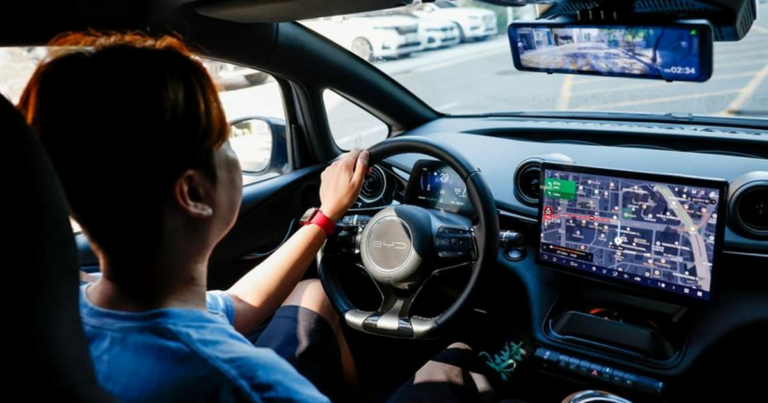
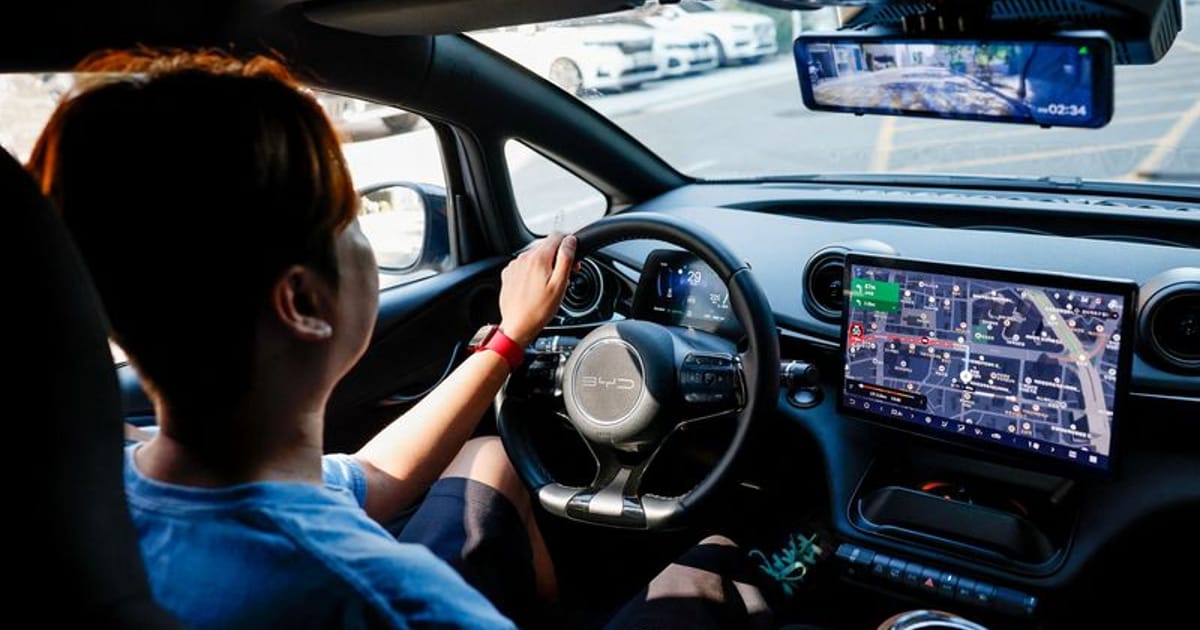
SEOUL/TOKYO, Oct 30 (Reuters) – Kim Min-seon bought an electric vehicle from China’s BYD in July.
The questions came swiftly.
“Everyone reacted like, ‘Why did you buy a Chinese car? Are you trying to get yourself killed?'” the 48-year-old Seoul resident said. Her purchase would have been unthinkable just a few years ago in South Korea, where Chinese cars have been long dismissed as shoddy.
At around $18,500, the Dolphin compact was inexpensive, well equipped and – crucially – available. Kim initially wanted a Hyundai Casper EV but was told she would have to wait more than two years for delivery.
After rapid expansion in Europe and elsewhere, BYD and other Chinese automakers are now targeting South Korea and Japan, two countries with entrenched car industries – and no shortage of sceptical consumers. They are making inroads in South Korea, but Japanese sales have been muted.
The difference is partly due to EV uptake. Roughly a quarter of the new cars sold in South Korea this year were EVs, versus 3% in Japan, according to industry data.
Chinese automakers have proven their ability to spend years building dealer networks and adapting cars to local tastes, according to industry executives and analysts.
It is a strategy born of both confidence and necessity: China produces some of the most technologically advanced cars available anywhere at prices rivals struggle to match. But its domestic market is so saturated with brands that carmakers need to look overseas for growth and profit.
“They enter first, watch what happens and gradually adjust their strategy,” said Liao Jingnan, founder of MobyInfo, a Tokyo-based consultancy.
Reuters interviewed more than a dozen people including company executives, dealers and EV buyers in both South Korea and Japan for this article.
BYD sold more than 20,000 vehicles in South Korea in the first nine months of this year, overtaking the combined sales of Toyota and its Lexus brand, according to market research firm Carisyou.
BYD has been able to take advantage of South Korea’s growing appetite for cheap EVs, said Lee Jae-il, a senior analyst at Eugene Investment & Securities. Petrol prices have surged almost 10% since the US-Israeli war on Iran started, but Hyundai and Kia focus mainly on premium EVs, offering only a few for under $30,000.
“The timing has worked particularly well for BYD,” Lee said.
Geely’s Zeekr brand began taking orders for its 7X SUV in South Korea in June and plans to open up to 14 showrooms by the end of the year. Chery is expected to enter the market in 2027, according to an industry presentation reviewed by Reuters. Chery declined to comment.
Xpeng, which set up a local unit in Korea last year, is now looking to hire someone to build out its retail network, according to a job posting on LinkedIn. Xpeng declined to comment.
South Korean carmakers are worried. Jeong Dae-jin, the chairman of the Korea Automobile & Mobility Association, has called for tax incentives for Korean-made EVs.
Automakers were “very desperate,” he said.
Japan may end up testing the patience of Chinese automakers. Foreign brands account for only about 6% of passenger car sales and drivers prefer hybrids, the technology championed by Toyota.
Relations between Tokyo and Beijing have been fraught since last year under right-wing Prime Minister Sanae Takaichi, who has taken a harder line on China.
Some 88% of Japanese and 71% of South Koreans have an unfavourable view of China, according to a Pew Research Center survey this year. Diplomatic strains have had no particular impact on BYD’s sales, showroom visits or customer inquiries in Japan, a spokesperson for BYD Auto Japan said.
BYD, which started selling cars in Japan in 2023, has more than 75 dealerships and plans to eventually expand to 100. It sold fewer than 4,000 cars in Japan in the first nine months of the year, just a 0.1% market share.
In July, it launched a boxy EV in Japan’s “kei” minicar segment, which is dominated by domestic firms. As of September, it had only sold about 650 of them, although BYD’s overall Japanese sales have risen every year.
“It’s not the market share,” said Marc Yamada of consulting firm Alvarez & Marsal. “It’s the growth.”
EMT, a startup backed by Chery, plans to launch a kei car in the first half of 2027 and three more models by 2029, Chief Technology Officer Koji Yamamoto told Reuters. It aims to build cars locally by the 2030s, he said.
Zeekr plans to launch a luxury van in Japan, initially targeting taxi fleets and chauffeur services, said Hiroyasu Koma, CEO of folofly, Zeekr’s distributor.
One person who will not be buying a Chinese car anytime soon is Fumio Kuwabara, an early adopter who has been driving Japanese EVs since 2010. He does not trust the reliability of Chinese cars, he said.
“I feel like they’ve cut corners in places you can’t see,” he said.
Ruling party lawmaker Daishiro Yamagiwa told Reuters that Japan must consider the security risks from Chinese cars that can be controlled from outside the vehicle.
It is still unclear whether Japanese consumers will hold out or end up overcoming their wariness as South Korean Lee Seong-dong did.
“Honestly, I didn’t have a good image of Chinese cars, either,” said Lee, a content creator in Seoul, who bought a Dolphin.
“Seeing the car in person and driving it changed my thinking a lot,” he said.
(Reporting by Heekyong Yang and Hyunjoo Jin in Seoul, Daniel Leussink, Maki Shiraki and Kentaro Okasaka in Tokyo and Ju-min Park in Beijing; Editing by David Dolan and Thomas Derpinghaus)
Watch Global Banking & Finance TV
Explore more articles in the Finance category
JavaScript is required for instant feedback — but you can also email newsletter@gbafmag.com .
Authoritative analysis on banking, capital markets and fintech — straight to your inbox.
Inform · Inspire · Empower
A global financial intelligence and recognition platform delivering authoritative insights, data-driven analysis, and institutional benchmarking across Banking, Capital Markets, Investment, Technology, and Financial Infrastructure.
Copyright © 2010-2026 – All Rights Reserved. | Sitemap | Tags
Back to top
About the Author