A Democrat in Michigan has endorsed the Republican candidate in the state's crucial US Senate contest, as a spat with her own party's candidate Abdul El-Sayed escalated just days before the vote.
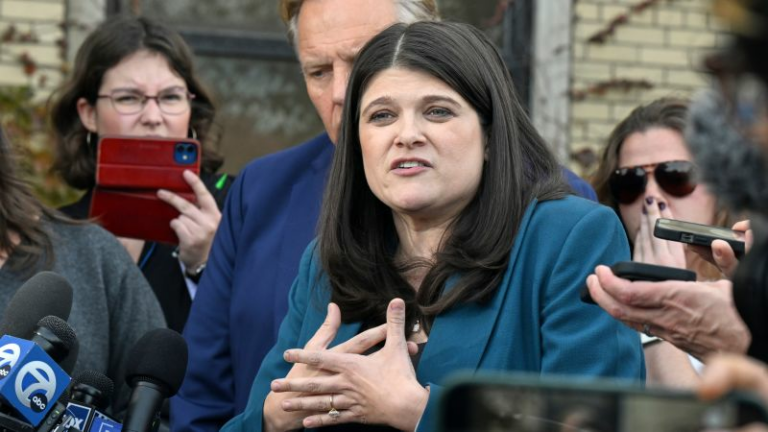
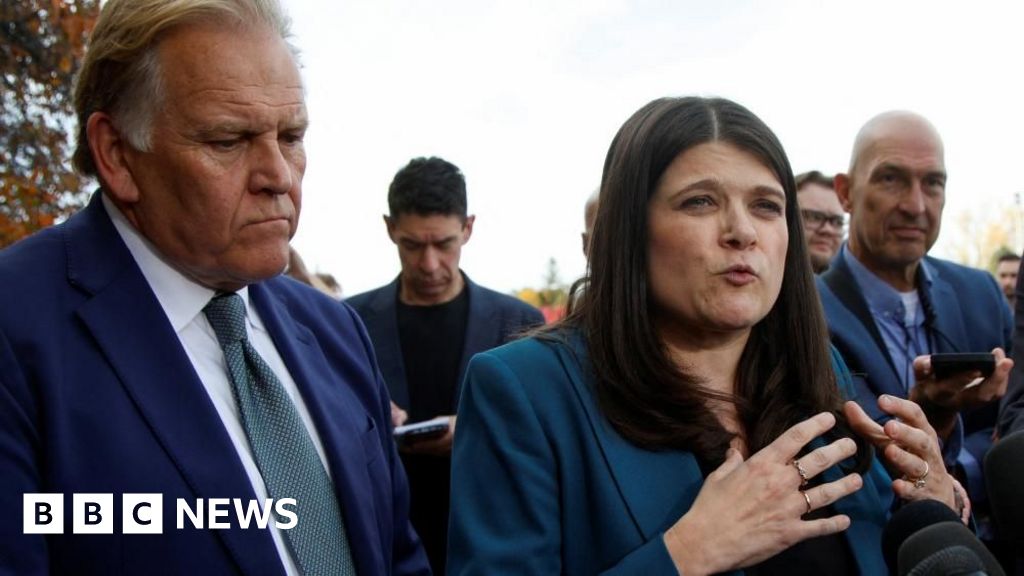
Haley Stevens, a sitting congresswoman who lost out on the Democratic Senate nomination to El-Sayed, made a surprise appearance alongside the Republican candidate Mike Rogers on Sunday.
"I don't belong in Abdul's campaign," she said in a video posted to X shortly after that appearance. "Who we are as Michiganders is not hate and is not what we are getting out from our Democratic nominee right now."
"That's why I am endorsing Mike Rogers," Stevens said.
The move stunned many of Stevens' fellow Democrats who condemned her decision to break from the party and switch her support just two days before the election, with one calling it a "despicable betrayal".
The public feud between Stevens, a centrist Democrat, and El-Sayed, who represents the party's left-wing, has boiled over in recent days.
Stevens called on El-Sayed to denounce a campaign advert from an outside liberal group that linked US support for Israel with high prices. El-Sayed criticised the advert and said he had nothing to do with its contents.
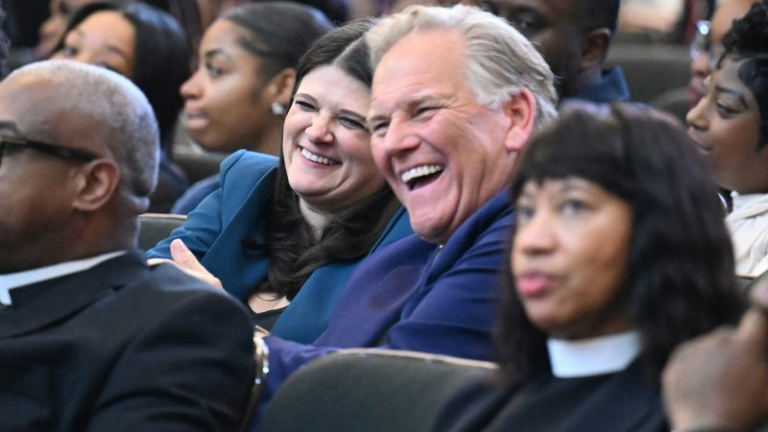
Stevens had been scheduled to appear at an event with El-Sayed on Sunday in an effort to display party unity, but he reportedly asked her not to come and she chose to attend a church service with his Republican opponent instead.
"This is a very close election, we all know that, but Abdul made clear that I was not welcome in his campaign, that he didn't need me there, that he didn't want me there," Stevens told reporters as she stood alongside Rogers outside the church.
When asked about Stevens' endorsement, El-Sayed told reporters he was focused on the problems Michiganders are facing.
"At the end of the day, I don't think about Haley Stevens," he said on Sunday. "None of this matters."
The Michigan Senate race is considered by analysts to be one of the tightest in Tuesday's midterm elections. It is one of a handful of battleground contests that will ultimately decide control of the Senate.
The seat is currently held by a retiring Democrat and the last time a Republican was elected to this Senate seat was in 1994. But in presidential elections, it is one of the crucial swing states – Michigan voted for Joe Biden in 2020 but Donald Trump in 2024.
Rogers welcomed Stevens' endorsement and said it showed "courage" during brief remarks with reporters.
President Donald Trump echoed that sentiment during a campaign rally in Iowa, calling her "very brave".
"I don't know Haley. I've never met Haley. But Haley said what few people were willing to say," Trump said. "I'd love her to join the Republican Party actually."
Many of Stevens' staff reportedly resigned immediately after her announcement, while the chair of the Democratic Party in Michigan said her decision "shows that she has abandoned everything she claims to care about".
"We reject the attempts by Stevens and bad-faith actors to divide our party and undermine our momentum," Curtis Hertel said in a statement.
Top Senate Democrat Chuck Schumer called Stevens' endorsement of Rogers "a despicable betrayal".
In downtown Detroit, several Democrats the BBC spoke to said they were disappointed by Stevens' endorsement of Rogers.
"I just genuinely don't understand it," said Summer Lawrence, a 21-year-old student. "I do think it's a betrayal of the party because the things she stands for are not the same things that he stands for as a Republican."
"Maybe she had frustrations with the party," Matthew Barera, another Michigan voter, said.
Others, including Republicans who support Rogers, said they doubted it would make a difference to the race.
"People can see right through her actions, you know? She's just angry," Marissa Lee, a Rogers supporter, told the BBC. "She is not going to make anybody change their mind."
Over the weekend, as Stevens' criticism of El-Sayed escalated, a number of Democratic politicians in Michigan publicly encouraged her to end the feud and back the party's candidates more directly.
The primary, and the conflict between the pair, has underlined divisions over the party's direction ahead of the 2028 presidential election.
Former public health official El-Sayed, who is the son of Egyptian immigrants, has channelled grassroots frustration with Washington politics as well as US ties to Israel.
Stevens is a more centrist Democrat – and had the support of party figures such as Michigan Governor Gretchen Whitmer during the primary race.
The party is hoping to regain control of the Senate in Tuesday's elections, but will need a net gain of four seats to do so. A loss in Michigan – which they currently hold – would represent a major blow and leave them needing to flip five seats.
Follow the twists and turns of Trump's second term with North America correspondent Anthony Zurcher's US Politics Unspun newsletter. Readers in the UK can sign up here. Those outside the UK can sign up here.
The BBC's Clive Myrie travelled to North Caroline where voters voiced their frustrations ahead of midterm elections.
The state's $500m Senate race may be the most closely watched in the US midterms, and is about far more than control of Congress.
An in-depth look at the key polling, races and issues ahead of an election that will define Trump’s final two years as president.
Anthony Zurcher explains how the results of the midterm elections could reshape the rest of Trump's presidency.
Whatever the result of the midterm elections, the party is facing tough questions over what they stand for and who should represent them.
Copyright 2026 BBC. All rights reserved. The BBC is not responsible for the content of external sites. Read about our approach to external linking.
About the Author