Ethiopia’s Dormant Mining Heritage Offers New Tourism Routes
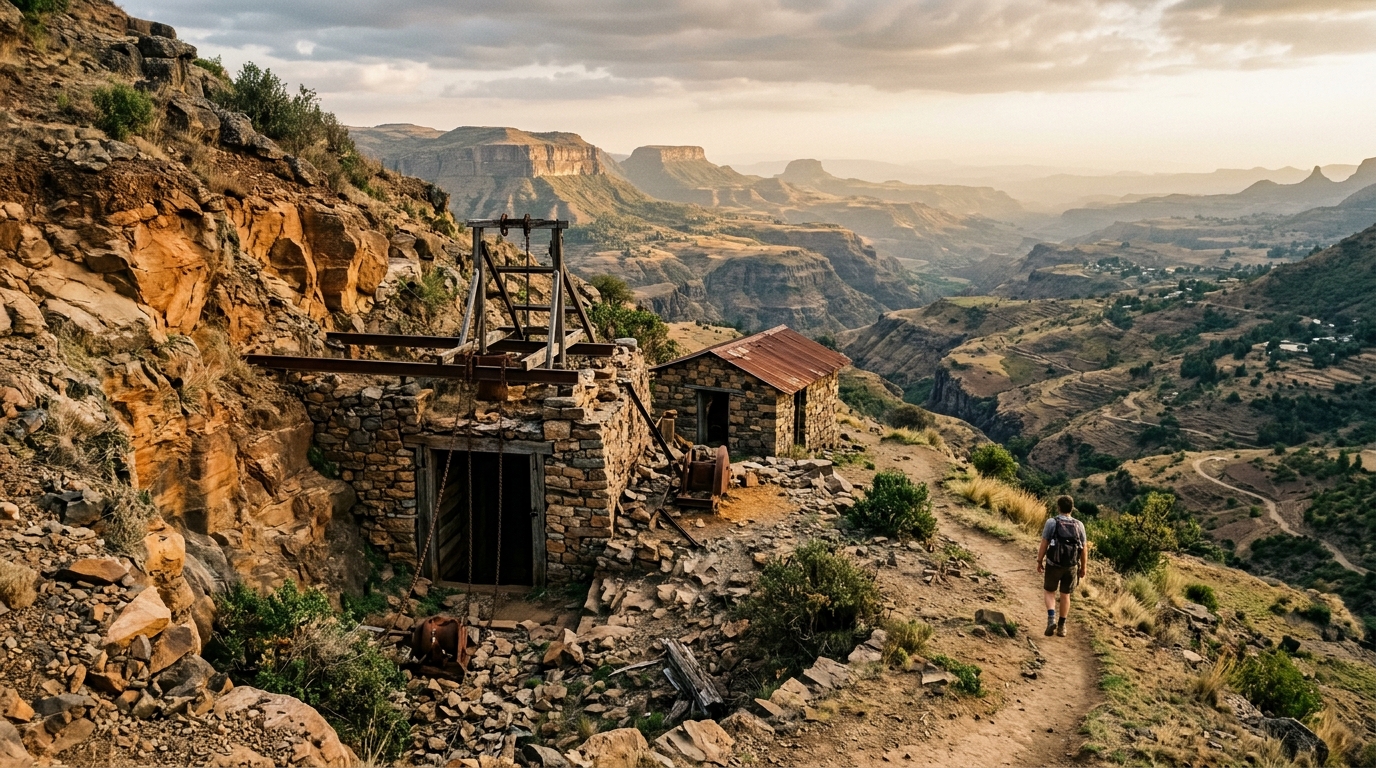
A new qualitative study published in the journal Built Heritage argues that Ethiopia’s extensive mining history remains a dormant asset that could be integrated into the country’s conventional cultural heritage and tourism industries. The research, conducted by Alemseged Debele Tsega, examines how abandoned mining fields, pits, and associated industrial legacies can be recognized, registered, and protected as national heritage assets. By situating mining heritage within existing legal and policy frameworks, the study proposes strategies to transform these sites into new tourism attractions, thereby expanding the economic and cultural value of Ethiopia’s tourism sector beyond its traditional historical and natural sites.
The study identifies a significant gap in Ethiopia’s current heritage management, where mining heritage is the least acknowledged form of heritage despite its long history. Although mining activity has been practiced in Ethiopia for centuries, leaving behind tangible and intangible legacies, these sites have largely been overlooked by scholars of cultural heritage and the tourism industry. The research aims to fill this gap by exploring how mining heritage can be contextualized within broader cultural heritage and geoheritage frameworks, providing a theoretical and practical basis for its integration into national tourism planning.
To investigate these issues, the author employed a qualitative research design, utilizing document analysis and empirical analysis of data from various sources. The study relied on proclamations issued on Ethiopia’s heritage protection and conservation, legislation on mining operations, and policy documents related to the country’s tourism industry. Additionally, the research incorporated documents from the United Nations and the World Bank, as well as oral history interviews with six key informants selected from the Ethiopian Heritage Authority, the Ministry of Tourism, and the Ministry of Mines. This multi-source approach allowed for a layered analysis of the legal, historical, and practical dimensions of mining heritage in Ethiopia.
The findings suggest that Ethiopia’s existing legal frameworks, such as Proclamation 209/2000 on cultural heritage, already provide a basis for classifying mining heritage as part of the country’s cultural heritage. The proclamation recognizes immovable cultural heritage, including structures and monuments anchored to the ground, which can encompass remains of mining buildings, settlements, and ditches. The study highlights specific mining sites in regions such as Tigray, Adola, Benishangul, Wollo, Wollega, and Afar as potential candidates for registration as cultural heritage. These sites, which include goldfields, opal mines, and salt mines, possess significant local and national value and could serve as supplementary authentic sources for the Ethiopian tourism industry.
Furthermore, the research emphasizes the connection between mining heritage and geoheritage, noting that both consider geological sites and features to be important tourist attractions. Geoheritage calls for the preservation of geological features that have scientific, cultural, and educational relevance, contributing to the development of geotourism. The study argues that mining tourism can be viewed as a form of cultural geotourism, which focuses on using cultural heritage related to geological sites to enhance the tourism industry. This perspective offers a new model for exploring old mines and their extraction technologies, memories, and landscapes within the context of the heritage and attraction industry in Ethiopia.
The study also identifies specific potential mining tourism sites, including the Yubdo platinum field in Wollega, Oromia, which has a rich history of platinum prospecting and ties to European platinum tycoons in the early 20th century. In northern and northeastern Ethiopia, the goldfields in Tigray, salt fields in the Afar region, and opal extraction sites in Wollo are highlighted as potential attractions. The salt mine site in Afar is particularly notable for its association with the discovery of the fossil Australopithecus afarensis, known as Lucy, and its historical role in the trade of salt bars as currency. These sites, if developed with appropriate infrastructure, could attract tourists interested in specialized experiences related to mining history and geological features.
However, the integration of mining tourism into Ethiopia’s conventional tourism industry requires careful planning and ethical considerations. The study notes that mining tourism is a niche form of tourism that attracts visitors interested in specialized experiences, and therefore, it should be integrated with other tourism packages for long-term success. Service providers must ensure that visits to mining fields are conducted ethically and that illegal mining is prohibited along proposed routes. Additionally, the safety and security of tourists at attraction sites must be ensured, drawing lessons from other mining tourism destinations such as Cullinan in South Africa, where adequate parking, safety, and security measures contributed to visitor satisfaction.
The research also addresses the challenges associated with preserving mining heritage, including the potential environmental impacts of mining activities. Heavy metals released from mineral extraction can affect water quality and the environment, as seen in gold mining sites in Tigray. Conserving traditional salt mining activities in Afar presents a different challenge, requiring a balance between recognizing mining heritage and supporting current economic activities such as tourism and pastoralism. The study suggests that a comprehensive conservation strategy is needed to address these issues, ensuring that the development of mining tourism does not compromise the environmental or social fabric of the regions involved.
The study concludes that while Ethiopia’s mining heritage is currently dormant, it holds significant potential for activation and reuse for development. By treating mining heritage from the broader perspective of cultural heritage management, stakeholders can acknowledge its historical, cultural, and socioeconomic significance. The research advocates for cooperation among heritage, mining, and tourism stakeholders to promote the conservation and preservation of these sites. It also recommends that regulatory frameworks be modified to accommodate mining heritage and geoheritage values, thereby increasing the possibility of integrating mining tourism into the national tourism strategy.
Despite the promising prospects, the study acknowledges limitations in thoroughly examining every aspect of Ethiopia’s mining heritage due to the inadequacy of previous studies and lack of funding. The author encourages comprehensive interdisciplinary research involving history, anthropology, archaeology, heritage, and tourism studies to further explore these issues. Securing funds for infrastructure development and the transformation of abandoned mining fields into tourist attractions remains a significant challenge. Possible solutions include seeking resources from active mining companies, foreign donors, and collaboration with local communities and the government. The study ultimately positions mining tourism as a viable possibility for enhancing Ethiopia’s tourism industry, offering new experiences and routes that can enrich the country’s tourist destinations and build a positive image on the global stage.
Beyond extraction pits, the study details tangible industrial relics that illustrate Ethiopia’s broader manufacturing history. In Afar, commercial potash exploitation commenced in 1906 under the Italian Compagnia Mineraria Coloniale, which transported minerals by camel to the port of Mersa Fatma along a newly built railway before output declined during World War I. Postwar extraction resumed under the Dallol Potash, Magnesium, and Sulphur Mines Company, followed in 1954 by the Ralph M. Parsons Company, alongside later commercial ventures including the Allana Potash Corporation and the Yara Dallol Potash Project. Similar historical significance attaches to manufacturing landmarks across the country. These include Ethiopia’s first cement factory constructed by Italians in Dire Dawa in 1938, the early Ethiopian Iron and Steel Company established in Akaki during the mid-1960s, and the historic Ethio-Djibouti railway workshop built by French engineers between the 1890s and 1917, which signaled early Ethiopian industrialization.
The author also evaluates how domestic statutes govern movable relics, community traditions, and institutional mandates. Proclamation 209/2000 explicitly identifies coins struck from precious and base metals, including gold, silver, bronze, and copper, as movable cultural heritage passed down across generations. Beyond portable objects, the traditions, religious beliefs, and folklore of mining laborers constitute intangible cultural heritage. Under 2014 statutory rules, intangible practices shared by two or more nations, nationalities, or peoples qualify for national designation, whereas localized practices receive regional recognition. In mining legislation, Proclamation 816/2013 classifies artisanal mining as manual work performed by microbusinesses, while 2020 legislation mandates social provisions including healthcare and catering for workers. Institutionally, cultural administration evolved from the Ministry of Culture and Tourism, founded in 2005, to the restructured Ministry of Tourism and the Ethiopian Heritage Authority in 2022. This regulatory mandate is anchored in Article 91(2) of the 1995 Constitution, which charges both the government and citizens with preserving historical sites. Although Proclamation 299/2002 established environmental impact assessments, it omitted explicit rules requiring the rehabilitation of abandoned extraction pits.
National economic trends and international models further contextualize this development framework. Ethiopian tourism generated 7.4 billion American dollars in 2018, with annual foreign arrivals expanding from 136,000 in 2000 to 812,000 in 2019. In 2020, international tourism contributed 2.28 billion dollars, representing 5.5 percent of gross domestic product and 3.3 percent of employment. Globally, where tourism generated an estimated 11 percent of gross domestic product in 2023, mining attractions have achieved commercial prominence across European nations and South Africa. Furthermore, the study cites pit-lake reclamation documented in Australia, South Africa, and the Czech Republic, where repurposed water-filled excavations improved local ecology, supported vegetation and aquatic life, and created recreational waterfront landscapes aligned with sustainable environmental development policies.
Subject of Research: Integration of mining heritage and tourism in Ethiopia
Article Title: Integrating mining heritage and mining tourism into the conventional cultural heritage and tourism industry of Ethiopia
Article References: Tsega, A. D. (2026). Integrating mining heritage and mining tourism into the conventional cultural heritage and tourism industry of Ethiopia. Built Heritage, 10(1), Article 48. https://doi.org/10.1186/s43238-026-00293-5
Image Credits: AI Generated
DOI: 10.1186/s43238-026-00293-5
Keywords: mining heritage, tourism, Ethiopia, cultural heritage, geoheritage, industrial heritage, tourism policy, heritage conservation, Integrating, mining, heritage, conventional
News Source: Courtney Benton. (November 7, 2026). Ethiopia’s Dormant Mining Heritage Offers New Tourism Routes. Scienmag.
We bring you the latest biotechnology news from best research centers and universities around the world. Check our website.
Enter your email address to subscribe to this blog and receive notifications of new posts by email.
Bioengineer.org © Copyright 2023 All Rights Reserved.
Login to your account below
Please enter your username or email address to reset your password.
Bioengineer.org © Copyright 2023 All Rights Reserved.
About the Author