Contact us
For advertisers
Digital agenda
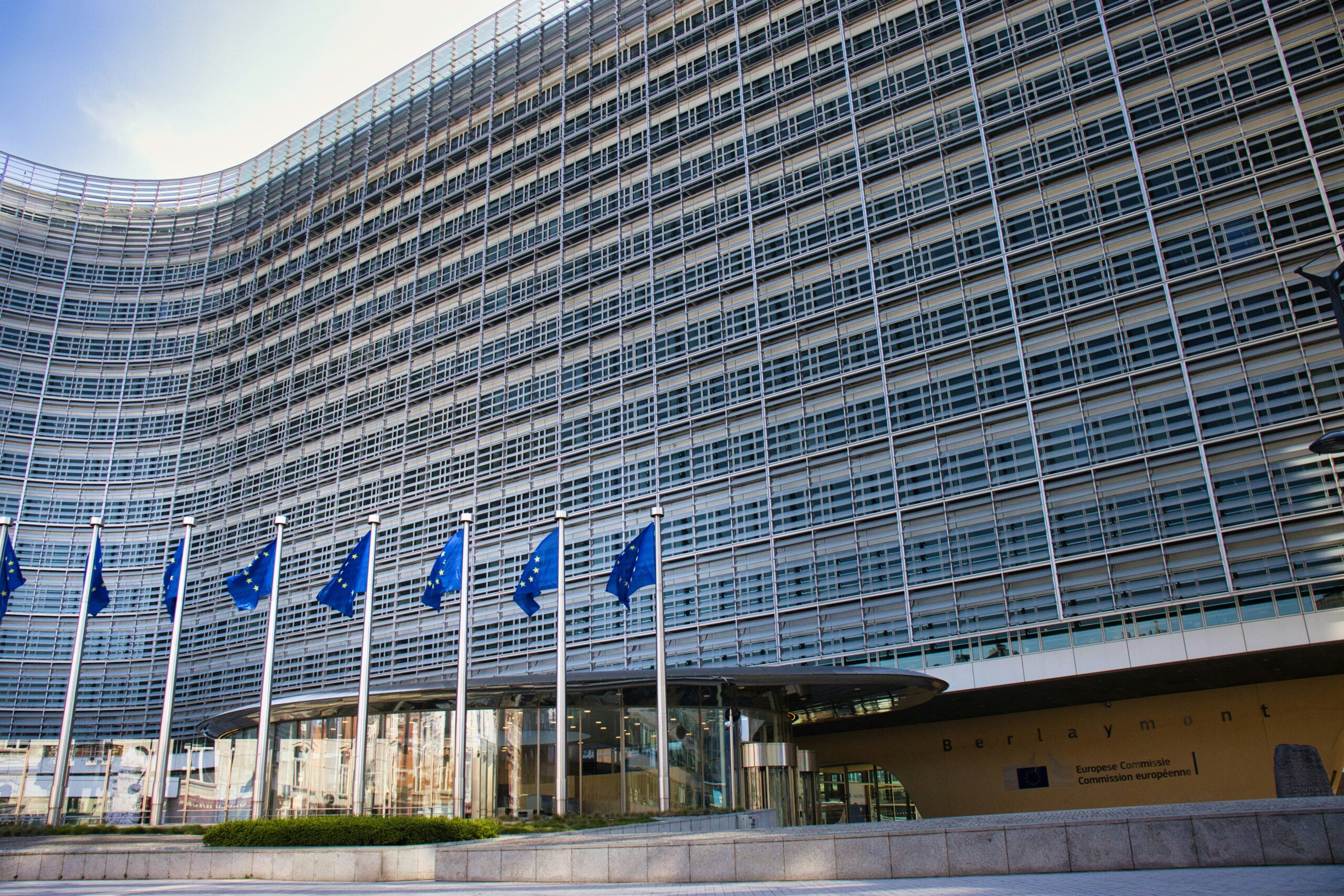
The Commission’s push to simplify digital rules set off a lobbying rush / Photo: Unsplash
Companies could be allowed to use your personal data to train and run artificial intelligence without asking for consent. As the EU rewrites its privacy rules, tech giants are lobbying hard in Brussels, Berlin, and Dublin. A new report finds that business filled more than four in five meetings with European lawmakers on the reform.
Major technology companies and business groups have held hundreds of meetings with European politicians on the Digital Omnibus, according to new research by Corporate Europe Observatory and LobbyControl. The package aims to simplify the EU’s digital rules, including the General Data Protection Regulation (GDPR). The report counts 655 lobbying meetings with members of the European Parliament since the Commission tabled the proposal in November 2025. Business interests accounted for 83 per cent of them. Only 11 per cent involved civil society organisations or trade unions.
“Our research shows that Big Tech enjoys unprecedented access to the highest levels of government across Europe,” said Bram Vranken, campaigner and researcher at Corporate Europe Observatory. He accused technology companies of using their lobbying to weaken fundamental rights so that they can develop and operate artificial intelligence.
The findings come a week after member states agreed on their position on the Digital Omnibus. The Council of the EU adopted its negotiating mandate on 21 October. The text aims to simplify how companies collect and use personal information.
Among the most controversial changes are the rules on when companies can use personal data to train and operate AI systems. Under the proposal, developers could rely on ‘legitimate interest’. This legal basis allows companies to use personal data without asking for consent. They must, however, show that the use is necessary for a legitimate purpose and does not override people’s rights.
For users, the dispute concerns how much control they have over their personal information. Campaigners fear that companies could more easily use people’s data to develop AI systems without their explicit agreement. They also warn about the potential use of sensitive information, like ethnicity, political beliefs, or sexual orientation, in applications such as facial recognition.
The Council argues that its position maintains strong privacy protections. It keeps the GDPR’s existing definition of personal data and adds safeguards for processing sensitive information in AI systems. Critics counter that a new provision on pseudonymised data, where names are replaced with codes, could still take some information outside the GDPR. Ireland currently holds the rotating Council presidency. Its Minister for Foreign Affairs and Trade Helen McEntee said the changes “will make it easier for businesses to operate across Europe, reducing administrative burdens while maintaining high standards for data privacy and citizens’ rights”.
The report highlights the role of Germany, which carries the most weight in Council votes thanks to its population, and of Ireland. Between May 2025 and September 2026, the German government held 85 meetings with 11 non-European tech companies. Some involved more than one firm, so the companies took part 103 times in total. This means an average of 1.5 meetings per week. The figure could be higher because not all meetings are publicly disclosed. The report also notes that it is unknown which topics the meetings covered.
Chancellor Friedrich Merz met the chief executives of Apple and OpenAI, alongside senior representatives from Google and Nvidia. OpenAI’s Sam Altman alone secured five high-level meetings in Berlin within four months. Digital Minister Karsten Wildberger, who leads Germany’s work on the Digital Omnibus, held 18 meetings with major technology companies.
Felix Duffy, campaigner and researcher at LobbyControl, did not mince his words. “The German government has sided with the AI companies. Digital Minister Wildberger has taken up key demands of the AI lobby: our personal data will be available for AI. The main beneficiaries are Google, Meta and OpenAI, not European companies,” he said.
In Ireland, the national lobbying register shows that Meta has approached 41 policymakers and MEPs on EU digital rules since May 2025. Google has approached 30 public officials. The researchers argue that technology companies sought to influence Ireland’s priorities during the Council presidency.
The lobbying continued in the European Parliament. On average, lobbyists have held three meetings with MEPs every working day since November 2025. Google and Meta held 21 and 19 meetings respectively, more than any other company. The industry associations that represent them, such as DIGITALEUROPE with 10 meetings, added more.
The report also raises concerns about the revolving door between government and industry. In Denmark, Sweden, and Ireland, former government officials have gone on to lobby for Meta on the Digital Omnibus. The researchers warn that such moves risk giving technology companies privileged access to policymakers and creating conflicts of interest.
The door also turns the other way. Finnish MEP Aura Salla (EPP/FIN) led Meta’s lobbying in Brussels until 2023. Today she is the Parliament’s rapporteur on the Digital Omnibus for the industry committee, which makes her one of its lead negotiators. She also met more lobbyists on the file than any other MEP, 110 in total. Corporate Europe Observatory, LobbyControl, and five other organisations called for her removal from the role. Ms Salla denied any conflict, saying she had complied with transparency requirements.
The technology industry sees the reforms differently. DIGITALEUROPE, which represents the digital technology sector, argues that European regulation is holding back investment and innovation. It says reforms should help Europe develop its data economy, which could reach €815bn by 2030.
Reacting to the Council agreement, DIGITALEUROPE’s Director General Cecilia Bonefeld-Dahl said member states had addressed important issues, including personal data use in AI development and the protection of commercially sensitive information, but “without actually resolving issues on the ground”. She urged negotiators “to remove obligations to share trade secrets and instead build a safe and trusted, voluntary environment for B2B data sharing”.
Her wish list goes beyond the Digital Omnibus. She also wants the EU to “dedicate 25 per cent of the next EU budget to critical and digital technologies, open 25 per cent of public procurement to SMEs and scale-ups, and crowd in private and allied investment”.
The European Parliament must now listen to its constituents, not Big Tech. — Bram Vranken, campaigner and researcher at Corporate Europe Observatory
Parliament must still adopt its position, which the report expects at the beginning of 2027. Only then can talks with the Council begin. Mr Vranken urged MEPs to resist pressure from large technology companies. “The European Parliament must now listen to its constituents, not Big Tech,” he said.
Contact us
For advertisers
EU Perspectives, along with the news portals Ekonomický deník, Zdravotnický deník, and Česká justice, is published by Media Network s.r.o., Revoluční 1082/8, 11000 Praha 1, registered under file number 216663 C at the Municipal Court in Prague, The Czech Republic.
Cookies policy | Privacy policy
Publishing house
Online titles
EU Perspectives, along with the news portals Ekonomický deník, Zdravotnický deník, and Česká justice, is published by Media Network s.r.o., Revoluční 1082/8, 11000 Praha 1, registered under file number 216663 C at the Municipal Court in Prague, The Czech Republic.
Cookies policy | Privacy policy
To provide the best experiences, we and our partners use technologies like cookies to store and/or access device information. Consenting to these technologies will allow us and our partners to process personal data such as browsing behavior or unique IDs on this site and show (non-) personalized ads. Not consenting or withdrawing consent, may adversely affect certain features and functions.
Click below to consent to the above or make granular choices. Your choices will be applied to this site only. You can change your settings at any time, including withdrawing your consent, by using the toggles on the Cookie Policy, or by clicking on the manage consent button at the bottom of the screen.
About the Author