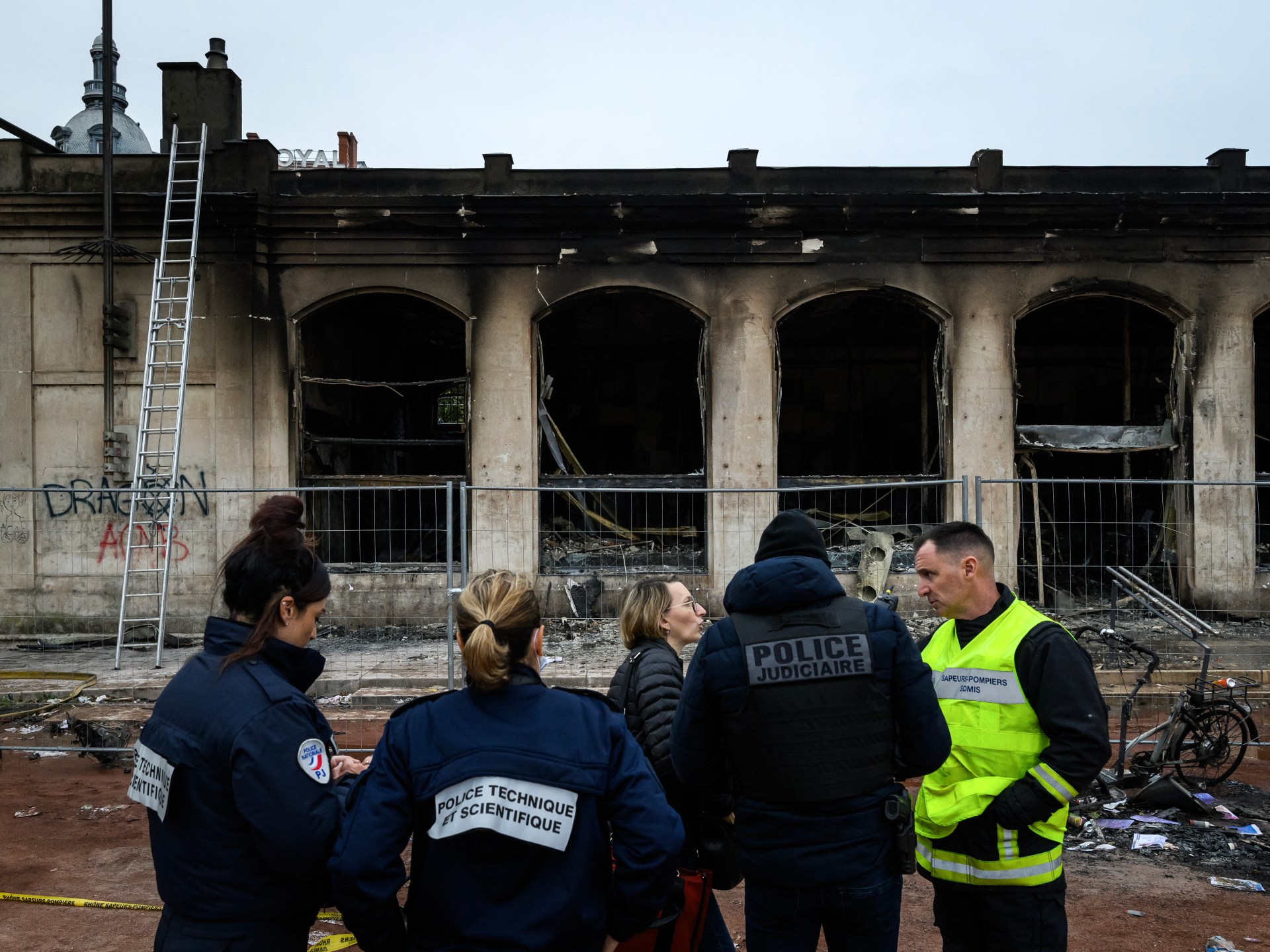
Interior Minister Laurent Nunez acknowledges that police ‘lost control’ during weekend protests.
Save
Share
France has announced partial curfews in several major cities across the country in the aftermath of the violent unrest that gripped the country over the weekend.
Prime Minister Sebastien Lecornu said on Monday that he had asked regional authorities to impose “partial” and “localised” curfews in some cities to protect businesses after weekend demonstrations spilled over into some of the worst street violence in recent years.
The call came as calm returned, allowing the government to review the response of authorities to the riots and strategies to prevent a recurrence.
Late on Monday, curfews in various cities and communes were announced.
Authorities issued a curfew order for Place de la Republique in Paris and the streets around the Les Halles shopping street from 11pm local time (21:00 GMT) on Monday night until 6am (04:00 GMT) on Tuesday. Gatherings and demonstrations were also banned across the city starting at 8pm (18:00GMT), police said.
Similar curfews, some applying only to minors, were also announced for Monday night in Lyon, Nice and Coulaines.
In Lille in northeastern France, and three nearby communes, curfews were announced for Monday and Tuesday nights.
President Emmanuel Macron on Monday morning declined an offer from Interior Minister Laurent Nunez to resign in the wake of the unrest, which grew out of nationwide demonstrations by students protesting educational conditions, the Elysee presidential office said.
Macron said Nunez should stay in his position to ensure the chain of command is maintained within the police and security forces and asked the interior minister to establish new methods to deal with looters, the Elysee said in a statement.
The president also asked Nunez to “take all necessary steps to ensure transparency over the failures in planning and intelligence that led to the violence”, the statement added.
Lecornu later said he had asked local authorities to impose partial curfews starting on Monday evening.
“It is out of the question to put all of Paris under curfew,” he said, but insisted that he was “fully resolved to restoring public order”.
A state of emergency could be declared if necessary, though partial curfews seemed “more appropriate” at this stage, he said, according to the Reuters news agency.
“I’ve asked the prefects to implement a number of curfews for this evening,” Lecornu said, adding that “the key issues” include both “the protection of people, but also of property and businesses”.
The Ministry of the Interior said more than 2,300 people were arrested and almost 1,000 police and gendarmes were injured in protests on Saturday. Injuries were also reported among protesters, with one demonstrator’s hand blown off by a police crowd-control grenade.
The nationwide demonstrations brought together students demanding better conditions in the French education system and residents protesting against the high cost of living and faltering public services.
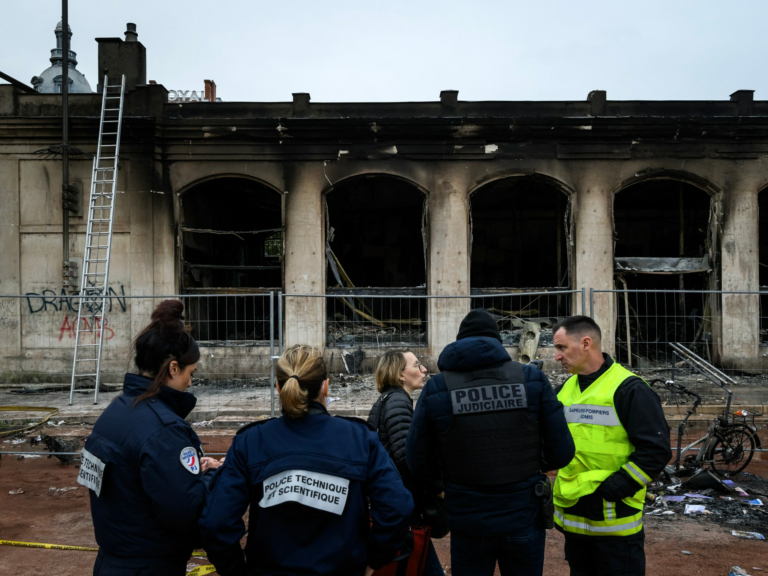
More than half a million people took part in the protests on Saturday. Looting, arson and damage to property occurred in many cities, with masked rioters attacking town halls, police stations and other government buildings.
Nunez acknowledged that police “lost control” during the protests.
“On Saturday in some major cities, you couldn’t look shopkeepers in the eye after hundreds of shops had been looted and tell them we hadn’t lost control,” he said.
Nunez acknowledged a “lack of anticipation” in the deployment of security forces, saying their numbers were insufficient to deal with the large crowds of rioters and looters on the fringes of the demonstrations.
The mayors of France’s biggest cities have demanded answers from the government over what they called a lack of preparation by security forces.
Nunez estimated that 60,000 law enforcement personnel were deployed across the country that day, and reported that about 350 people were arrested in Paris on Sunday and overnight.
Nationwide, more than 2,330 people were taken into police custody over the weekend, 70 percent of whom were adults, Justice Minister Gerald Darmanin said.
Looting continued on Sunday, and Paris Mayor Emmanuel Gregoire said on Monday that about 30 shops had been targeted in the capital the previous day, describing the scenes as “unbearable”.
The violent weekend demonstrations were led by the “yellow vest” movement, which held weeks of violent populist protests over fuel prices between 2018 and 2020.
The unrest followed weeks of protests by high school students against overcrowded classrooms, teacher shortages and underinvestment in education, the biggest youth-led protest movement in the country in recent memory.
The unrest comes six months before France’s next presidential election, as pressure grows over a weak economy and surging national debt. The yellow vest movement has called for a new round of protests on Saturday, according to France24.
Follow Al Jazeera English:
About the Author