Samuel Ben-Ur
The US-backed Board of Peace (BoP) remains unable to build its first military facility in Gaza, even as it prepares Hamas weapons-collection sites and expands reconstruction partnerships. Meanwhile, Hamas-affiliated officials continue to administer public services and regulate trade despite the group’s July announcement that it had dissolved its government. A dispute over commercial-import fees also interrupted shipments from Israel this week.
On October 14, The Guardian reported that Israel prevented the Louisiana-based company Arkel International from beginning construction of an outpost the BoP commissioned in August. The roughly 100-by-100-meter facility at a former Gaza Humanitarian Foundation site would accommodate rotating deployments of 150 International Stabilization Force (ISF) troops drawn from a larger contingent of 500 personnel from Morocco and Kosovo. BoP officials believe this initiative will make progress only after Israel’s October 27 elections.
Separately, the Israeli public broadcaster Kan reported on October 12 that Israel approved the entry of an American company working under the BoP to identify potential Hamas weapons-handover sites in Israeli-controlled southern Gaza. A board official confirmed continued coordination with Israel through an August disarmament working group and said decommissioning could begin once authorizations and cooperation guarantees were secured. However, Israeli security officials accused Hamas of rebuilding its military capabilities and preparing attacks, and no weapons handover has been confirmed.
On October 13, the National Committee for the Administration of Gaza (NCAG) signed a memorandum of understanding with the German Agency for International Cooperation (GIZ) at NCAG’s temporary headquarters in Cairo. NCAG chief Ali Shaath and GIZ country director Alexander Solyga signed the agreement in the presence of BoP High Representative Nikolay Mladenov. It provides technical cooperation on economic recovery, municipal services, education, employment, water, agriculture, and energy, including needs assessments and capacity-building. No funding commitment or implementation timetable was announced.
The NCAG remains outside Gaza, where Hamas retains administrative influence. An October 6 Washington Institute assessment describes a decentralized Hamas-linked network managing population registries, municipal infrastructure, aid distribution, limited taxation, policing, and salaries through civil servants and local intermediaries. The evaluation reports stronger bureaucratic continuity in central Gaza than in the fragmented northern and southern districts. Israel controls roughly 60 to 70 percent of the territory.
On October 14, Israel’s Coordinator of Government Activities in the Territories (COGAT) said Gazan merchants had suspended commercial-import coordination over Hamas’s demands for 10,000 shekels (about $3,220) per truck and 30 percent of sales in cash. COGAT also alleged that Hamas detained a merchant’s son over nonpayment.
Gaza’s truckers’ union disputed Israel’s explanation, while an official from Gaza’s Ministry of Economy said the payment was a donation for civil-servant salaries. Gaza’s Hamas-affiliated Government Media Office denied imposing taxes, calling the contribution voluntary. By October 15, commercial imports from Israel had reportedly stopped for two days, although humanitarian shipments and commercial goods from Egypt continued entering.
The BoP’s $2.45 billion, six-month recovery plan remains stalled over the sequencing of Hamas’s disarmament and Israel’s withdrawal. Israeli Prime Minister Benjamin Netanyahu insists that Hamas disarm first, while the proposed roadmap links disarmament to a phased withdrawal.
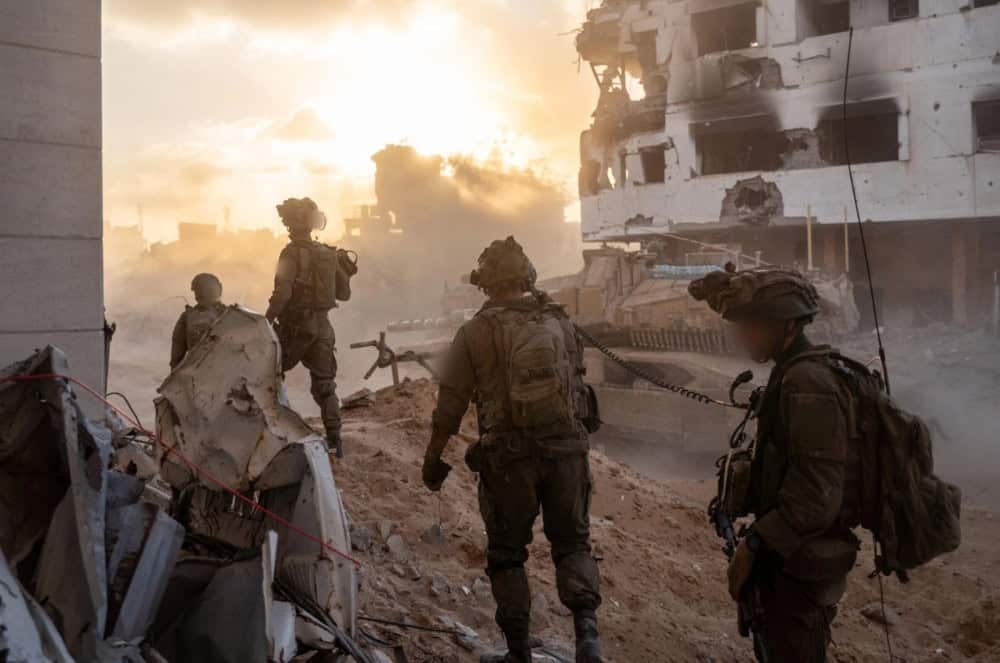
Meanwhile, the IDF reported 31 ceasefire violations by Hamas and other Palestinian terror groups in Gaza from October 1 to 15:
Samuel Ben-Ur
Seth Frantzman
David Daoud & Ahmad Sharawi
The LWJ Editors
FDD’s Long War Journal provides accurate reporting and analysis of ongoing efforts to address jihadism, conflicts between state and non-state actors, and warfare between states. This is accomplished through original reporting, including by embedded reporters, news aggregation, maps, podcasts, and other formats.
© 2025 Long War Journal. All rights reserved.
Privacy Policy
Terms & Conditions
Cookies Policy
About the Author