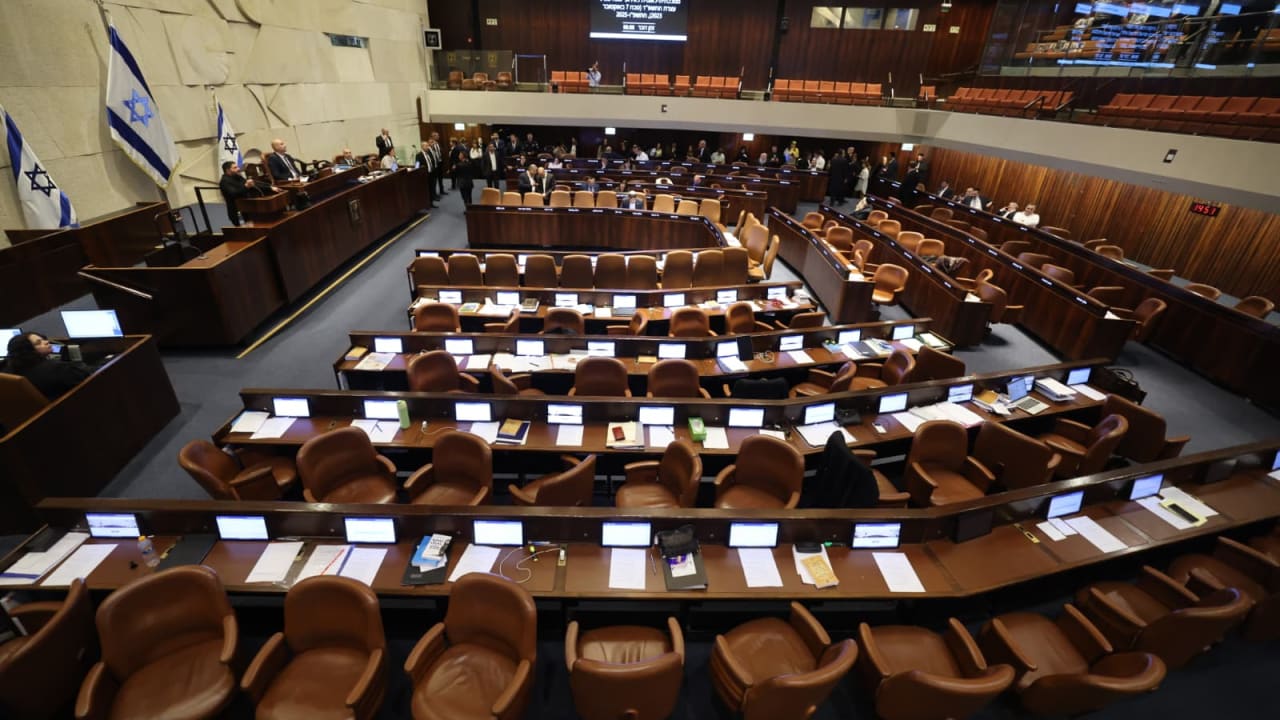
The Knesset told the High Court of Justice that Israel’s new judicial-selection system should not be struck down simply because the justices may consider the existing system better, arguing that only severe damage to the country’s democratic character could justify invalidating part of a Basic Law.
The Movement for Quality Government (MQG), one of the petitioners challenging the legislation, rejected that position in a response filed Sunday, arguing that the Knesset’s supplementary arguments added no new factual or legal basis and largely repeated claims already made during last month’s hearing.
MQG asked the court to make its conditional orders absolute, thereby accepting the petitions and invalidating the challenged provisions.
The dispute concerns an amendment to Basic Law: The Judiciary and a complementary amendment to the Courts Law that would change the composition of the nine-member Judicial Selection Committee and how it appoints judges at every level.
The Basic Law amendment passed 67-1 in March 2025 and is scheduled to take effect when the next Knesset begins its term. Nine petitions are now being heard together.
The supplementary arguments were submitted on Wednesday (July 22) after an 11-justice panel questioned the Knesset and government one day earlier over whether the new system would make judges more dependent on political approval and weaken judicial independence.
The court issued conditional orders requiring explanations as to why the legislation should not be struck down, with the central question being whether the changes damage Israel’s democratic identity so seriously that the court may intervene despite their status as a Basic Law.
The Knesset divided its response into four parts: the composition of the committee, appointments to lower courts, appointments to the Supreme Court and a mechanism intended to break prolonged deadlocks over Supreme Court vacancies.
Under the current system, the committee includes three Supreme Court justices, two ministers, two MKs, and two representatives of the Israel Bar Association.
The new system would remove the IBA representatives and replace them with two jurists qualified to serve on the Supreme Court, one selected by coalition MKs and the other by opposition MKs.
That would leave four members selected by the coalition, including one of the jurists; three Supreme Court justices; and two members selected by the opposition, also including one jurist.
The Knesset said lawmakers had given four main reasons for removing the IBA: concerns that lawyers who appear before judges have an inherent conflict of interest when deciding their promotion; the IBA’s involvement in national politics; a past case in which a Bar representative was suspected of advancing appointments in exchange for a bribe; and a desire to give elected representatives greater influence over judicial selection.
During the hearing, the justices questioned why replacing the IBA representatives with other lawyers would solve any conflict-of-interest problem. The IBA also argued that it holds nationwide information about judges’ professionalism and conduct that is important when candidates are considered for promotion.
The Knesset answered that IBA representatives were particularly vulnerable to professional conflicts because they were elected by lawyers with direct financial and professional interests in judicial decisions.
It acknowledged that the IBA possesses important information but said it could share that material with the committee without holding two seats and votes on it.
More fundamentally, the Knesset argued that the court was asking the wrong question if it focused on whether the IBA’s participation was helpful or whether the new committee would be better than the old one.
The relevant question, it said, was whether removing the IBA and increasing the influence of elected representatives negated the core of Israel’s democratic identity. A Basic Law should not be invalidated merely because the court considers the previous system preferable, the Knesset argued, since the authority to establish and change Israel’s constitutional arrangements belongs to the Knesset acting as the constituent authority.
The legislation would also lower the threshold for selecting Supreme Court justices from seven of the committee’s nine members to five.
The five-member majority would have to include one coalition-side member and one opposition-side member, but would no longer require the support of any of the three Supreme Court justices.
The Knesset said the current seven-vote requirement effectively gives the justices acting together a veto over the selection of their future colleagues. The new system, it argued, would instead require agreement between representatives selected by both the coalition and opposition.
During a hearing last month, the justices expressed concern that the change could leave judicial candidates identified as coalition or opposition choices and influence the conduct of lower-court judges seeking promotion.
Justice Alex Stein asked whether an ambitious district court judge would feel a need to “find favor in the eyes of politicians,” while Supreme Court President Isaac Amit warned that future justices could carry a political “chip” identifying those responsible for their selection.
The Knesset said the possibility that an appointee would be publicly associated with those who supported them already existed under the current system and in other senior public appointments.
Judges, it argued, were required to detach themselves from those who helped appoint them and decide cases independently, whether their supporters had been politicians, lawyers or other judges.
It also rejected the petitioners’ argument that increased political involvement would necessarily reduce public confidence in the courts.
While the petitioners said the new system would damage trust by politicizing appointments, the Knesset said most lawmakers who supported the amendment believed public trust had already been harmed by the Supreme Court justices’ involvement in selecting their future colleagues.
The Knesset further argued that even if the professional standard of future Supreme Court appointments were assumed to fall, lawmakers could decide that the risk was justified by greater public trust and a more socially and judicially diverse bench.
It stressed that this was a hypothetical argument rather than an admission that professional standards would decline.
Under the amendment, appointments to the magistrate’s and district courts would continue to require five votes, but the majority would have to include at least one judge, one coalition-side member and one opposition-side member.
Petitioners warned that giving each bloc an effective veto could paralyze the committee and prevent vacancies from being filled.
The Knesset acknowledged the risk of deadlock, but said it was the unavoidable price of requiring broader consensus. It argued that predictions of future paralysis remained speculative and could not justify invalidating a Basic Law before the system had begun operating.
The legislation also includes a separate fallback procedure that could be activated once during a Knesset term if two Supreme Court vacancies remain unfilled for an extended period.
Coalition-side and opposition-side members would each submit a list of candidates for the other side to choose from initially. If no candidate were selected within the required period, the members who submitted the list could eventually make the choice themselves.
The Knesset acknowledged that the procedure had disadvantages but argued that leaving Supreme Court positions vacant indefinitely was worse.
MQG said Sunday that none of those arguments changed the factual or legal foundations of the case and that there was no need for a further substantive response.
The case will now return to the 11-justice panel for a ruling, unless the court requests further submissions or schedules another hearing.
Copyright ©2026 Jpost Inc. All rights reserved
•
•
About the Author