‘Disaster preparedness is about making sure that when a shock happens, people are ready and are better able to cope with it.’
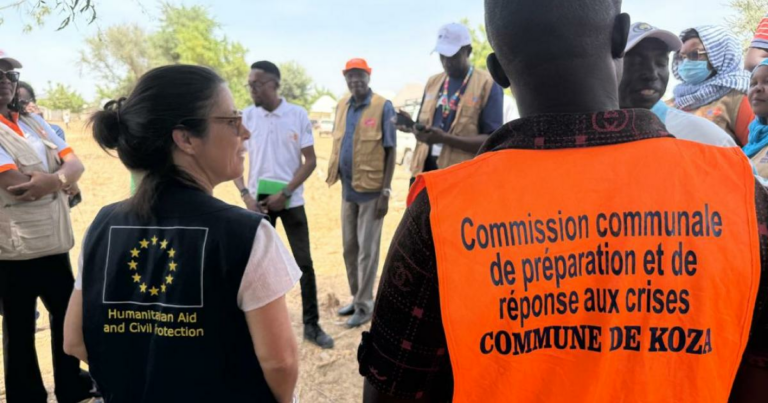
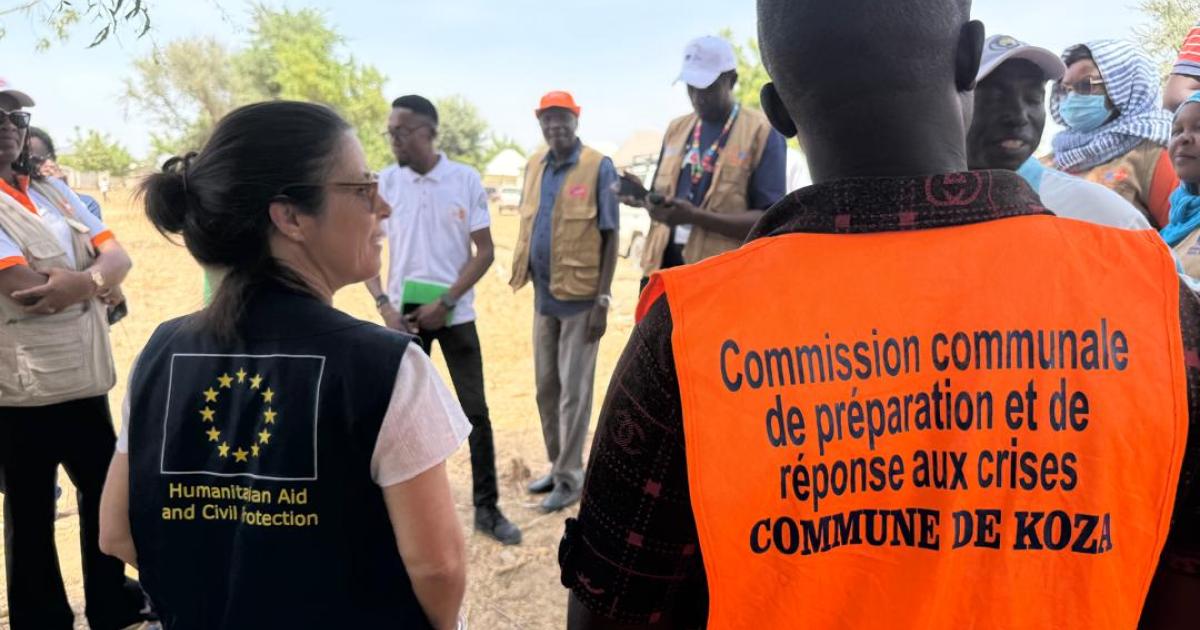
For Lisa de la Rubia, who works on disaster preparedness and rapid response for EU humanitarian aid in West and Central Africa, putting this into practice means planning and acting before the emergency hits.
The news is unsettling. Forecasts warn that this year’s El Niño could be particularly strong, affecting regions worldwide and shifting rainfall and temperature patterns. In West Africa, the effects will vary from place to place, with some areas facing increased risks of heavy rainfall and flooding, while others will experience prolonged dry spells and extreme heat.
Overall, climate change is making seasons increasingly erratic.
Lisa has heard this several times first-hand.
‘The seasons here were quite predictable’, she says. ‘Farmers knew when to expect rain and when the dry and lean seasons would begin. Now it’s very erratic.’
For communities already affected by conflict, insecurity and displacement, floods and droughts can make an already difficult situation even worse.This is particularly important in Cameroon’s Far North, where communities face both climate-related shocks and conflict-driven displacement. Strengthening local preparedness also helps communities respond to different emergencies and complements the work of the Rapid Response Mechanism (RRM).
‘Disaster risk management is the broader umbrella’, Lisa explains. ‘Disaster preparedness is a part of that. It means planning and taking action before a disaster happens, so we are ready to respond effectively.’
That can also mean preparing for several hazards or risks at the same time, rather than focusing only on one.
‘We try to take a multi-risk approach’, says Lisa. ‘We don’t want to prepare people for just one hazard and be unprepared for another.’
In Cameroon, EU humanitarian funding supports work with communes to strengthen their capacity to respond to small-scale emergencies. If a limited number of families are displaced, the commune should be able to provide an initial response without having to wait for humanitarian organisations to arrive.
The key is helping municipalities anticipate and integrate preparedness into their development plans, and making sure they have the resources to act and respond.
The aim is for that capacity to remain after a project ends, with local authorities taking ownership and allocating their own resources.
Good preparedness can make a real difference, but when extreme rainfall hits, or insecurity make people flee, the impact can still be devastating.
In Cameroon’s far north, communities living around the Logone and Chari Rivers are regularly affected by severe flooding. EU humanitarian funding to Food and Agricultural Organization of the United Nations (FAO) has supported anticipatory action and emergency preparedness, helping communities and authorities take action before floodwaters rise.
‘It is about acting on forecasts and early warnings to protect people before a disaster happens, rather than waiting until it’s too late’, Lisa says.
Communities in Blangoua and Makary receive contingency supplies and thousands of sandbags to reinforce protective embankments or diguettes, while local committees relay information alerts and help organise preparations. These measures give communities more time to act before floods strike.
These measures can reduce the impact, but continued rainfall and rising river levels can still breach the diguettes and leave families without homes or crops.
Saleh Youssouf was among those who had to leave his home with his wife and 8 children and move to higher ground.
‘Our huts collapsed before our eyes and our belongings were washed away by the waters’, he recalled.
This is where preparedness meets response. Preparing early can reduce the impact, but if the disaster is too big, people may still need help when homes and livelihoods are lost.
With EU-funded support through FAO, Saleh received onion seeds and agricultural tools after the floods. Given access to more than a hectare of land, he was able to start farming again.
It was not enough to give them clothes and food. We wanted to help them become independent by giving them seeds to work their own fields.
Saleh harvested part of his plot and sold the onions, giving his family a way to rebuild their livelihood.
For Lisa, this is the point of preparedness: not simply having a plan for the next emergency but making sure communities and local authorities are ready and can act before and after it comes.
And sustainability remains one of the biggest challenges.
‘If the project ends and everything stops, then we haven’t really achieved what we wanted to achieve’, she says.
That is why EU humanitarian funding supports local organisations, authorities and communities to strengthen systems and make preparedness part of their everyday work. This includes pre-positioning emergency supplies, training first responders, developing response plans, and integrating preparedness into local budgets and decision-making.
The aim is to ensure that when the next flood, drought or displacement occurs, communities and local authorities are better prepared, can act early and do not have to start from scratch.
Story by Anouk Delafortrie, Regional Information Officer for West and Central Africa
Publication date: 13/10/2026
Follow the European Commission
About the Author