e-Edition
Get the latest news in your inbox!
Get the latest news in your inbox!
e-Edition
Trending:
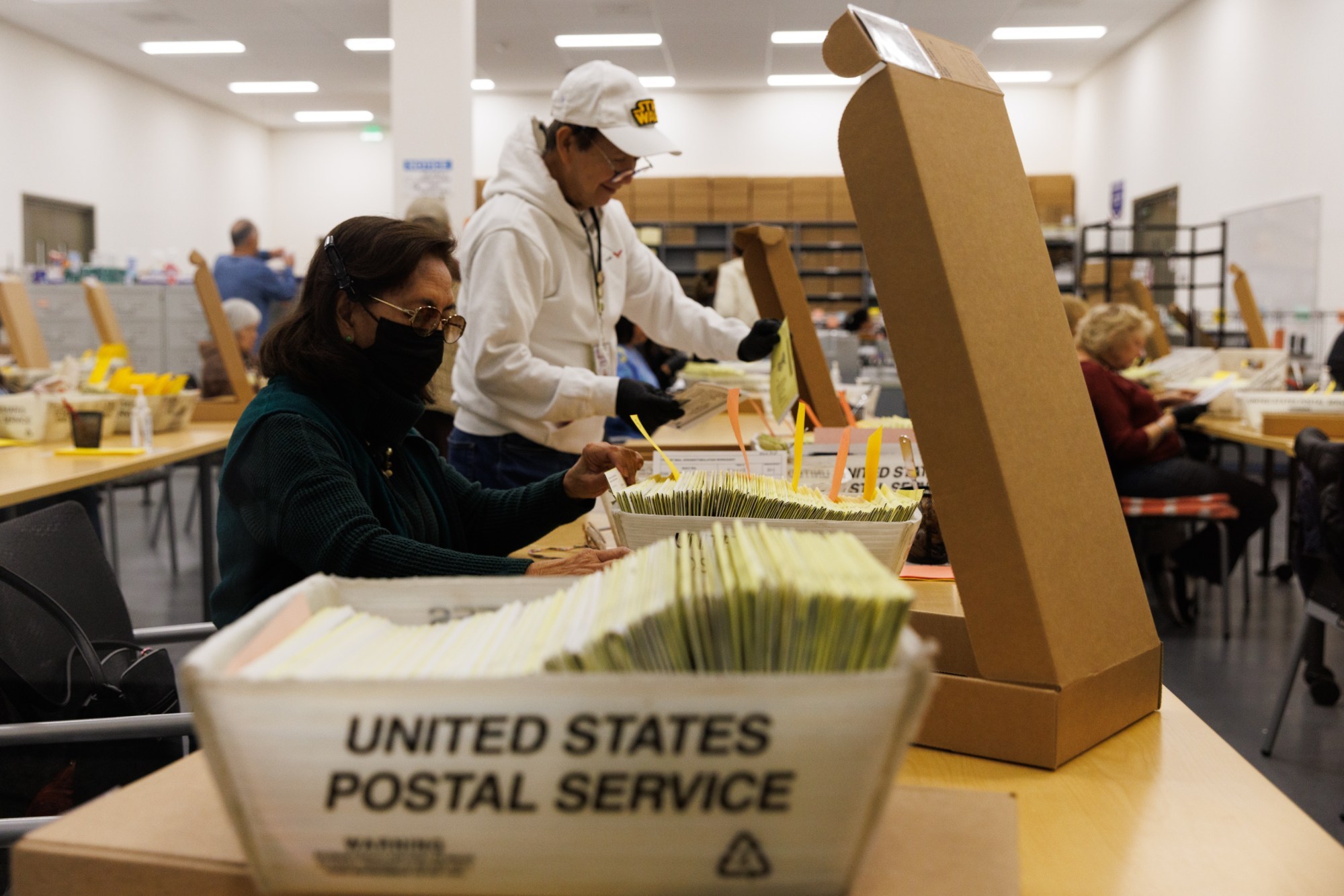
San Diego County elections officials said Tuesday that they are “evaluating next steps” after the U.S. Department of Justice delivered a letter Friday demanding that county Registrar Shawn Brom commit within 48 hours to working with federal officials to determine the citizenship status of 1,709 registered voters.
The letter, signed by San Diego-area U.S. Attorney Adam Gordon, threatened potential criminal charges against Brom or anyone else from his office if they end up counting a vote cast by a person named in the list who ends up being a noncitizen.
“The legal consequences for either facilitating or ignoring federal crimes are significant,” Gordon wrote. “An alien voting in a federal election is a federal crime — and knowingly facilitating such conduct is equally unlawful … If persons knowingly tabulate ballots cast by individuals identified by federal agencies as noncitizens, they risk becoming aiders and abettors to a federal crime.”
The Los Angeles Times reported over the weekend that 57 of California’s 58 counties were served nearly identical letters Friday, with the exception of Los Angeles County, which had already received a different but similar notice.
The San Diego County letter asserted that the 1,709 local names came from the statewide list of 20,000 names the Department of Justice identified as “likely” noncitizens two weeks ago. That letter, sent to Secretary of State Shirley Weber and Los Angeles County’s registrar, called for those 20,000 ballots to be set aside and left uncounted until state and local officials could prove the voters were citizens.
When Weber and Los Angeles County officials would not commit to such a plan, the Department of Justice filed a federal lawsuit in Los Angeles. That lawsuit remains pending in the Central District of California after the 9th U.S. Circuit Court of Appeals on Monday declined an emergency request by the Trump administration to intervene. A federal district judge heard arguments in the case Tuesday.
State officials have said the federal government’s list of 20,000 alleged noncitizen registered voters is already falling apart under scrutiny — just as similar lists in other states have turned out to contain few, if any, noncitizen voters. Attorney General Rob Bonta said in a statement Monday that the list of 20,000 names “appears to contain significant inaccuracies.”
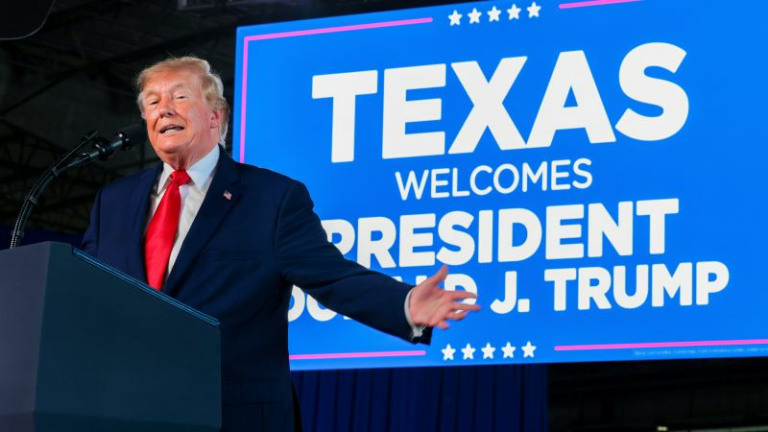
Bonta said the Department of Justice’s recent conduct is “the Trump administration’s latest attempt to interfere in California’s elections,” and that it “follows years of efforts (by the administration) to undermine election results and voting rights.”
In a statement Tuesday, the San Diego County Registrar’s Office confirmed that Brom had not committed to working with the Department of Justice and U.S. Department of Homeland Security, as Gordon’s letter requested.
“The County of San Diego received the request and is evaluating next steps,” registrar spokesperson Antonia Hutzell told the Union-Tribune in a statement. “This includes preparing a response to the letter and assessing additional actions. With court hearings still occurring, this is a quickly evolving situation.”
Hutzell also pointed out that Weber’s office is the one responsible “for determining eligibility” of voters, and sought to assure voters that the federal government’s actions would not interfere with next week’s election.
“There is no evidence of widespread voter fraud in San Diego County or in the State of California,” Hutzell’s statement said. “San Diego County voters can continue to cast their ballots with confidence and without fear. Our priority remains ensuring a secure, transparent, and accessible election for every eligible voter.”
Gordon’s office declined to comment Tuesday.
Gordon’s letter to Brom requested that for each of the 1,709 names, Brom’s office send the federal government “nonpublic information” associated with their registration, including Social Security numbers, copies of state IDs or driver’s licenses and other documents “that were presented by the registrant at the time the person registered to vote.”
Gordon wrote that if a person whose name is on the list could not be confirmed as a citizen, elections officials would be instructed “to segregate — not cancel — those individuals’ vote-by-mail ballots until their citizenship status can be determined. If a ballot for any individual on the list has been returned, instruct the appropriate elections official to not verify the signature and/or tabulate the ballot until citizenship can be determined.”
Phillip Halpern, a former assistant U.S. attorney in San Diego, told the Union-Tribune that the Department of Justice’s efforts appear “to be heavy-handed intimidation by an administration trying to do everything it can to prevent people from voting.”
Halpern, who retired in 2020 and never worked under Gordon, was a federal prosecutor in the Southern District of California for 36 years, during which time he prosecuted then-Congressmembers Duke Cunningham and Duncan Hunter. He said there were other ways the Trump administration and Department of Justice could have gone about addressing legitimate concerns about certain registered voters being noncitizens.
“If the letter said, ‘We have a concern that noncitizens are voting, can you please preserve these ballots while we go seek a court order,’ I don’t think I’d have a problem with that,” Halpern said. He added that even that much of an appearance of interference would be “questionable,” but he called the letter from Gordon “improper” and highly political.
He and others, such as David Becker, the executive director of The Center for Election Innovation & Research, said the letter sent to San Diego County and other local elections officials around the state likely violated Department of Justice policy.
“The letters … clearly indicate these efforts represent the exact kind of systematic voter list review — comparing data on voter lists to data on other lists — that is expressly prohibited during the National Voter Registration Act’s 90-day ‘quiet period’ before a federal election, a policy that the Supreme Court reaffirmed relating to this election just weeks ago,” Becker said in a statement.
Gordon’s letter to San Diego County officials preemptively addressed that contention as “misplaced,” arguing that the 90-day limitation “applies only to systematic list-maintenance programs — not to targeted, individualized evidence of unlawful voting identified by federal law enforcement.”
Copyright 2026 San Diego Union-Tribune. All rights reserved. The use of any content on this website for the purpose of training artificial intelligence systems, algorithms, machine learning models, text and data mining, or similar use is strictly prohibited without explicit written consent.
About the Author