Share
Cuts in subsidies for renewable energy generators will hamper SNP Government green economy drive as oil and gas firms cool on sector
As first minister John Swinney demands the right to hold a second independence referendum he is set to receive a reminder of how dependent Scotland is on funds provided by UK householders.
Under the SNP’s watch, Scotland has been a huge beneficiary of the subsidies provided to the renewable energy industry, which Mr Swinney and predecessors have claimed can power Scotland to prosperity.
However, with the deadline for applications in the latest round of the subsidy programme looming, Scotland must face the prospect of cuts in the support provided for firms, which could have awkward implications for Mr Swinney.
Read more
Watchdog’s ScotWind warnings boost case for North Sea oil developments
SNP Government green jobs desperation is alarming
North Sea oil giants celebrate bumper profits amid cost-of-living crisis
Are Scottish energy minister’s carbon capture boom claims a waste of hot air?
Embattled Great British Energy boss ‘incredibly proud’ of quango’s achievements
His claims that Scotland will become a renewables powerhouse rest on the assumption that the country’s geography combined with its windy weather will allow it to generate massive amounts of clean power that will end its dependence on fossil fuel.
First ministers since Alex Salmond have promised that investment in assets such as windfarms and tidal energy generators will lead to the development of a renewable energy supply chain that will create thousands of jobs.
Those claims always looked exaggerated. They have become increasingly threadbare after featuring in SNP election propaganda in the absence of evidence to support them.
While plenty of windfarms have been developed in Scotland and off its shores, most of the related manufacturing work has gone to firms outside the country.
Mr Swinney and colleagues insist investment in innovative assets such as floating windfarms will provide the demand required to encourage firms to develop the production infrastructure that Scotland lacks.
What they do not mention is that investors are only likely to commit to the development of those assets if the UK Government ensures they get the subsidies required to ensure they make a big enough profit on their investment.
The main support scheme for renewables investment is the Contracts for Difference programme. This guarantees generators a minimum amount, or strike price, for their output, for as long as 15 years.
If the market price is lower than the strike price in any quarter generators receive payments to make up the difference.
Statistics collected by the body that administers the scheme, the Low Carbon Contracts Company, show offshore windfarm operators shared payouts totalling £2 billion last year.
The costs of the programme are added to the bills of householders, irrespective of their ability to pay. House of Commons Library researchers reckon the CFD element of bills averages £40 a year –a potentially significant headache for people on a low income.
Scottish projects have been major beneficiaries of the seven allocations rounds used to distribute CFD funding.
In the latest round 35 Scottish projects won support, out of a total of 200 successful applications.
But as the targeted October 7 deadline for final sealed bids for Allocation Round 8 approaches, Scottish ministers have reasons to be very worried about the outcome.
The round is being completed following the surge in energy prices triggered by the US-Israeli war on Iran. The annual cap on energy bills increased by 4% from this month, to £1,723.
After Reform UK highlighted the impact of renewables subsidy programmes on bills, former energy minister Ed Miliband said the Labour Government was determined to limit the cost implications of AR8. The budget for the round will be finalised after applications are assessed.
Andy Burnham could use a cut in the amount of CFD support promised to firms to provide relief for householders without increasing Government spending.
Since becoming prime minister in July, he has made reducing energy bills a priority in his campaign to address the cost-of-living crisis.
The outcome of the ministerial deliberations about AR8 could have a significant impact on Scotland at a key time in the development of the renewable energy industry.
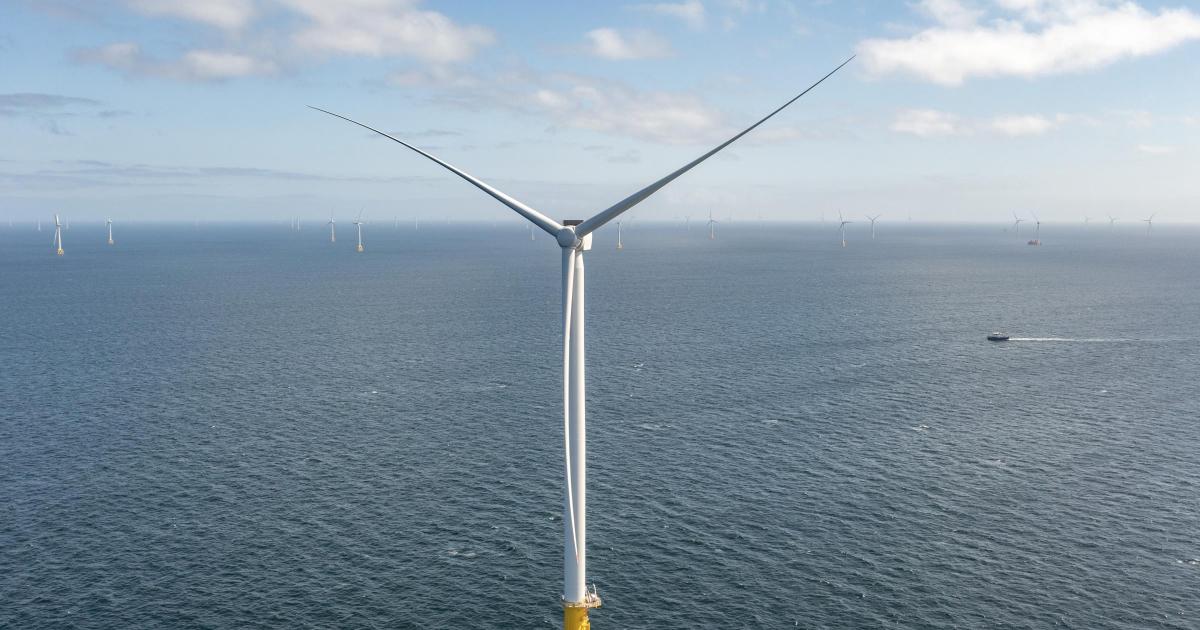
The importance of the contracts for difference programme for Scotland is most obvious when it comes to floating windfarms, on which ministers are pinning huge hopes.
Supporters say floating windfarms are ideal for Scottish conditions as they can be deployed further offshore than those fixed to the seabed, allowing them to harness stronger and more consistent winds.
Ministers are counting on success in what they predict will become a huge global floating windfarm market to make up for Scotland’s failure to build a significant offshore wind supply chain so far.
However, the cost of generating energy from floating windfarms is hugely expensive.
In AR7 the Pentland floating windfarm off Scotland was guaranteed £155.37 per Megawatt hour for its output. Windfarms fixed to the seabed off England were promised less than half that, at £65.45/MWh.
Nothing has happened in recent months to suggest the cost situation has improved.
In November Shell handed back the lease covering the £3bn CampionWind project off Scotland after concluding the economics didn’t work.
Offshore Energies UK has noted concerns about whether offshore wind power is on track to make a material contribution to the overall energy market.
The trade body warned in September: “We will need to start to see cost reductions in the forthcoming allocation rounds if we are to see a tangible impact on consumer bills and strengthen the UK’s position as a leader in this field.”
However, windfarm developers in Scotland have demanded more support to compensate them for what they claim are unfair charges to secure connections to networks that will take their output to market south of the border.
All that increases the likelihood that investors in Scottish offshore wind projects seek price guarantees in AR8 that ministers decide are too high and have their applications rejected.
That kind of outcome could deal a massive blow to hopes that engineering giants will finally develop large scale manufacturing facilities for turbines and the like in Scotland, which could create jobs in large numbers.
The costs of network upgrades are also added to household bills. Andy Burnham has pledged that more British firms will get a share of the related work.
Danish giant Vestas is interested in developing a turbine production plant in Edinburgh. However, the company has said it will only go ahead if windfarm developers win enough support under AR7 and AR8 to guarantee appropriate workloads.
AR8 could also end a relatively successful period for Scotland in one area of the windfarm market in which Scotland has enjoyed huge advantages.
Scotland was a big beneficiary of the former Conservative Government’s decision to effectively bar onshore windfarm developments in England, following complaints about their impact on the landscape.
In AR7 some 21 Scottish onshore wind projects won support, out of a total of 28 successful UK applications.
Former prime minister Keir Starmer ended the ended the ban on English onshore wind projects in the expectation of supporting a big increase in generating capacity, leaving Scottish projects facing the prospect of much greater competition in AR8.
The round could also sound the death knell for an industry lionised by first ministers since Alex Salmond that has not come close to fulfilling their expectations.
Mr Salmond held out the prospect that tidal and wave energy could help Scotland become the Saudi Arabia of renewables.
However, firms on which SNP ministers pinned their hopes foundered after failing to find a way to generate affordable marine energy at scale.
While many Scottish marine energy projects have won support under the CFD programme, the awards concerned have underlined how expensive the power they generate has been.
In AR7 Orbital won backing for a tidal energy project in Orkney at a strike price of £190.10/MWh. Solar plants were guaranteed just £46.82/MWh.
The SNP Government has gone quiet about tidal energy in recent months, amid recognition that it may only be suitable to power small local systems. Without further CFD support the sector could fade into obscurity.
All this means SNP Government bluster about the coming renewables bonanza must be taken with an even larger dose of salt than usual pending the outcome of AR8.
If the results disappoint, we can expect Mr Swinney to forget how much CFD funding Scottish projects have won in the past and lead colleagues in another chorus of “it’s all London’s fault”.
Share
This website and associated newspapers adhere to the Independent Press Standards Organisation’s Editors’ Code of Practice. If you have a complaint about the editorial content which relates to inaccuracy or intrusion, then please contact the editor here. If you are dissatisfied with the response provided you can contact IPSO here
© 2001-2026. The Herald is owned and operated by Newsquest Media Group Ltd, an audited local newspaper network.
Visit newsquest.co.uk to view our policies, terms and legal agreements.
The Echo Building, 18 Albert Road, Bournemouth, England BH1 1BZ. Registered in England & Wales | 01676637
Data returned from the Piano ‘meterActive/meterExpired’ callback event.
As a subscriber, you are shown 80% less display advertising when reading our articles.
Those ads you do see are predominantly from local businesses promoting local services.
These adverts enable local businesses to get in front of their target audience – the local community.
It is important that we continue to promote these adverts as our local businesses need as much support as possible during these challenging times.
About the Author