“UNCLOSETED with Spencer Macnaughton” is a new podcast by Uncloseted Media, an investigative LGBTQ-focused nonprofit news publication. Follow and subscribe wherever you get your podcasts. YouTube // Spotify // Apple
This story was produced with the support of MISTR, a telehealth platform offering free online access to PrEP, DoxyPEP, STI testing, Hepatitis C testing and treatment and long-term HIV care across the U.S. MISTR did not have any editorial input into the content of this story.
Chris Gallant was already facing an uphill battle before controversy struck. The retired military pilot and former air traffic controller is running as a Democrat to unseat the incumbent representative of New York’s first congressional district, which encompasses the eastern half of Long Island and has been Republican since 2015.
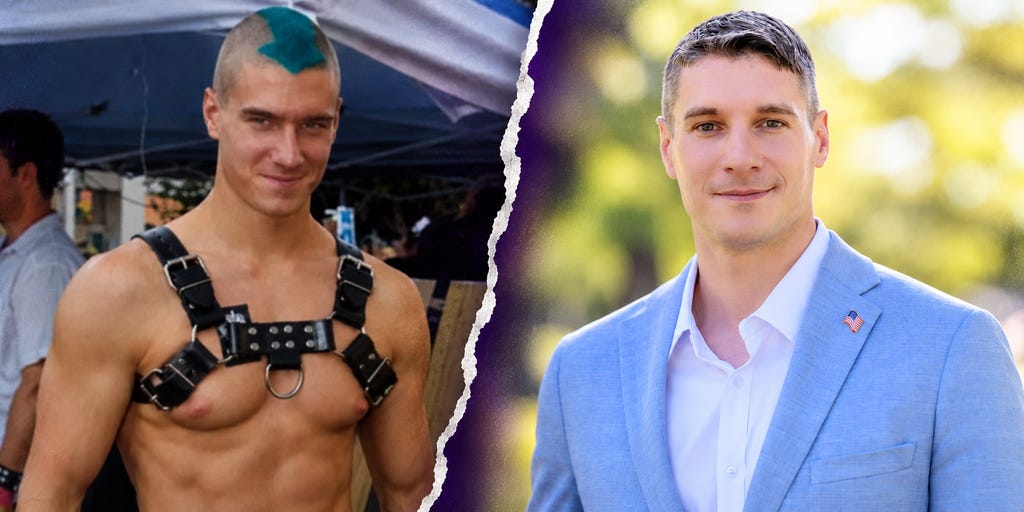
But on Sept. 13, The New York Post published an article revealing that Gallant had modeled leather and other BDSM-related gear for a San Francisco-based sex shop. The outlet published several photos of him wearing the gear while referencing others of him “fully naked and having sex with another man.” While The Post, a right-leaning publication, framed the discovery as scandalous, Gallant has chosen to lean into it—he quickly responded online, saying, “I’m proud of who I am. I won’t be shamed into silence – and I won’t allow my private life to be distorted and weaponized against me.”
Ultimately, the attempted scandal seems to have only boosted Gallant’s profile, putting him on a national stage and paving the way for sympathetic media coverage from The New York Times, New York Magazine, Salon, The Daily Show and more. In this episode of “UNCLOSETED with Spencer Macnaughton,” we’re sitting down with Gallant to discuss his campaign and why “sex” shouldn’t be a dirty word in politics.
Spencer Macnaughton: Hi everyone, welcome back to UNCLOSETED with me, Spencer Macnaughton. Today, I’m here with Chris Gallant, a retired military pilot and former air traffic controller running as a Democrat in New York’s first congressional district, where he hopes to unseat incumbent Nick LaLota in a district that hasn’t voted blue in over a decade. In September, The New York Post ran a story that attempted to expose Gallant for modeling what the paper described as “XXX-rated BDSM ads.” And while his campaign initially encouraged him to drop out, Gallant owned the photos and has since used the story as part of his campaign strategy, even adopting the slogan, “Make politics sexy again.” Chris, thanks so much for speaking with me and Uncloseted Media today.
Chris Gallant: Yeah, Spencer, thanks for having me. It’s good to see you.
SM: Yeah. We’re, you know, less than a week out from the midterms. How’s it going? Like, what’s your day-to-day like as we get closer and closer to November 3rd?
SM: That’s amazing. And you’re running mainly, like what a lot of other Democrats are running for in this midterm election, is things like affordability, things like, you know, responding to the outrage and corruption that we have. Of course, we’re an LGBTQ publication, so we’re here to talk serious business. So with that, a non-classy segue to September 13th: The New York Post, they come out with, I guess what they probably thought might have been a bombshell, right? They release photos of you in a harness. And alluded to there being more photos, you know, fully naked of you engaging in sex with another man. Those photos came out. And I remember a friend sent that to me, and I was like, “Oh, damn.” You know? In my mind, I was aware of the race. I was like, “This is a bombshell. Like, shit, does that mean he’s gonna drop out? What will that mean?” But curious, when you found that out, where were you? And describe the moment of how you got that news and how you responded in real time.
CG: Um, well, my heart dropped. I mean, I knew they were there. I mean, it was no secret, really. But the fact that now they wanted to use this against me, it took me a minute to really think and consider where I was in this race and to try and figure out what we were going to do with it and how. You know, the initial reaction was, “OK, how do we figure out about dropping out?” That was the first initial like, “OK. Well, let’s discuss this.” And finally, I was like, “All right, I need to decompress. I need a minute. I need to think.” And after an hour or two and having conversations, I said, “No, well, I want to fight this. I want to own this.” And you know, we’re living in an age right now where millennials and people of our generation have had photos and videos of them on all platforms. It doesn’t matter what it is. I mean, this is the age that we’ve lived in. And I laugh all the time; this is why the Senate and Congress are about to die in their chairs because they didn’t have this then. And so, going forward and moving into this new generation, understanding that anybody who comes after us or after me has lived in this digital age. And so these are going to be the realities of what’s going to happen. And so, you know, I want to advocate for that, people that I know that are afraid to get into public life because they’re afraid of the existence of some picture somewhere. And that shouldn’t be.
SM: I thought about this a lot before I, you know, I was doing my research and saw you say these things about how you want to be essentially an ambassador for the generation who’s grown up in the digital age. Like, you know, we’re, I think, roughly the same age. You know, grade nine was when Facebook was essentially invented. We were the guinea pig generation for social media when there were literally no rules. This was a Wild West. We had no clue what to do. Who doesn’t have a nude out there? Do you think this is going to be a representation of us moving past this and allowing people to break into politics where they can do so without feeling, you know, the weight of a nude they might have had 15 years ago?
CG: I hope so. I mean, I really, I think that this is going to be the next generation. And this is the breakthrough moment. The moment where we have the ability to not have to be worried about what might be on the internet. You know, if you haven’t done anything illegal, then where do you divide the difference between private life and public life, especially in the LGBTQ world? I mean we use Grindr a lot more than probably straight people use, like, Bumble or something like that. But I mean, who knows? But the reality is that’s the age and the generation that we live in, and that’s what I think how we move forward.
SM: When you got the news, did you just see the link like everybody else, or did your campaign manager call you being like, “This is coming out in a few hours?” Like, can you expand a little bit more on that moment specifically, like how you found out?
CG: Well, the newspaper called our team.
SM: OK.
CG: So they sent us the pictures that they had. And I was like, “OK, well.”
SM: Not AI.
CG: So that was kind of like, all right, well, how do we respond? And so they gave us, I think, like a day or something to at least collect our thoughts and figure out what the next steps were. We worked together with our team to navigate what our response was going to be. And it took time, because I finally just put my foot down and said, “No, I want to own this. I want to be unapologetically myself.” I mean, this would have been the nail in the coffin for a lot of people.
SM: Well, and you said somewhere else that like they encouraged you to drop out, some of your team, is that correct?
SM: No, I appreciate that. I think to younger generations, it’s almost a joke how much “authenticity” is in the zeitgeist, but it’s something that younger people especially, I think, really value. Perhaps more so than older generations. And for The New York Post, do you know, did they pay somebody to give those photos to them? How did that go down? Do you have any insight into that?
CG: No idea. And you know what? It doesn’t even matter at this point because it’s done. We immediately owned it that day. We immediately went online, and I posted my first video right after it happened. And then I pivoted right back to policy.
SM: You know, we can totally leave The New York Post behind after this, but one more question. Because when I’m thinking about this from a journalistic perspective, these are consensual photos that you engaged in. They’re not newsworthy at all. You must have been livid at The New York Post for deciding to publish these. I mean, from a journalistic standards perspective, it makes zero sense to go live with these.
CG: Well, and this is why we also think there was some kind of coordination, because it’s exactly the right time. It was so perfectly done. This is like a remake of a couple of years ago in the same district of something else that had happened. It was the same kind of thing. It was the same time period. It was right after Labor Day. So this just has the classic signs of a coordination attempt to get me out of this race. And that’s not gonna do it.
SM: Well, it didn’t. And you guys turned it around pretty quickly. You guys didn’t just own it by posting the video saying, “Hey, they’re real. I’m in the race still,” right? Like, days after the article, you took this scandal, and I would say turned it into strategy. Your campaign adopted the slogan, “Make politics sexy again,” which is kind of iconic. And one of the PACs, I believe, supporting you—correct me if I’m wrong—they’ve been using flyers that are saying, “It’s time for Long Island to send a good boy to Congress” alongside a graphic of a dog collar. My friend showed me that last week and I died. I was like, that’s not just like owning it a little bit. You’re going the distance with it.
CG: Well, so we had nothing to do with that. Because I think I probably would have probably said no to something like that. We didn’t see it until there’s an Instagram or whatever, Boyfriends We Deserve. And I saw it on her social media. And I died. I was like, “Where the hell did this come from?” And I look at the PAC. We have no interaction with that at all. We didn’t develop it. We didn’t think about it. They kind of owned it on their own, which I mean, I kind of died myself. I thought it was hilarious. But, you know, I’m not sure how well that went over in the district, but the election’s right around the corner.
SM: Why do you think society, particularly American society, particularly politics in American society, are so shook anytime we talk about anything that might be just a little deviant as it relates to consensual—consensual underlined—sex? Like, why are we so afraid to talk about it and afraid to go for it and see it as such a scandal?
CG: I think I blew the lid off that pot, uh, just to put it mildly. But you’re right. I mean, I think because—and I don’t know where this all comes from—the fact that they expect politicians to be so blasé, I guess. With no background and no life before. And we’ve all had lives in our 20s. I think that the expectation is you’re supposed to be someone who’s polished and does the job and they’re serious about doing the job. But I think there’s give and take on both sides of that, right? I mean, yeah, I think having an authentic life or whatever you’ve done before as a 20-year-old or a 30-year-old or whatever doesn’t necessarily always have a bearing on how you’re going to perform in Congress. I think the real answer is, how do you actually do your job? So when I win, that’s going to be an opportunity for me to prove myself to my constituents and do what I say I’m gonna do, and I think that all starts with actually showing up in the district and having conversations. And throughout this entire campaign, I’ve not been afraid to meet people. I have not been afraid to hold town halls. I’ve not been afraid to answer the hard questions. And I think that’s the important part. Not pictures from the past or you going out drinking with friends or something. Or, you know, having been at a party or two in your life or something. I think that just adds authenticity to who you are as a person, and it shouldn’t be something that’s hidden all the time.
SM: Like, if there’s a couple that’s voluntarily having a threesome, it doesn’t need to be a headline.
SM: A hundred percent. I think about kink and I think about so much stigma associated with consensual sex. Adults having sex. And I come from Canada—born and raised there which I would argue is more sex positive. Tell me where you think America lands in terms of being sex positive and why maybe they’re far behind.
SM: And one thing you said to another outlet, you said: “As gay people, we’ve got rules which are very different than the heteros—the heterosexual world of things. I just think we’re living in a new age now.” Right? And you know, I tell my mom, “Hey Mom, you know, most gay guys are in open relationships.” She doesn’t get it. It’s like a non—she doesn’t understand, right?
SM: And I guess, like, do you think that this could create a situation where we can own our queerness more in politics, like what you’ve done, how you’ve responded? Can you talk a little bit more about what you mean when you say, “We’ve got rules that are different”? Because it’s a vastly different world being straight and being gay. And, you know, I think both should be able to exist in a political context.
CG: Well, I mean, you basically hit it. I mean, you took the words out of my mouth. I mean, yeah, you hit it. In the gay world, an open relationship is more of a norm and a standard. You know, meeting someone on the dance floor and taking them home that night is… is almost a norm in the gay world and it’s funny too because, you know, you talk to a lot of straight people and they’re like, “Oh, the gays have it so easy.” And I mean, well kind of, you know? You don’t have to sit there and wine and dine someone, you know, eight ways to Sunday, and then, you know, it’s just different. It’s a different world. It’s a different realm. And that’s just the way we’ve always authentically lived, and I think guys being guys and hanging out makes it easy. Now, lesbians might have to wine and dine a little bit more, and that’s a different world too. They have their own set of rules. But in our world, that’s, I guess that’s sort of the norm.
SM: And just back to that word, because I do think like the word “heteronormativity” in politics is baked into a large extent, right? Like, I was reading one of the articles and, you know, there’s allegations—I don’t think that word’s too strong—like Pete Buttigieg, for example. He didn’t want to campaign in a gay bar because there was a dancer pole on the premises, right. And obviously at the national level, maybe there’s more pressure? But like the pressures to conform to heteronormativity as openly gay people, as openly queer people, right? Like you, in your actual life, authentically, you present as masculine, right? But there’s a lot of queer candidates who might not at all. And that might be a barrier to them entering politics, right? Like, what else do you think we can do to create space for candidates who may not authentically fit into heterosexual norms and may not want to, which makes them decide not to even try?
CG: I guess sort of my background is, that’s just who I am, just naturally.
SM: Totally. Yeah.
CG: And I do know a lot of people who may be in the military who are probably quite a bit, maybe more flamboyant than I am. So you know getting into politics, you shouldn’t have to hide yourself and hide who you are or be afraid of who you are. I mean you should always be authentically yourself, and I think that relates a lot better to the public than trying to hide it. So for somebody moving into maybe a political world or trying to run for a position or an office, I would always say just be authentically yourself. And I think that’s going to go a lot further than trying to hide something.
CG: You know what’s funny is that, since then, I’ve only been asked in person probably about those pictures once.
SM: OK, actually?
CG: Seriously.
SM: That shocks me. Wow.
CG: I mean, and everybody knows about them. I mean, especially in our world. Like literally, it was at a meet and greet. And it was actually, I would say, an older crowd, like I mean 70s and 80s. And there was one woman in there clutching her pearls. But I answered it, and I basically said to her what I said to you earlier. It hasn’t prevented me from running into a burning building or flying helicopters or still doing my job. But literally, I’ve only been confronted with it once. People want to worry and focus about what’s going on in their pocket, like, you know, money. Affordability is a problem. Being able to buy gas and tariffs that are going on and a war that we’re waging and the corruption to an nth degree. Those are the conversations that people want to have. Not something about some New York Post. And The New York post is just a joke. You know, it’s just terrible. And you talked about bad journalism, I mean, there you go. But people want to talk about what’s actually bothering them and affecting them, not some old pictures.
CG: I don’t know. Maybe because the story wasn’t really worth the story. And I think because of all the positive outpouring that we got, like The New York Post dropped that on social media, and I would say 95%, if not more, of those comments were all in full support and totally positive. And that’s what we’ve seen pretty much everywhere. And then a lot of the LGBTQ outlets started picking it up. And then I think the largest outlet that wound up picking it up was The New York Times when they ran their first article. Outside of that, I think we made it to, what’s that comedy show?
SM: The Daily Show.
CG: The Daily show, yeah. We did The Daily Show for a quick—
SM: I mean, can we talk about that for a second? Like you’ve gone kind of, like you said, international, and I think you said to another publication, this is your Kim Kardashian moment, which I love. That’s hilarious. But you know, New York Times, New York Mag, The Daily Show, like it became a thing where everyone knew who you were, at least in my circles, which are very gay, right? What’s that been like for you to go viral and the intensity of that, especially as it relates to, you know, You essentially being a sex symbol and, you know, also somebody who is into certain kinds of sex.
CG: Yeah it was interesting to deal with, just because I consider myself to be pretty humble. My biggest issue when I started running this campaign was trying to talk about myself and to sell myself to people and tell people, like, “OK, this is who I am. This is what I’ve done.” And they’re like, yeah, you have to talk to yourself a lot. I hated that. And that was a struggle. And then looking later on down the road when this all kind of broke out and watching this literally go not only nationally but internationally, I think I was going viral in Spain one day for like three days or something, which is crazy to me. It’s very new and it’s a different kind of stress. I mean I’ve dealt with a lot of stress in my jobs whether you know flying helicopters or working air traffic control when shit’s about to hit the fan. This was just very very different and, you know, it really puts you into the public light much faster. But the very fortunate part about all of it was that the support was incredible. And like I said, from across the board, and especially our world, the LGBTQ side was very supportive. And I knew if anything ever happened and that at the end of the day, I knew that not only my family, but my friends who are like my second family, I knew I could lean on them and they’d be there for me. And that is what made it OK.
SM: And maybe I should have asked this earlier, but I think, you know, it’s easy to joke about it because it’s kind of funny, you know, the whole story and everything that’s happened. But I also think it’s, like, you’re a human at the end of the day. And I hear that loud and clear. If you’re comfortable, can you describe that stress a little bit more about what it’s like to be embroiled in such a scandal that feels completely unwarranted and unfair?
CG: I think that the key thing was, the stress of it was, you know, pacing back and forth. I mean, I probably had a crop circle in my carpet because I was pacing so much before this actually went public. And then the fear of what was the public’s reaction gonna be and what was their response gonna be. You know, I’ve always ran this campaign, not trying to impress anyone, but to actually earn the support of the people I’m looking to represent. I’m sitting here trying to build a campaign, build something that is better than what exists today, and I’ve worked really hard at it. And to all of a sudden be thrust into the limelight in almost a negative light, and to have all of that work now all of a sudden go down the toilet, I think that’s what really bothered me the most. And that was the issue. I put a lot of heart and soul into what we’re doing here on the ground and to hopefully continue that mission. And I think that was my fear and my anger that all of a sudden that could just all get flushed down the toilet just because of a tabloid running some stupid article.
SM: Thank you for all that. Is there anything else on this—Oh, I did want to ask, back to the less serious part of it… So as the scandal has gone international, have your DMs on Instagram just been like exploding? I would imagine that’s—I feel like sometimes gay men can lack decorum so I’m curious about that.
CG: Yeah, I’ve gotten quite a few pictures here and there. But the funny part of it is that I just don’t have time to deal with my social media, and I feel like it also is a very big distraction. I get very distracted from daily life and everything that I’m doing here on the ground that I just ignore my social media. I don’t actually personally look at it. I have a comms person and she’s fantastic. She’s the one who’s been doing all my social media, but I have somebody hired specifically just for that.
SM: Well, her job must not be boring.
CG: I’ve seen some of those messages. She’s like, “I love this. This is great.”
SM: Amazing. So you and your fiancé are both serving and have served in the military. And as we know, the head of the Pentagon or the Department of War, whatever you wanna call it, is Pete Hegseth. Pete Hegseth, we’ve done a lot of work on him. He has a horrifically anti-LGBTQ track record. He’s started calling for “training not trannies” multiple times in public speeches in the last month or so. A few weeks ago for this very podcast, I interviewed Doug Wilson, Pete Hegseth’s pastor, who told me that in his ideal world, he would call for the execution of gay people. And that he would literally illegalize, and I asked him this point blank, in your dream world, Pastor Wilson—Pete Hegseth’s pastor—would you illegalize hand jobs, blow jobs and anal sex? And he said yes, verbatim. What are your thoughts on having the people at the top of the military, such an important institution in America, saying things like this and feeling this way about people like you and your fiancé?
CG: Look, I signed the blank check that was up to including my life for this country. And when we look at the sacrifice that I’ve made to be deployed and, you know, being away from my family and friends at extended periods of time, all the training that I have gone through and that we’ve gone through, him and I, or any member of the military for that matter, where we put on the uniform, willing to make the sacrifice. To stand up for this flag and for our country and for the people that we know here to protect and to be told that I can’t live my life as I so choose? That’s a problem. For the last 20 years to watch how far we’ve come, to watch an administration or people who are running our military, the strongest military in the world, to basically have this notion that the people serving it can’t because of who they love is just completely unacceptable and not the America that I fought for.
SM: I have a good friend, she’s a trans-military vet, and she and her wife, who’s cisgender, they were recently staying at my mom’s house in Canada checking out offices they could move to because they’re afraid here. And Canada didn’t work out, but they have moved to Germany. She said that she just got in the mail from the Pentagon that her gender marker was changed from female back to male, and she said it was one of the most devastating days of her life. What are your thoughts on the kind of all out war that Hegseth’s Pentagon has placed on trans people specifically?
CG: I have worked with some trans members of the military and because of the stigma that’s already there, I feel that they’ve always gone above and beyond to be the best that they can be. To be in that kind of a position, they’re still there serving their country and they’re doing the best that they can. And oftentimes they go above and beyond to be even better than the guy next to them because they have to. And that’s what I’ve always seen. And a lot of the members, trans members of the military that I’ve worked with, have gone always above and beyond and they’ve been very good soldiers. And, in my opinion, anyone who serves this country that can meet the standard, I mean, because in the military we’re about standard, then you should be able to serve your country if you so choose. And that’s how I’ve always felt. So watching them have this mission of theirs to try and ex-communicate trans members or members who are gay or lesbian, it’s a problem.
SM: Mhm, mhm. Staying on the topic of trans issues, obviously, Republicans have spent hundreds of millions of dollars on anti-trans attack ads in the midterms. We have a huge trans audience, there are a lot of trans people who are really not happy with Democrats because they’re not giving a clear message right now on where exactly they stand, right? Obviously, Nick LaLota, your opponent, has been pretty anti-trans in his messaging. When it comes to specific things like gender-affirming care for minors or participation of trans girls in girls’ sports, where do you stand in those areas?
CG: If someone is looking to go through a change, their parents should be able to give them the resources that they need to see someone, making sure that this is the right decision that they wanna make, but they need to go through all the steps. And the thing is that I’m not, as a gay man, I’m actually not 100% fully versed in that whole process per se, just because it hasn’t necessarily been a focus of mine. But I think that they should be getting all the resources that they need. And those are things that I’m going to fight for to make sure that they’re protected and that they are safe and making sure that their parents have the resources they need as well, whatever that process looks like. And then when we talk about sports, on that front, I think that should be a local policy issue. The amount of schools that this affects is just such a small number. But this administration, because of the bigotry, wants to make it such a huge issue. And on the federal government side, it shouldn’t be a federal government issue, it should be a local school issue. It should be a PTA issue. And that’s where my position is on the federal level. Like we shouldn’t be enacting laws on a federal level focused on what schools should or shouldn’t do as far as allowing a trans member or trans person to be in some kind of sport or not. I’ve been to a PFLAG meeting once to talk to parents, but I think that my understanding is not sufficient enough. And I think I need to get a better understanding, because knowledge is power, right? And so I think, I’m looking to actually probably have more meetings with people who are trans, who are in these positions, who have had lives like that, and get a better understanding. And that’s how I need it to navigate. And I think a lot of the issues that we have here in this country overall, particularly when it comes to trans issues, is that it’s a lot of misinformation and disinformation and bigotry that we hear, because people don’t actually understand what that process is. And as a gay man, I don’t even fully understand, fully, what that all looks like, and I need to. And so it is something that I’m definitely gonna be working on to get more knowledgeable in that field.
SM: No, I appreciate that. I think it’s so dominated by angertainment, so I really appreciate that answer. I would be remiss not to ask about the power of Fire Island in your campaign. You know, obviously you’re an openly gay candidate. It’s exciting. You’re close enough to Fire Island. You have a personal connection to it. We, in full transparency to anyone listening, you came to Uncloseted’s fundraiser and showed up for us there. There’s been no financial support to either organization, again, in full transparency. But like the power of gay philanthropy on Fire Island, I’m sure that has been a big helper for you. Can you talk about that a little bit? Because it’s a force.
CG: Yeah, you know, it is. A lot of people who do live out there, they are often very involved in politics, and they are often very involved in the fundraising aspect of things. But the unique part of it has been because I’ve grown up going out there, and you know I’ve been going to the Pines since I’m 18 and building relationships that I have out there, it’s more like family rather than just friends. And so when I do go out there and I decided to take this mission on to become a member of Congress, the support has been incredible, both in the Grove and the Pines. And so for me, when I go out there and I do a fundraiser or I do an event, being able to see all these people that I see all the time and then at the same time, meeting a whole lot more people that are interested in this has been just an incredible experience.
SM: Well, I think that’s a perfect place to end. Chris Gallant, thank you so much for speaking with me and Uncloseted Media today, and best of luck in the final days as we get closer to November 3rd.
CG: Thanks Spencer, appreciate it.
SM: And if you want to listen to all our episodes, subscribe to Uncloseted Media’s YouTube page or follow us wherever you get your podcasts.
Additional reporting by Hope Pisoni.
If objective, nonpartisan, rigorous, LGBTQ-focused journalism is important to you, please consider making a tax-deductible donation through our 501(c)(3) fiscal sponsor, Resource Impact, by clicking this button:
Donate Here
No posts
About the Author