news Alerts
There are no new alerts at this time
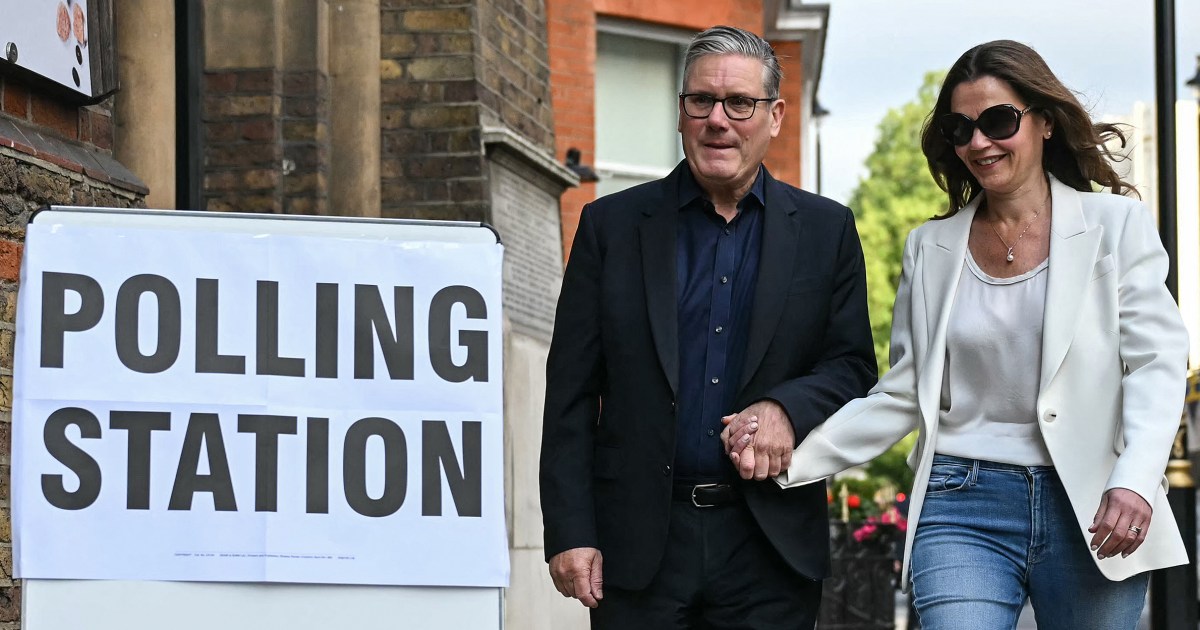
LONDON — British Prime Minister Keir Starmer is under pressure after his Labour Party faced a historic drubbing in local and regional elections that delivered sweeping gains for hard-right Reform UK, led by Trump ally Nigel Farage.
Subscribe to read this story ad-free
Get unlimited access to ad-free articles and exclusive content.
Labour shed hundreds of local councillors across England, facing humiliation as it lost control of key authorities across its traditional heartlands, squeezed on all sides by Reform, the populist left-wing Green Party, and a loose coalition of anti-establishment independents angered over Gaza.
In Wales, the party has lost power for the first time, with Plaid Cymru, the left-wing, pro-Welsh independence party, coming first and Reform second.
With some results still outstanding, the overall picture will heap pressure on Starmer, an unpopular leader beset by speculation his colleagues may move against him.
“The results are tough, they are very tough, and there’s no sugarcoating it,” Starmer said Friday, as he dismissed calls to stand down.
“Tough days like this don’t weaken my resolve to deliver the change that I promised,” he said, though he acknowledged that voters were clearly unhappy about “the pace of change” that Labour had delivered. He vowed he was “not going to walk away from those challenges and plunge the country into chaos.”
Some of his MPs were already breaking ranks to call for him to quit or set out a timetable for a leadership contest, however. Labour MP Louise Haigh said that Starmer “cannot lead us into another election” without “urgent change,” while MP Connor Naismith said that “with regret, it is clear to me that we need new leadership.”
A critical mass of his MPs turning against him could force a leadership challenge within the party to oust Starmer from power.
Labour losses and Reform gains were no surprise in the elections; polls had long telegraphed the direction of travel just two years after Starmer led Labour to power in a 2024 landslide. However, the scale of Labour’s losses appeared epic.
Reform won hundreds of local council seats in working-class areas in England’s north, wiping the ruling party out in places like Hartlepool that were once solid Labour turf.
Farage called it “a truly historic shift in British politics” and that Labour was being “wiped out by Reform in many of their traditional areas.”
Though seen as a barometer of public anger, the prime minister’s name itself was not on the ballot.
Instead, Britons voted in more than 5,000 local government elections in England, a handful of mayoral contests around London, and votes for the Welsh and Scottish parliaments — devolved legislatures with powers over transport, health and other areas.
Local government elections are typically not high-octane affairs in Britain. But with no general election expected until 2029, and with no equivalent of midterms for voters to manifest displeasure, this year’s vote has symbolized a clear break with the longstanding dominance of Britain’s two establishment parties.
The Conservative Party, which spent 14 years in power before a chastening defeat in 2024, continued to shed votes on Friday, as its right-wing voters were drained by Reform. Nevertheless, party leader Kemi Badenoch insisted Friday that there were “signs of renewal everywhere that we are standing.”
Reform was the big winner, taking control of local governments in several areas. It also became the second-largest party in Wales behind Plaid Cymru.
Labour, for more than 100 years the dominant political force in Wales, faced a political earthquake there as First Minister Eluned Morgan lost her seat.
“The people of Wales rejected Welsh Labour,” she said. “I am taking responsibility and I am resigning.”
The Scottish National Party continued its domination after 19 years in power in Scotland, reversing its fortunes from 2024 Westminster elections when Labour claimed dozens of Scottish seats.
The left-wing Green Party hoped for a momentous push, anticipating council gains from Labour in London and other metropolitan areas. The party added to its vote share, but its gains in terms of seats were far outstripped by Reform’s.
Their first headline win came Friday as Zoë Garbett became the first directly-elected Green mayor, winning in the former Labour stronghold of Hackney.
It’s in place like this that younger liberals have become frustrated with Starmer’s efforts to chase the right-wing vote by acting tough on immigration and pursuing a cautious economic agenda.
“Two party politics isn’t dying. It’s dead and it’s buried,” Green leader Zack Polanski posted to X on Friday.
In sum, the results appear to signal an end for Britain’s postwar two-party system, in which power has changed hands between Labour and the Conservatives, with the Liberal Democrats in a distant third.
Faced with widespread antipathy, those mainstream forces have been hammered by the electorate, with voters increasingly turning to the Greens and Reform, as well as Plaid and the SNP in Wales and Scotland.
There are questions as to how durable support for these left and right insurgents is, however, with both Reform and the Greens facing increasing media scrutiny over their agendas and candidates.
All that said, Britons’ appetite to hand a shellacking to Starmer and the political establishment appears undimmed.
Starmer was already facing enormous pressure over the decision to appoint Peter Mandelson as ambassador to Washington, despite his known links with the late convicted sex offender and financier Jeffrey Epstein. His government has also conducted more than a dozen damaging U-turns, as it failed to capitalize on its 2024 victory and deliver promised help with the cost of living and boosts to public services.
“Keir Starmer is playing existential problems buckaroo at the moment, as he stacks them on the back of his electoral donkey,” said Ben Ansell, a professor of politics and international relations at the University of Oxford. “Everything is happening at once.”
The prime minister seems increasingly likely to face an internal challenge.
High-profile contenders have been rumored to be readying themselves for this moment, including Health Secretary Wes Streeting, former Deputy Prime Minister Angela Rayner and Greater Manchester Mayor Andy Burnham.
If Starmer makes it to the next general election, which can happen no later than May 2029, “that would surprise most political analysts,” Ansell said. “And it would probably surprise most members of the Labour Party at this point, too.”
Alexander Smith is a senior reporter for NBC News Digital based in London.
© 2026 NBCUniversal Media, LLC
About the Author