Ending "vetoes" within power-sharing by changing how the first and deputy first ministers can take up their roles are among proposals published by Sinn Féin calling for reform of the Stormont institutions.
The party had previously accused the Democratic Unionist Party (DUP) – its power-sharing partner – of "blocking progress" on issues.
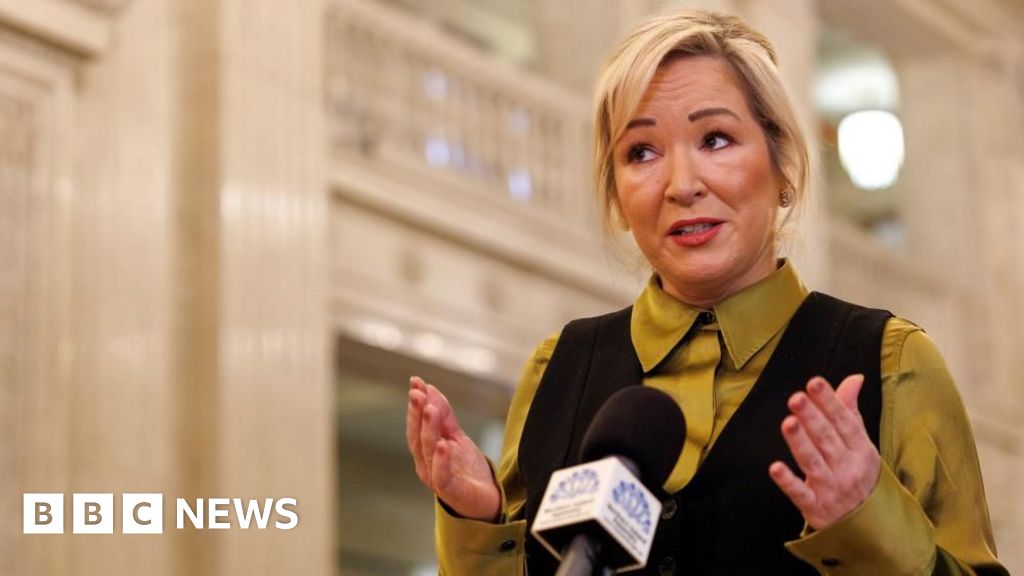
Launching its plan on Monday, Sinn Féin vice-president and Stormont's First Minister Michelle O'Neill said it was about removing the "ever-present threat of collapse" and ensuring stability in future.
Sinn Féin is seeking to remove what it called a "veto" on executive formation – namely the nominations of parties to the roles of first and deputy first minister.
If the largest party within nationalism or unionism in Northern Ireland refuses to nominate for the role an executive cannot be formed.
Sinn Féin is arguing that in future, if either of those parties chooses not to nominate the opportunity to take up the role should pass to other parties.
It said this would ensure the institutions can continue to function while maintaining the principle of power-sharing.
The use of the veto has been used by both Sinn Féin and the DUP in the past and has been criticised by smaller parties at Stormont.
O'Neill said the proposals were "not an exhaustive list" and "do not negate proposals that others will undoubtedly bring forward".
"The most significant reform will ultimately be constitutional, through the achievement of a new and united Ireland," she added.
"In the meantime, we are determined to do everything in our power to deliver better for workers, families and communities."
The party also wants changes to how the assembly speaker is elected in future.
The rules also currently require a speaker to be chosen through a cross-community vote, meaning either of the largest nationalist or unionist parties can prevent the assembly from functioning by refusing to support the speaker's election.
The DUP refused to allow a speaker to be elected in 2022, in protest over its opposition to post-Brexit rules at the time.
Chris Hazzard accused the current speaker, Edwin Poots of the DUP, of taking decisions that benefited his party's positions on issues and said it was "blocking debate".
Any changes to reform the institutions would require support from unionist parties and legislation would be needed to amend the Northern Ireland Act.
Parties like Alliance and the SDLP have for some time called for these kinds of measures.
Other proposals in the party's document include legislating to allow the appointment of the justice ministry to happen through D'Hondt in future, rather than a cross-community vote.
The party said this would "normalise" the appointment and allow parties eligible to put a candidate forward, rather than requiring a majority of votes of unionist and nationalist MLAs.
It is also calling for more "transparency" around decisions taken by the assembly speaker.
The party said this would include measures requiring explanations for rulings – as at present, the speaker's decision on any issue is final.
Patsy McGlone is the party's longest-serving MLA at Stormont.
The Good Jobs Bill was first announced almost two years ago but the legal text of the draft law has still not been published.
Róis-Máire Donnelly said she will try to win over critics of the language during her 12 months in the post.
Northern Ireland is the only part of the UK where hunting with dogs is still permitted.
The money was pledged to the Northern Ireland Executive to help restore devolved government in 2024.
Copyright 2026 BBC. All rights reserved. The BBC is not responsible for the content of external sites. Read about our approach to external linking.
About the Author