POLITICO’s must-read briefing on what's driving the day in Brussels, by Gerardo Fortuna, Nicholas Vinocur and Gabriel Gavin.
This site is protected by Turnstile and the Cloudflare Privacy Policy and Terms of Service apply.
AI generated Text-to-speech
POLITICO’s must-read briefing on what’s driving the day in Brussels, by Gerardo Fortuna, Nicholas Vinocur and Gabriel Gavin.
By GERARDO FORTUNA
Send tips here | Follow us @gerardofortuna @NicholasVinocur @GabrielGavin | Listen to Playbook and view in your browser
CIAO THERE. I’m Gerardo Fortuna.
START HERE: FIFA’s bombshell plan to sell a stake in the commercial rights to the World Cup and other tournaments has sparked a furious backlash — including in Brussels. Italian footballer-turned-MEP Carolina Morace told Playbook the sport “cannot be governed by the logic of the financial markets” … Bulgarian liberal MEP Nikola Minchev slammed the plans as “absurd” … and Bogdan Zdrojewski, the European Parliament’s lead lawmaker on the European Sport Model, said MEPs should invite FIFA President Gianni Infantino to Parliament to question him directly.
UEFA, European football’s governing body, told Playbook it “will not stand by while FIFA seeks to reshape the future of football around the interests of private investors,” and there was even talk last night of a European boycott. Britain’s new PM Andy Burnham also piled on, saying the tournament “belongs to the people who fill the stands.” Expect plenty more of that today.
In today’s Playbook:
— There’s a booth for that: Montenegrin speakers wanted.
— The ECR’s race to replace Mateusz Morawiecki will remain a Polish affair.
— Faces in the crowd: Anitta Hipper, Marine Le Pen, Adam Bielan, Maida Gorčević, Carlo Fidanza, Tobiasz Bocheński, Matteo Salvini, Mateusz Morawiecki, Volodymyr Zelenskyy, Christian Wigand, Tufan Erhürman and many more.
On today’s Brussels Playbook Podcast: Zoya and Ian discuss how the split in Poland’s Law and Justice party is spilling over into EU politics.
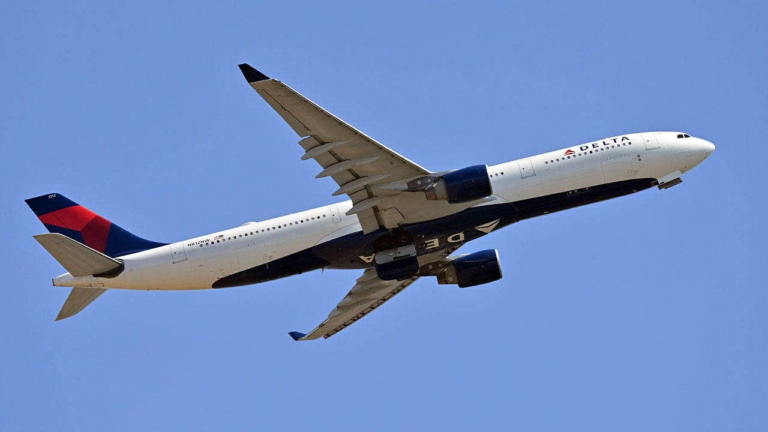
CHARLEROI, NO MORE? Thousands of national officials, party operatives, campaigners and visiting regional politicians will be forced to find a more expensive way to Brussels in the lead up to the next EU election, as Brussels South Charleroi Airport shuts for 11 weeks.
Not ideal timing: The rebuilding of the airport’s only runway — set to take place between Aug. 15 and Oct. 31, 2028 — will land squarely in the opening months of Latvia’s presidency of the Council of the EU and at the start of the final rentrée before the 2029 EU election.
Mixed feelings: It’s the airport that Brussels love to hate: from the 50-minute schlep to get there to the infamous security lines when you arrive. Even so: Many of those Playbook spoke to were thrown by the prospect of losing the budget escape route Charleroi provides (with parliamentary assistants hailing from southern Italy and Greece the most miffed).
Easy for some: The shutdown is more likely to hit lower-ranking officials, campaigners and political staff, who will find it harder to expense higher airfares or journeys via alternative routes. That’s because Charleroi connects Brussels cheaply with regional cities, candidate countries and parts of the EU that are poorly served by rail and may be overlooked by connections through Brussels’ other airport, Zaventem.
Pricing it in: “It is one of Ryanair’s largest continental bases,” director of JLS Consulting John Strickland told Playbook, predicting significant disruption as airlines reshuffle aircraft and passengers — with Zaventem standing to gain as an alternative route, as could nearby Lille.
The pain threshold: OAG Chief Analyst John Grant told Playbook the thinner network of affordable routes will increase the cost barrier. “For travelers there are always [other] choices, although sometimes with increased cost implications.”
Doing the presidential math: Latvia will not lose its direct Brussels link: airBaltic currently flies from Riga to Zaventem. The country will, however, lose the cheaper option. Ryanair is advertising Riga-Charleroi tickets from €29.99 one way, compared with around €85 on airBaltic to Zaventem — a gap of about €110 on a return trip before extras. That said, Charleroi’s airport shuttle, which starts at €14.99 each way, narrows the difference. And 2028 fares have yet to be set.
Paying the price: Still, for the officials, experts and journalists repeatedly traveling to Brussels and back, or booking return trips to Riga for Latvia’s presidency, the additional cost could quickly add up.
The bigger question: While 11 weeks of disruption is manageable, Belgian trade union SETCa has already warned that some aircraft, crews and routes won’t return after the break — potentially leaving Brussels with a slimmer, pricier gateway to the rest of the continent.
THE SAHEL SAGA CONTINUES: The Commission insists it followed the rules when appointing its new envoy to the Sahel, even as its original pick faces criminal charges in Slovenia over the nomination, my colleagues Gabriel Gavin and Sebastian Starcevic report.
HIPPER REPLACEMENT: Commission spokesperson Anitta Hipper, who has moved to Executive Vice President Henna Virkkunen’s cabinet, will be replaced by Christian Wigand, best known as Jean-Claude Juncker’s social affairs and tech spokesperson.
A NEW THREAT TO EUROPE’S POWER COUPLE: It’s not just France’s far right that wants to upend the EU’s status quo — far-left presidential candidate Jean-Luc Mélenchon has also signaled he would end the Franco-German partnership as we know it.
LEAVING D.C. IN HIGH SPIRITS: Volodymyr Zelenskyy’s trip to Washington was a remarkable turnabout from his disastrous visit last year, with more American lawmakers now convinced Kyiv can win the war, my stateside colleagues report.
Capping it off: The U.S. Senate voted overwhelmingly to advance a sweeping Russia sanctions bill that Senator Lindsey Graham had championed before he died.
WHILE YOU WERE SLEEPING: The U.S. military said it thwarted a “surprise” Iranian attack on its forces and struck Tehran-backed militias in Iraq, rupturing the brief pause in the conflict, the BBC reports.
LANGUAGE MATTERS: The EU is hiring Montenegrin-speaking officials as the country races toward membership — starting the practical work needed to make it the bloc’s 25th official language, Seb Starcevic reports.
Writing the fine print: The Council of the EU’s legal service is looking for assistants to help draft the country’s accession treaty — the rules under which it joins the bloc — and translate legislation. “The first opportunities are opening up for citizens of Montenegro to build their careers in the institutions of the European Union,” the country’s European Affairs Minister Maida Gorčević said.
28 by ‘28: Montenegro has closed over half of the chapters required to meet the EU’s membership requirements and aims to become the bloc’s 28th member by 2028. Once it joins, Montenegrin is set to be included as one of the bloc’s official languages.
ABC, not АБB: Montenegro will use its Latin alphabet, not Cyrillic, for EU documents, according to a diplomat involved in the accession negotiations, granted anonymity to discuss the internal plans. Both alphabets are taught in the country’s schools, although the Latin script is more widely used.
Family members: Montenegrin is understandable to speakers of Croatian, Serbian and Bosnian, with a few minor differences in vocabulary and pronunciation. The similarities among the South Slavic languages “are more than 95 percent,” Igor Lakić, linguistics professor at the University of Montenegro, told Playbook.
The EU employs an army of translators to ensure its legislation is understood in its member countries’ 24 official languages, at a cost of around €1 billion each year. If Montenegrin becomes number 25, the bloc will need to recruit another cadre of translators and interpreters — despite the language’s similarities with Croatian.
Does Montenegrin require its own booth? Lakić believes it does. It’s not just the linguistic differences that matter, but also the “political, economic and other characteristics … that only interpreters from each of these four countries can properly convey to different languages.”
Language politics run hot in the Balkans. Podgorica has enshrined the Montenegrin language in its constitution and has successfully sought to get it internationally recognized, while neighboring Serbia has attacked it as a political invention.
TALK TO PLAYBOOK: On the Brussels Playbook Podcast, Ian asked Montenegrin speakers to send us voice notes. Whatsapp us on +32 491 050629 and listen from 7 a.m. to hear if we give you a shoutout.
SUCCESSION: European lawmakers Adam Bielan and Tobiasz Bocheński are the leading contenders to replace Mateusz Morawiecki, a former Polish prime minister, as head of the European Conservatives and Reformists Party.
What happened: Morawiecki stepped down from the role following last week’s dramatic split in Poland’s Law and Justice (PiS) party. Three MEPs followed Morawiecki out the PiS door.
Keep it Polish: Under the pan-European party’s internal rotation, the presidency is expected to remain with PiS, Max Griera, Eliza Gkritsi and I report. Bielan, a former deputy marshal of the Polish Senate, is seen as the frontrunner in the race between the two MEPs, according to an ECR official granted anonymity to discuss the internal race. Neither Bielan nor Bocheński responded to request for comment.
Easy does it: ECR Executive Vice President Carlo Fidanza, also an MEP, will take over the ECR presidency until party members elect a permanent successor to Morawiecki — expected in September. “Politically speaking, we are obviously aiming for a smooth transition,” another senior ECR official said.
Protected in Brussels: Morawiecki’s three allied MEPs, meanwhile, are expected to remain in the ECR grouping in the European Parliament, even though they’re likely to form their own Polish delegation after the summer recess, three officials — one from PiS and two from ECR — told Playbook. This means the breakaway MEPs will continue to sit alongside PiS lawmakers.
Why keep them? ECR wants to overtake the Patriots for Europe as Parliament’s third-largest group before next year’s midterm division of top jobs. Losing three MEPs would weaken the grouping’s bargaining hand. “There will be no ostracism,” one official said.
THE GRAZING BRIGADE: Shepherds and cattle farmers are emerging as an unlikely weapon against blazes in Spain and France, Agnes Rønberg reports in Morning Agri (for subscribers).
HEATWAVE-DRIVEN POLITICS: France’s far right is seizing on the out-of-control wildfires, arguing President Emmanuel Macron is failing to protect people and their homes.
SAFE — BUT NOT YET: Italy wants to tap the EU’s SAFE defense loan mechanism but Matteo Salvini’s far-right League, which is part of the governing coalition, cooled talk of an immediate move, saying parliament should decide (for subscribers).
THE BIG REVIEW: Washington has launched a long-awaited review that will determine the number of American troops and military assets in Europe.
THE MONEY’S (MOSTLY) GONE: The European Commission has now paid out roughly two-thirds of its post-pandemic recovery fund, with the clock ticking toward next year’s deadline, per Morning Financial Services (for subscribers).
PREPARING THE POST-BREXIT RESET: Brussels is ready to offer the U.K. a compromise on the thorny issue of tuition fees that has been holding up the reset talks started by Keir Starmer.
Berlin: Friedrich Merz ally Thorsten Frei takes over as the CDU/CSU’s parliamentary leader today as the backlash against the chancellor’s reshuffle rumbles on.
London: The Burnham ideas train rolls on as the U.K.’s new prime minister places himself front and center of everything his government is doing.
Paris: PM Sébastien Lecornu’s office insists that a meeting with French banks about funding presidential campaigns wasn’t about giving Marine Le Pen a boost.
Washington PM: Lindsey Graham’s funeral was a reminder that the late senator was at odds with much of the MAGA wing of the Republican Party.
— Fisheries Commissioner Costas Kadis participates in the informal meeting of Fisheries Ministers in Cork, Ireland at 11:30 a.m., with a press conference at 4 p.m. Watch.
— U.N. Secretary-General António Guterres meets with Cypriot President Nikos Christodoulides and Tufan Erhürman, the leader of the breakaway Turkish Cypriot north of Cyprus, at 9 a.m.
MEP Christine Anderson; former MEPs Giles Chichester, Metin Kazak, Anthea McIntyre and Rui Tavares; POLITICO’s Freddie Martyn and Jacopo Barigazzi; the European Commission’s Kristina Presis; Reuters’ Joanna Plucinska; European Parliament’s Emmanuel Kujawski; NYT’s Peter Goodman.
Playbook is brought to you by POLITICO’s EU Politics team: Gerardo Fortuna, Nicholas Vinocur, Gabriel Gavin, Zoya Sheftalovich, Max Griera, Mari Eccles, Hanne Cokelaere and Sebastian Starcevic. And: reporters Ferdinand Knapp and Milena Wälde, editors Alex Spence and James Panichi, and producers Dean Southwell and Hugh Kapernaros.
SUBSCRIBE to the POLITICO newsletter family: Brussels Playbook | London Playbook | London Playbook PM | Playbook Paris | Berlin Playbook | Sunday Crunch | EU Influence | London Influence | D.C. Playbook | D.C. Influence | Canada Playbook | POLITICO Forecast | All our POLITICO Pro policy morning newsletters
About the Author