Help rescue animals from the front line — shop our Companion Collection 🐾
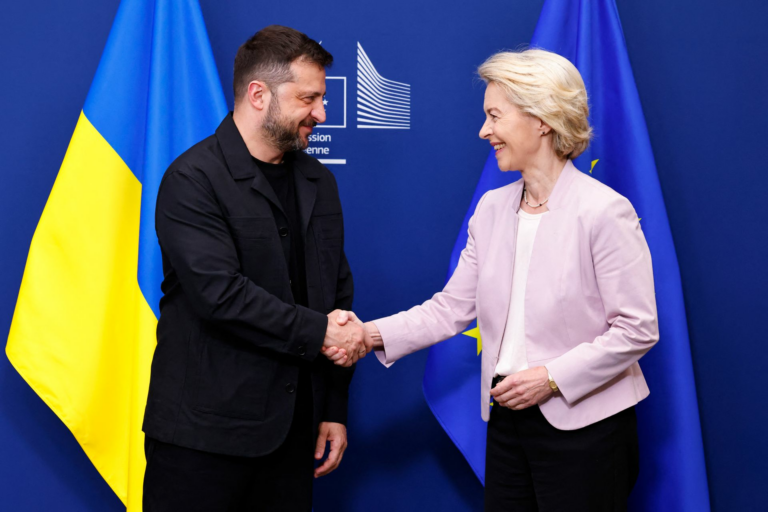
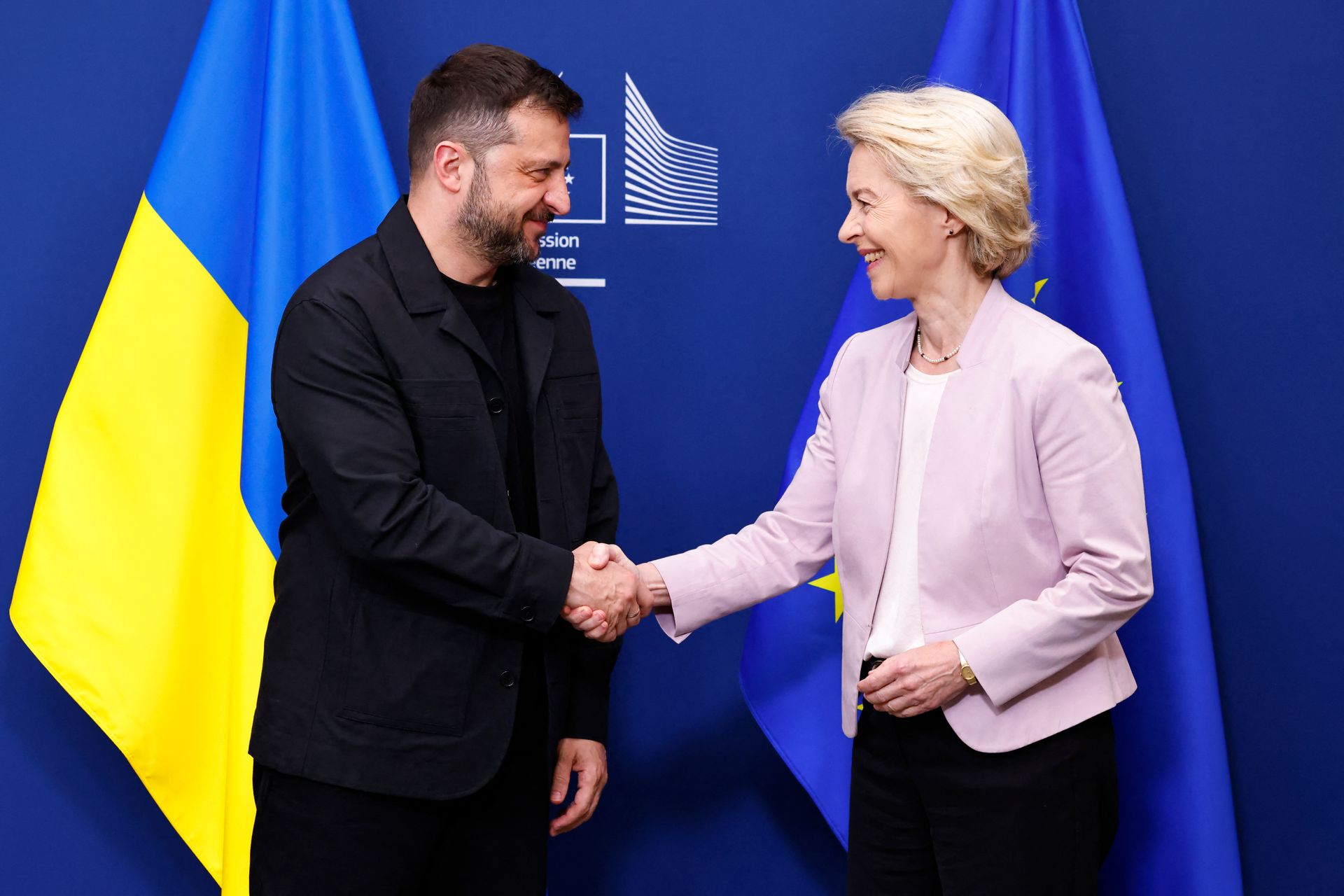
LUXEMBOURG — Ukraine celebrated the opening of two more EU enlargement clusters at a ceremony in Luxembourg on Oct. 13, a key milestone in the process to eventually become a member state.
Ukraine and Moldova have been advancing their EU membership bids in tandem and are currently trying to open all six of the bloc's enlargement clusters — to-do lists of reforms that must be completed to join the bloc.
On Oct. 13, Ukraine unlocked clusters 2 and 3, titled "internal market" and "competitiveness" respectively. They are the two largest clusters by number of policy files.
Moldova is expected to follow suit roughly an hour later with its own ceremony.
The move was made possible the day after the Verkhovna Rada, Ukraine's parliament, passed a law bolstering the rights of the country's Hungarian-speaking minority — a demand that Hungary had said must be fulfilled before it would allow further progress.
In June, Kyiv and Chisinau opened the first cluster, on the rule of law, followed by another on external relations in July.
That leaves only two clusters remaining to be opened, which the European Commission and the Irish Council Presidency of the EU hope to be done with by the end of 2026.
The two remaining clusters risk being harder to get through, as they encompass sectors of the economy such as agriculture and transport, where Ukraine has a competitive edge, and some EU countries fear losing out.
On Oct. 6, the European Commission issued a set of proposals on the future of EU enlargement, which also suggested that Ukraine's agricultural sector would require special treatment, to be handled during the enlargement process rather than used as a block on progress.
The EU's Enlargement Commissioner Marta Kos told the Kyiv Independent ahead of the opening of the clusters that "once Ukraine will be so far that we will think of what will go in the accession treaty, we will put down the solutions for both sides."
Kos was clear that the process needs to both protect European farmers and help Ukraine export to feed the world, all while Kyiv adopts EU standards.
But Kos' mention of the accession treaty, which is only being drafted near the very end of the EU enlargement process, indicates that she does not expect the strength of Ukraine's agricultural sector to be used as a reason to block progress at this stage.
Brussels Correspondent
Chris Powers is the Brussels Correspondent with the Kyiv Independent. He reports on EU news and policy developments relevant to Ukraine, bridging the gap between Brussels and Kyiv. He was formerly the Defense and Tech Editor at the EU media outlet Euractiv. Chris holds a BA in History from the University of Cambridge and an MA in European Studies from the College of Europe.
The move was made possible the day after Ukraine's parliament passed a law bolstering the rights of the country's Hungarian-speaking minority — a demand that Hungary had said must be fulfilled before it would allow further progress.
The Aksaykardandetal plant manufactures drive shafts and metal components for agricultural and specialized machinery, and has metalworking capabilities which could potentially be used to manufacture military equipment components.
Luxembourg's move to delist Mikhail Fridman has "set a dangerous precedent," as other Russian oligarchs may push to get the same treatment, lawmaker Franz Fayot told the Kyiv Independent.
Prime Minister Donald Tusk said that German Police had arrested two suspects on behalf of Polish services and called the attack “another act of hybrid warfare” in a post on X.
Support for Ukraine's EU accession varied across the bloc, reaching 69% in Sweden, the highest share among the countries surveyed. Romania recorded the lowest level of support, at 40%.
The Kyiv Independent's War Crimes Investigations Unit has released Last Seen in Crimea, a new documentary investigating a system of detention in Russian-occupied Crimea where Ukrainian civilians have been held without contact with the outside world, often without formal charges, and subjected to torture and other forms of abuse.
On Oct. 13, lawmakers supported three bills in the first reading linked to funding from the International Monetury Fund (IMF) and the EU under the Ukraine Facility — an EU financial assistance program launched in 2024.
The group included two women, a child, and several men who were being led toward the Shebelinka–Ostrogozhsk gas pipeline by Russian forces, according to Ukraine's 13th Khartia Corps.
Ukraine's Education and Science Minister Andrii Butenko said that a fire broke out in a building of Rivne State Humanitarian University as a result of the Russian drone strike.
Bulgarian Prime Minister Rumen Radev called the attacks "absolutely unacceptable" and said Bulgaria had informed its permanent representatives to NATO and the European Union.
The tanker DF Peak, previously named Kaliningrad, has falsely sailed under the flag of Benin and is sanctioned by the U.S, EU, Switzerland, Canada, and Japan.
This story exists because readers chose to back it. Behind it is a newsroom that will not look away — and a community of people who make that possible. It's thanks to 35,000 members that our reporting stays free for everyone to read, and we can continue our reporting. Will you be one of them?
About the Author