UN Audit Sees Clash Over Security Council Response to ‘North Korean Landmine’… Opposition: "Didn’t Even Consult Security Council Members"
Language
KR
CN
Economic Content Platform for Investors
Language
KR
CN
by Hwang Yoonju
Published 14 Oct.2026 06:21(KST)
Updated 14 Oct.2026 08:02(KST)
At a parliamentary audit of the Permanent Mission of the Republic of Korea to the United Nations in New York, U.S., lawmakers clashed on October 13 (local time) over the mission’s response to the North Korean land mine explosion in the Demilitarized Zone (DMZ).
Opposition lawmakers, including independent Assemblyman Han Donghoon, questioned the diplomatic capabilities of Cha Jihoon, South Korea’s ambassador to the United Nations, saying he had not even consulted with key countries about a response at the United Nations Security Council (UNSC). Ambassador Cha countered that he had condemned North Korea’s provocations at the UN General Assembly and that the government was considering whether to pursue a response at the UNSC.
Members of the National Assembly’s Foreign Affairs and Unification Committee conduct a parliamentary audit of the Permanent Mission of the Republic of Korea to the United Nations in New York on the 13th (local time). New York Correspondents’ Corps
At the parliamentary audit conducted by the National Assembly’s Foreign Affairs and Unification Committee at the Permanent Mission of the Republic of Korea to the United Nations in Manhattan, New York, on October 13, People Power Party Assemblyman Kim Geon called for a response by the UNSC, saying, “This is a serious matter that occurred alongside the fortification of the inter-Korean border area and is also related to the undermining of the Armistice Agreement.”
Lawmakers focused their questioning on whether Cha had discussed the matter with ambassadors from key UNSC countries, including Mike Waltz, the U.S. ambassador to the United Nations. Cha said he had not directly discussed the matter with Waltz or other ambassadors from key UNSC countries.
Kim criticized him, saying, “Shouldn’t you meet with ambassadors from other countries, discuss whether this is an issue that can be taken up at the UNSC, and report the outcome to headquarters so the government can make a decision? How can it make a decision if you do nothing?”
Cha said, “I understand that headquarters is considering whether to pursue a discussion at the UNSC,” adding, “I believe it was also meaningful to raise the issue at the UN General Assembly’s First Committee.”
On October 8, Cha raised the issue of North Korea laying land mines during the general debate of the UN General Assembly’s First Committee, calling on Pyongyang to apologize and prevent a recurrence.
Following a joint investigation into the DMZ land mine explosion on September 21, the South Korean military and the United Nations Command concluded that a mine laid by North Korean troops had exploded south of the Military Demarcation Line (MDL). The Joint Chiefs of Staff said the incident violated the Armistice Agreement.
People Power Party Assemblyman Ko Dongjin also asked, “What action did the ambassador take while North Korea openly violated UNSC resolutions?” He added, “I don’t know whether he made efforts that produced no results or made no efforts at all.”
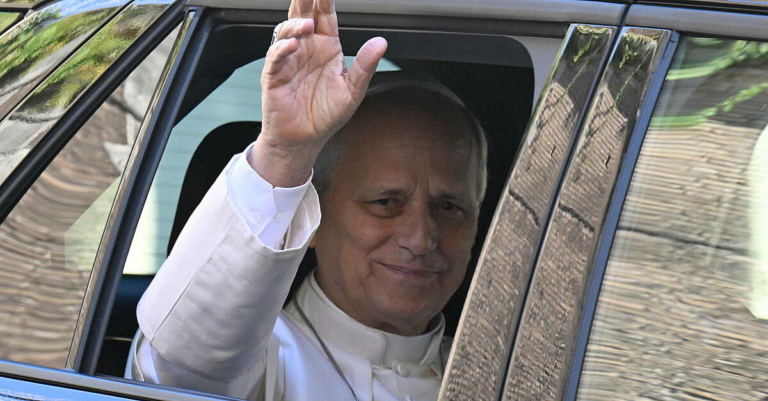
Cha Jihoon, South Korea’s ambassador to the United Nations. Yonhap News.
Lawmakers also continued to clash over Cha’s diplomatic expertise and the circumstances of his appointment. An assemblyman questioned the appropriateness of his appointment as ambassador, citing his past work as a lawyer for President Lee Jae Myung.
“The post of ambassador to the United Nations should be held only by the best of the best,” the assemblyman said. “Why did an amateur with no diplomatic experience seek this position?”
The assemblyman also repeatedly asked whether the president’s personal relationship with Cha had influenced his appointment and whether Cha had sought the ambassadorial post first. Cha said he could not comment on the appointment process, but added, “Many ambassadors to the United Nations from other countries are not career diplomats either.”
By contrast, lawmakers from the Democratic Party of Korea stressed that diplomatic efforts for peace on the Korean Peninsula should go hand in hand with maintaining the effectiveness of sanctions on North Korea.
Democratic Party Assemblyman Park Seongjun said the effectiveness of sanctions on North Korea could diminish as Pyongyang strengthens ties with China and Russia. “We need to maintain sanctions on North Korea while creating diplomatic space to resume dialogue between North Korea and the United States,” Park said. “The role of a special envoy is to share the government’s governing philosophy and broaden diplomatic horizons by drawing on political capital.”
Democratic Party Assemblyman Maeng Seonggyu also urged Cha to carry out his duties with confidence, saying concerns that his lack of diplomatic expertise could hinder his work needed to be dispelled.
Cha replied that the ultimate aim of sanctions on North Korea is to achieve peace and stability on the Korean Peninsula, and said he would continue diplomatic efforts to secure the support of the international community.
© The Asia Business Daily. All rights reserved. Unauthorized AI training and use prohibited.
Share
Kakao
Facebook
X
Copy link
Text Size
Normal
Medium
Large
Language
KR
CN
The Asia Business Daily makes no express or implied warranties regarding the accuracy, reliability, or fitness for a particular purpose of translated content.
Please note that some content may be inaccurate due to limitations of the translation solution.
Unauthorized reproduction, redistribution, or use for AI training is strictly prohibited.
Please email us at content@asiae.co.kr for feedback or corrections on our coverage.
Copyright © The Asia Business Daily (www.asiae.co.kr). All rights reserved.
About the Author