Netanyahu says ‘we will destroy this place’ as Israeli forces begin days-long operation with raids and demolitions.
Save
Share
Israel’s military has launched another major operation in the occupied West Bank, during which it plans to carry out mass arrests, demolish homes and forcibly displace residents.
The operation comes after an attack at an Israeli military checkpoint near Hebron on Friday in which two Israeli soldiers were killed. The two suspected Palestinian gunmen were shot dead.
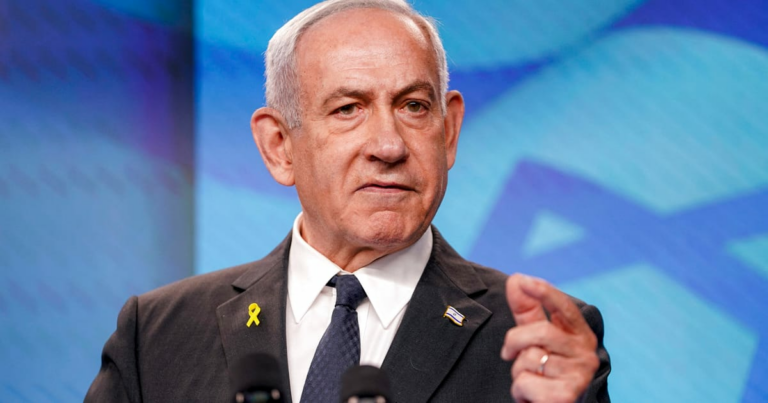
Israeli Prime Minister Benjamin Netanyahu, who ordered a full lockdown of the West Bank, said Israeli forces would go house-to-house in the Hebron neighbourhood that the suspected attackers came from.
“We will act to destroy this place, to change it completely,” he said.
Israeli rights group B’Tselem warned the Israeli government’s planned offensive amounts to “collective punishment and acts that could constitute war crimes”.
Here’s what we know about the Israeli military operation.
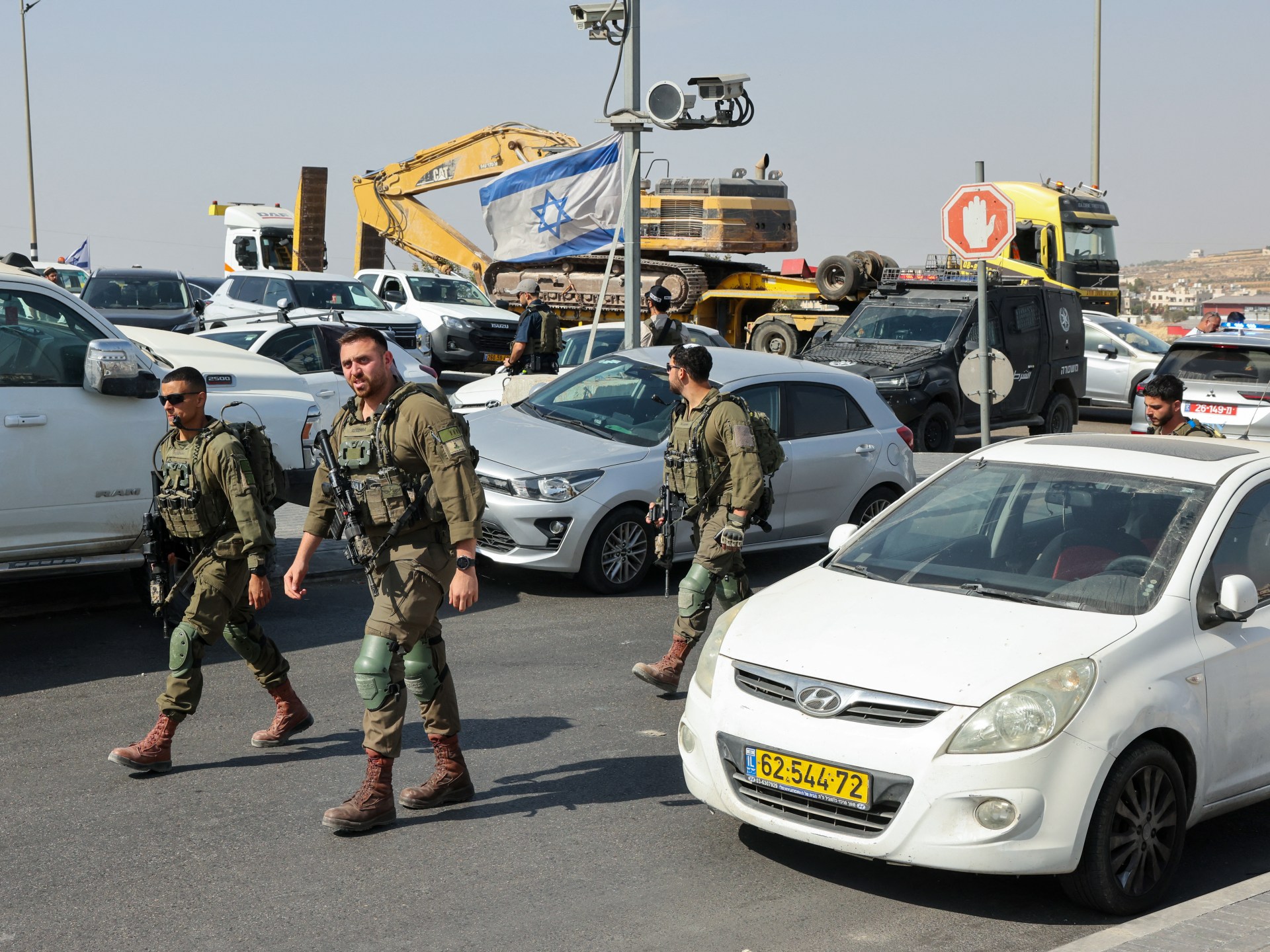
Israel’s military announced late on Friday that a major “counterterrorism” operation, involving Israeli soldiers, police and other security agents, was under way in the Hebron area of the occupied West Bank.
It said the “targeted” campaign would last “several days”, in addition to operations in “dozens” of other areas across the West Bank.
Israeli Prime Minister Benjamin Netanyahu earlier said Israeli forces would go “house-to-house” in the Hebron neighbourhood where the suspects involved in Friday’s attack came from, replicating tactics previously used in refugee camps in the northern West Bank. The operation will involve demolitions and forced displacement, he said.
By Saturday morning, Israeli forces had raided hundreds of homes in the Hebron area and turned dozens of houses into military interrogation centres, according to the Palestinian Prisoners’ Society.
Around 300 Palestinian families were being displaced in the city’s al-Jalda neighbourhood, reported Al Jazeera’s colleagues on the ground. Footage of the area, shared by Palestinians on Telegram, showed soldiers standing guard and military vehicles, shopping trolleys and other objects blocking the roads.
Earlier, Israeli bulldozers wrecked a three-storey building in Hebron, while ordering more Palestinian families to leave their homes in the Ein Deir Bahha area of the city and its surroundings.
Issa Amro, a Palestinian activist and political analyst based in Hebron, said nearly 800,000 Palestinians in the Hebron governorate were “under siege, with all entrances and exits closed since (Saturday) morning”.
He said many displaced families had left the night before, “without carrying enough goods or clothing, or the children’s schoolbags”.
“They were walking with fear, without knowing where they were going,” Amro told Al Jazeera.
Elsewhere, Israeli forces raided at least 15 towns in the northern West Bank, including Nablus, Jenin, Tubas and Qalqilya, Al Jazeera correspondents reported. In total, Israeli forces arrested around 70 people between Friday and early Saturday, while interrogating hundreds more, said the Prisoners’ Society.
Al Jazeera’s Nour Odeh, reporting from Ramallah in the West Bank, said there was “a lot of anxiety” throughout the occupied territory as people largely avoided going into the streets.
“There is a lot of fear that the pledge by the Israeli prime minister to use in Hebron what he described as the successful model employed in the Tulkarem and Jenin refugee camps of forced displacement, could mean months of being away from their homes and possibly losing them to massive demolitions,” she said.
The measure is a response to Friday’s attack at an Israeli checkpoint near Hebron.
But it also takes place just days before Israel’s election on Tuesday, during which Israel had already been planning to lock down the occupied territory, reported The Times of Israel.
During the lockdown, Netanyahu said Israeli troops would conduct “extensive waves of arrests” and pursue Hamas fighters “wherever they are and at all times”.
The operation comes amid signs that Israel and its ally the United States are preparing for a potential new wave of attacks on Iran.
According to The New York Times, the US and Israel have drafted plans for a campaign of attacks on Iran that would take place after the US midterm elections on November 3.
Citing unnamed US officials and other informed sources, The New York Times reported that the US and Israel have intensified drills for a “a short but intensive operation” against Iran, with potential targets to include the country’s “energy infrastructure, nuclear facilities, and missile and drone arsenal”.
US President Donald Trump appeared to confirm on Friday that the US was weighing a new military campaign against Iran. Speaking at a rally, Trump said, “We may do another little epic fury,” using the codename of the US-Israel war against Iran that started with attacks across the country on February 28.
Since the beginning of 2025, more than 40,000 citizens have been forcibly displaced from their homes by Israeli settler violence and raids by armed forces in the West Bank, and displacement continues to this day, The Palestinian Authority said in a statement on Saturday.
It warned of the dangers posed by the ongoing Israeli operation in Hebron, “where collective punishment measures include the forced displacement of entire neighbourhoods, the demolition of homes and structures, and the closure and siege of Palestinian cities”.
Israeli settler pogroms against Palestinians in the occupied West Bank have been particularly rife in recent weeks, coinciding with the annual olive harvest season.
On Saturday morning, Israeli settlers stormed the villages of Yabrud and Al Mughayyir, east of Ramallah, to forcibly graze their sheep on the agricultural lands of Palestinians and damage their crops, the Palestinian news agency Wafa reported.
On Thursday, the Palestinian Colonization and Wall Resistance Commission said it had recorded 409 attacks by Israeli forces or settlers against Palestinian farmers, their land, olive trees and agricultural equipment so far during October. It called the attacks part of a pattern of “direct violence to force farmers from their land”.
Visiting Western officials have also found themselves caught up in the violence.
On October 17, Israeli settlers assaulted European diplomats, including a French mayor, near the Palestinian village of Taybeh in the occupied West Bank as they visited Palestinian olive farmers. Then on Wednesday, US Democratic congressional candidate Brad Lander was briefly detained by the Israeli military while volunteering to help Palestinian farmers harvest olives.
The operation has been cheered on by far-right Israeli officials, but criticised by the United Nations, Palestinian officials and human rights watchdogs.
Israeli Finance Minister Bezalel Smotrich, who also holds a position within Israel’s Ministry of Defence where he oversees the administration of the occupied West Bank and its settlements, called for Israel’s large-scale offensive in the West Bank to proceed “exactly like in Gaza”.
Israel’s National Security Minister Itamar Ben-Gvir called for the Ramallah-based Palestinian Authority to be “dismantled” and for tighter restrictions on Palestinian movement.
Mustafa Barghouti, secretary-general of the Palestinian National Initiative party, said incitement from far-right Israeli ministers was making the situation worse.
He told Al Jazeera the West Bank lockdown was turning every city and village into “a small prison”, a form of collective punishment that would “lead to explosions”.
The Palestinian Authority called for international pressure on Israel to protect Palestinians from what it called “growing threats to expand the scope of forced displacement and destruction.”
Hamas called the West Bank operation an extension of Israel’s “criminal aggression” against Palestinians.
Mayy El Sheikh, spokesperson for the UN’s Human Rights Office in the occupied Palestinian territory, said Israel’s move to lock down the West Bank marked “yet another episode in a never-ending stream of suffocating measures making life more and more unbearable for Palestinians”.
UN Secretary-General Antonio Guterres, through his spokesperson, also expressed concern about West Bank closures that would restrict Palestinians’ “access to basic services and livelihoods”.
B’Tselem sounded the alarm over Israeli “plans for collective punishment and acts that could constitute war crimes”.
“The world cannot stand by as Israel continues its assault on Palestinians, waiting for yet more neighbourhoods to be emptied and erased before intervening, despite what we have already witnessed in Gaza and the northern West Bank,” said the rights group.
Follow Al Jazeera English:
About the Author